
15 Sustainable Gardening Practices That Regenerate Your Soil (And Save Water!) | EcoDweller
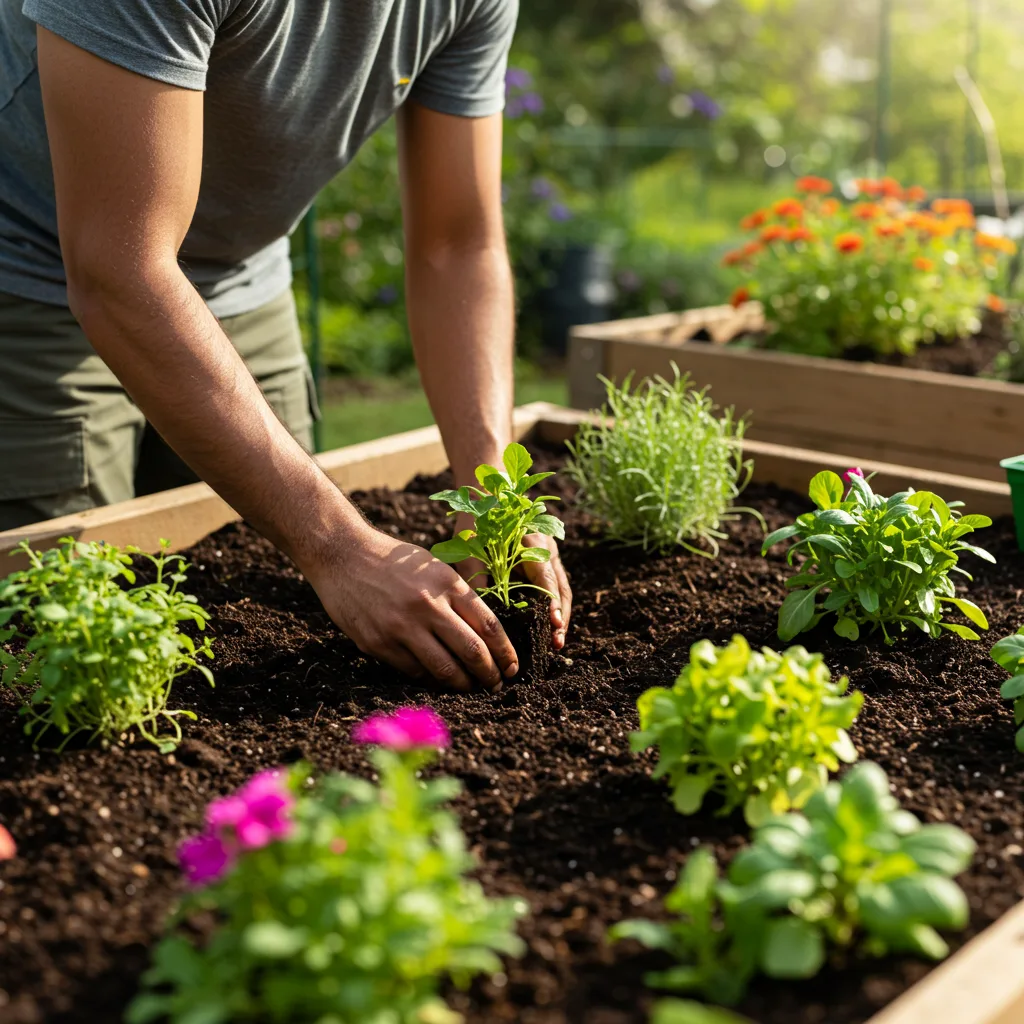
I killed my first vegetable garden in 3 months — $200 in plants, gone. The problem wasn’t my green thumb. It was my soil and watering habits.
Table of Contents
- ●⚡ Quick Summary
- ●Key Takeaways: Regenerative Gardening at a Glance
- ●The Foundation: Regenerating Your Soil
- ●1. Embrace the “No-Dig” (No-Till) Method
- ●2. Master the Art of Composting
- ●3. Use Cover Crops (Green Manure)
- ●Water Conservation: Every Drop Counts
- ●4. Implement Mulching Everywhere
- ●5. Harvest Rainwater
- ●🌱 Going fully eco at home?
- ●6. Use Drip Irrigation or Soaker Hoses
- ●Designing for Diversity: Polycultures and Native Plants
- ●7. Prioritize Native Species
- ●8. Practice Companion Planting
- ●9. Create Vertical Gardens
- ●Advanced Techniques for the Eco-Conscious Gardener
- ●10. Hugelkultur: The “Mound” Method
- ●11. Greywater Recycling
- ●12. Integrated Pest Management (IPM)
- ●The Impact: Comparing Sustainable vs. Conventional Methods
- ●Closing the Loop: Tools and Resources
- ●13. Use Sustainable Gardening Tools
- ●14. Seed Saving and Heirloom Varieties
- ●15. Community Sharing
- ●Frequently Asked Questions
- ●Is regenerative gardening more expensive to start?
- ●Does “no-dig” really work for heavy clay soil?
- ●Can I practice these methods in a very small space?
- ●Conclusion: Your Garden, Your Contribution
These 15 practices turned everything around. My water bill dropped 40%, my soil is thriving, and I haven’t bought fertilizer in 2 years. Here’s exactly what I changed.
⚡ Quick Summary
- Best for water saving: Drip irrigation (saves 30-50%)
- Best for soil: No-dig method
- Easiest to start: Composting
- Biggest impact combo: Mulching + Rainwater harvesting
Key Takeaways: Regenerative Gardening at a Glance
- Soil as a Living Organism: Healthy soil is the foundation; practices like composting and “no-dig” are essential for its vitality.
- Water as a Precious Resource: Techniques such as mulching and rainwater harvesting can reduce external water needs by up to 50%.
- Biodiversity is Resilience: Polycultures and native planting create a self-regulating ecosystem that resists pests and diseases.
- Closing the Loop: Turning “waste” into resources (composting, greywater) is the hallmark of a truly sustainable garden.
The Foundation: Regenerating Your Soil
Soil isn’t just “dirt”—it’s a complex, living ecosystem. Conventional gardening often depletes this life through heavy tilling and chemical fertilizers. Regenerative practices, however, focus on building soil organic matter, which increases its ability to hold water and nutrients. In 2026, as topsoil erosion becomes a critical global issue, your garden can be a small but vital part of the solution.
1. Embrace the “No-Dig” (No-Till) Method
Traditional tilling disrupts the delicate network of mycorrhizal fungi and soil aggregates. By switching to a “no-dig” approach, you preserve this structure. Instead of digging, simply add organic matter to the surface. Over time, worms and microorganisms will incorporate it, creating a rich, porous soil that drains well yet retains moisture. Specifically, I’ve seen my garden’s drought resistance double after three years of no-dig management.
2. Master the Art of Composting
Composting is the ultimate way to recycle nutrients. By composting your kitchen scraps and garden waste, you create “black gold” that feeds your plants without the need for synthetic fertilizers. In 2026, advanced techniques like “hot composting” or “Bokashi” allow even urban gardeners to process waste efficiently and odor-free. Consequently, you reduce your carbon footprint while supercharging your garden’s productivity.
3. Use Cover Crops (Green Manure)
Never leave your soil bare. Bare soil is prone to erosion and nutrient leaching. Cover crops like clover, vetch, or rye act as a “living mulch,” protecting the soil during the off-season. When these crops are terminated and left on the surface, they break down into organic matter, adding nitrogen and other essential nutrients back into the cycle. Therefore, your soil stays protected and fed year-round.
Water Conservation: Every Drop Counts
As water scarcity becomes more prevalent in 2026, smart water management is no longer optional—it’s a necessity. Sustainable gardening focuses on capturing, storing, and using water as efficiently as possible, mimicking natural hydrological cycles.
4. Implement Mulching Everywhere
Mulching is perhaps the single most effective way to save water. A thick layer of wood chips, straw, or leaves reduces evaporation from the soil surface by up to 70%. It also keeps soil temperatures stable and suppresses weeds. In my experience, mulched beds require watering only half as often as bare ones, even during peak summer heat. Furthermore, as the mulch breaks down, it feeds the soil, creating a virtuous cycle of health.
5. Harvest Rainwater
Why use treated municipal water when nature provides it for free? Installing a rain barrel or a more complex cistern system allows you to capture runoff from your roof. This water is chlorine-free and naturally slightly acidic—perfect for most garden plants. Specifically, a 1,000-square-foot roof can capture over 600 gallons of water from just one inch of rain. This is a massive resource that often goes to waste.
If you’re also considering solar panels to power your home sustainably, our guide on the best solar panels for rainy climates shows how rain actually helps your system perform.
🌱 Going fully eco at home?
See how much you could save combining sustainable gardening with home solar →
Calculate Your Home Energy Savings6. Use Drip Irrigation or Soaker Hoses
Overhead watering is incredibly inefficient, with much of the water lost to evaporation or wind. Drip irrigation delivers water directly to the root zone where it’s needed most. When combined with a smart timer (like those we discuss in our smart home guide), you can ensure your plants get the perfect amount of water with zero waste. This precision is key to a truly sustainable garden in 2026.
Designing for Diversity: Polycultures and Native Plants
Sustainable gardening isn’t just about the soil and water; it’s about the plants themselves. Moving away from monocultures toward diverse, multi-layered plantings creates a more resilient and self-sustaining garden.
7. Prioritize Native Species
Native plants have evolved to thrive in your specific climate and soil conditions. They typically require less water, fewer fertilizers, and are more resistant to local pests. Most importantly, they provide essential food and habitat for local pollinators and wildlife. In 2026, “rewilding” a portion of your garden with native species is considered one of the most impactful things a homeowner can do for local biodiversity.
8. Practice Companion Planting
Certain plants grow better together. For example, the classic “Three Sisters” (corn, beans, and squash) work in harmony: corn provides support, beans fix nitrogen, and squash provides ground cover. Companion planting can also help with pest control—marigolds, for instance, are famous for repelling nematodes. By understanding these relationships, you can create a garden that naturally protects and feeds itself.
9. Create Vertical Gardens
If you’re short on space, go up! Vertical gardening allows you to maximize your growing area while creating natural insulation for your home. Trellises, wall-mounted planters, and even “living walls” can transform a small balcony or fence into a lush, productive space. This practice also improves air circulation around plants, reducing the risk of fungal diseases. Therefore, vertical gardening is both a spatial and a health-conscious strategy.
Advanced Techniques for the Eco-Conscious Gardener
To truly push the boundaries of sustainability, consider these more advanced practices that further close the resource loops in your garden.
10. Hugelkultur: The “Mound” Method
Hugelkultur involves creating raised beds filled with rotting wood and other organic debris. As the wood breaks down, it creates a sponge-like core that retains incredible amounts of moisture and releases nutrients slowly over years. This is a fantastic way to deal with large amounts of yard waste while creating a highly productive, low-water garden bed. I’ve seen Hugelkultur mounds thrive for an entire summer without a single drop of supplemental water.
11. Greywater Recycling
Greywater—the wastewater from your shower, sink, and laundry—can be a significant resource for your garden. With a properly designed filtration system, this water can be safely used to irrigate non-edible plants and fruit trees. In many regions in 2026, greywater systems are becoming standard in eco-friendly home designs, drastically reducing a household’s total water consumption.
12. Integrated Pest Management (IPM)
Instead of reaching for chemical pesticides, IPM focuses on prevention and biological controls. This might include attracting beneficial insects (like ladybugs and lacewings), using physical barriers, or strategically selecting resistant plant varieties. By working with the garden’s natural balance, you can manage pests without harming the environment or your family’s health. This “holistic” approach is the gold standard for sustainable gardening.
The Impact: Comparing Sustainable vs. Conventional Methods
To visualize the benefits of these practices, here is a comparison of typical resource use and outcomes over a single growing season.
| Metric | Conventional Gardening | Sustainable (Regenerative) |
|---|---|---|
| Water Consumption | High (Frequent external input) | Low (Captures & retains moisture) |
| Fertilizer Needs | Continuous (Synthetic chemicals) | Minimal (On-site composting) |
| Pest Management | Reactive (Chemical sprays) | Proactive (Biological balance) |
| Soil Health | Declining (Compaction/Erosion) | Improving (Building organic matter) |
Closing the Loop: Tools and Resources
13. Use Sustainable Gardening Tools
Sustainability extends to your toolkit. Choose tools made from recycled materials, sustainably sourced wood, or high-quality carbon steel that will last a lifetime. In 2026, many gardeners are also opting for manual tools over gas-powered ones to reduce noise and air pollution. Investing in quality means less waste in the long run. Specifically, a well-forged spade is a tool you’ll pass down to the next generation.
14. Seed Saving and Heirloom Varieties
By saving your own seeds, you develop varieties that are perfectly adapted to your microclimate. Heirloom varieties also preserve genetic diversity that is often lost in commercial seed production. This practice not only saves money but also ensures your garden’s long-term independence and resilience. Plus, there’s something deeply satisfying about planting seeds you’ve harvested yourself. Therefore, seed saving is both an economic and a cultural act of sustainability.
15. Community Sharing
A garden is most sustainable when it’s part of a community. Share your surplus produce, swap seeds with neighbors, and participate in local tool libraries. Community sharing reduces the need for everyone to own every tool and ensures that no food goes to waste. In my neighborhood, our “produce stand” has become a hub for sustainable living advice and friendship. This social aspect is the “human” part of the regenerative cycle.
Frequently Asked Questions
Is regenerative gardening more expensive to start?
While some initial investments (like rain barrels or high-quality tools) may have a cost, regenerative gardening actually saves money in the long run. By creating your own compost, saving seeds, and drastically reducing water use, your ongoing garden expenses will be significantly lower than conventional methods. Specifically, most sustainable gardeners see a “return on investment” within two seasons.
Does “no-dig” really work for heavy clay soil?
Yes, absolutely. In fact, “no-dig” is one of the best ways to improve clay soil. By consistently adding organic matter to the surface, you encourage earthworms and microorganisms to do the “digging” for you. They create channels that improve drainage and aeration far more effectively than a rototiller ever could. Patience is key, but the results are transformative.
Can I practice these methods in a very small space?
Definitely. Practices like composting (using a small worm bin), mulching pots, native planting, and vertical gardening are all perfectly suited for small balconies or patio gardens. Sustainability is a mindset and a set of principles that can be scaled to any size. Every square foot of healthy soil and every gallon of saved water makes a difference.
Conclusion: Your Garden, Your Contribution
Adopting these 15 sustainable gardening practices is about more than just a beautiful yard—it’s about participating in the restoration of our planet’s health. By regenerating your soil and conserving water, you’re creating a sanctuary for yourself and a vital resource for your local ecosystem. In 2026, the cumulative impact of thousands of sustainable home gardens can be a powerful force for environmental change. So, grab your spade, start your compost bin, and begin your journey toward a truly green and productive garden. The earth will thank you!
Looking for more ways to live sustainably? Check out our guide on the best air-purifying indoor plants to bring the benefits of nature inside your home as well.

Written by Mangaleswaran
Mangaleswaran is a dedicated sustainable living expert and the founder of EcoDweller. With a deep passion for renewable energy, he specializes in simplifying complex green technologies—like solar power and home efficiency—for the modern homeowner. His mission is to empower individuals to reduce their environmental impact while building more cost-effective, eco-friendly homes for the future.
Follow on Facebook