
If you are considering making the switch to renewable energy this year, determining the true residential solar panel installation cost 2026 is the most critical first step. With the national average sitting around $19,873 before incentives, homeowners in the US and Canada are constantly asking where that money actually goes. In 2026, the solar market has evolved. Supply chain stabilization has slightly lowered hardware prices, but inflation and rising labor costs have created complex pricing dynamics. This comprehensive guide will break down exactly what drives that number, helping you avoid overpriced quotes and maximize your long-term savings.
Key Takeaways
- Average Price Range: A typical 8kW system costs between $18,000 and $24,000 before applying federal or state tax credits.
- Cost Per Watt: In 2026, the average cost per watt is approximately $2.85 in the US and $2.60 CAD in Canada.
- Payback Period: Most homeowners break even on their investment in 7 to 9 years, depending on local utility rates and sun exposure.
- State & Federal Incentives: The 30% Federal ITC remains robust, drastically reducing the final residential solar panel installation cost 2026 for eligible taxpayers.
What Is Included in the Installation Cost?
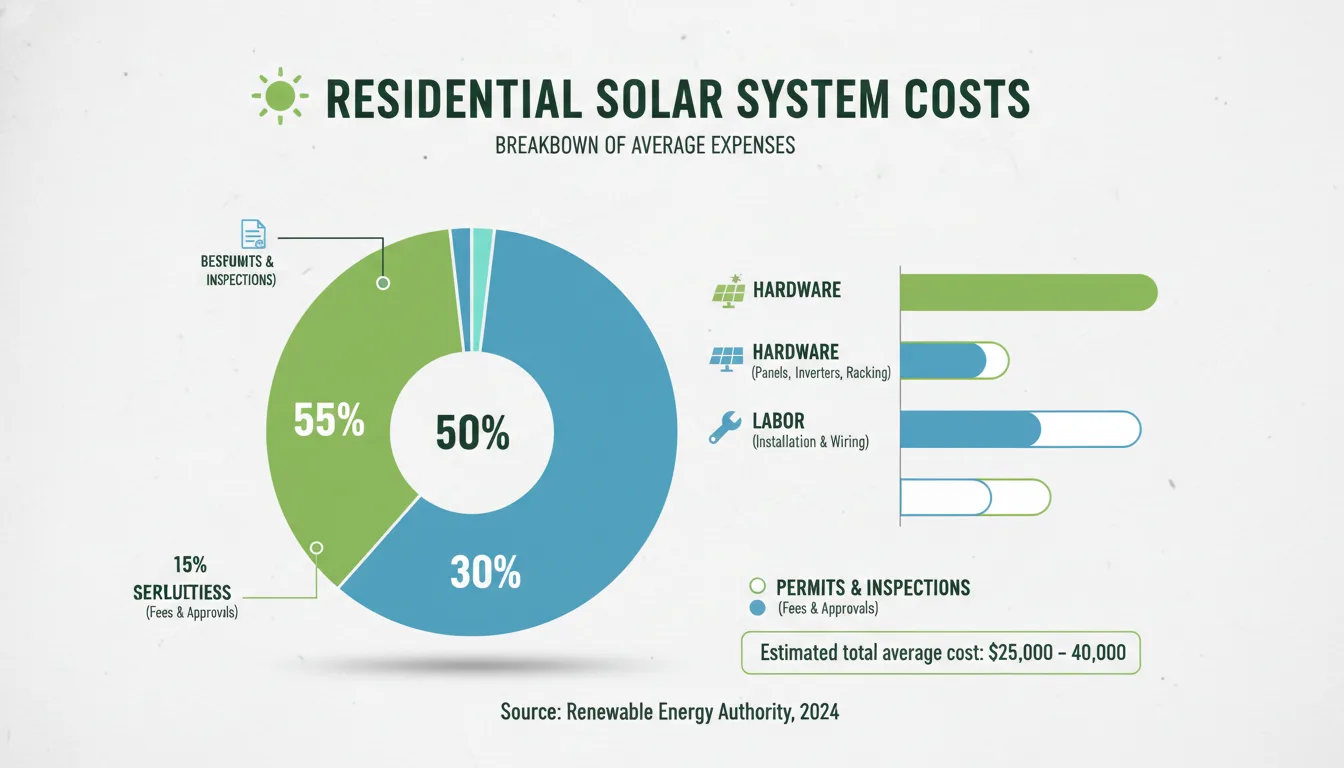
When you receive a quote for your solar array, it is not just the glass panels you are paying for. A fully functioning, grid-tied or off-grid solar system requires a complex symphony of hardware, professional labor, and bureaucratic approvals. Understanding these components is essential to accurately assessing your residential solar panel installation cost 2026. Here is the detailed breakdown of where your money goes.
1. Solar Panels (Hardware)
The photovoltaic (PV) panels themselves typically account for 25% to 30% of the total system cost. In 2026, monocrystalline panels (especially N-type cells) dominate the market due to their high efficiency (averaging 22-24%) and sleek, all-black aesthetics. While polycrystalline panels are cheaper, their lower efficiency means you need more of them, which drives up racking and labor costs. Premium brands like Maxeon, REC, and Qcells command a higher price upfront but offer superior 25-year degradation warranties.
2. Inverters and Balance of System (BOS)
Your panels generate Direct Current (DC) electricity, but your home runs on Alternating Current (AC). The inverter is the heart of your system, responsible for this conversion, and makes up about 10% to 15% of your costs. You generally choose between a central string inverter (cheapest, but vulnerable to shading) or microinverters/power optimizers (more expensive, but they maximize output for every individual panel). The Balance of System (BOS) includes all the necessary wiring, conduit, disconnect switches, and mounting hardware (racking) that secures the panels safely to your roof.
3. Professional Labor and Installation
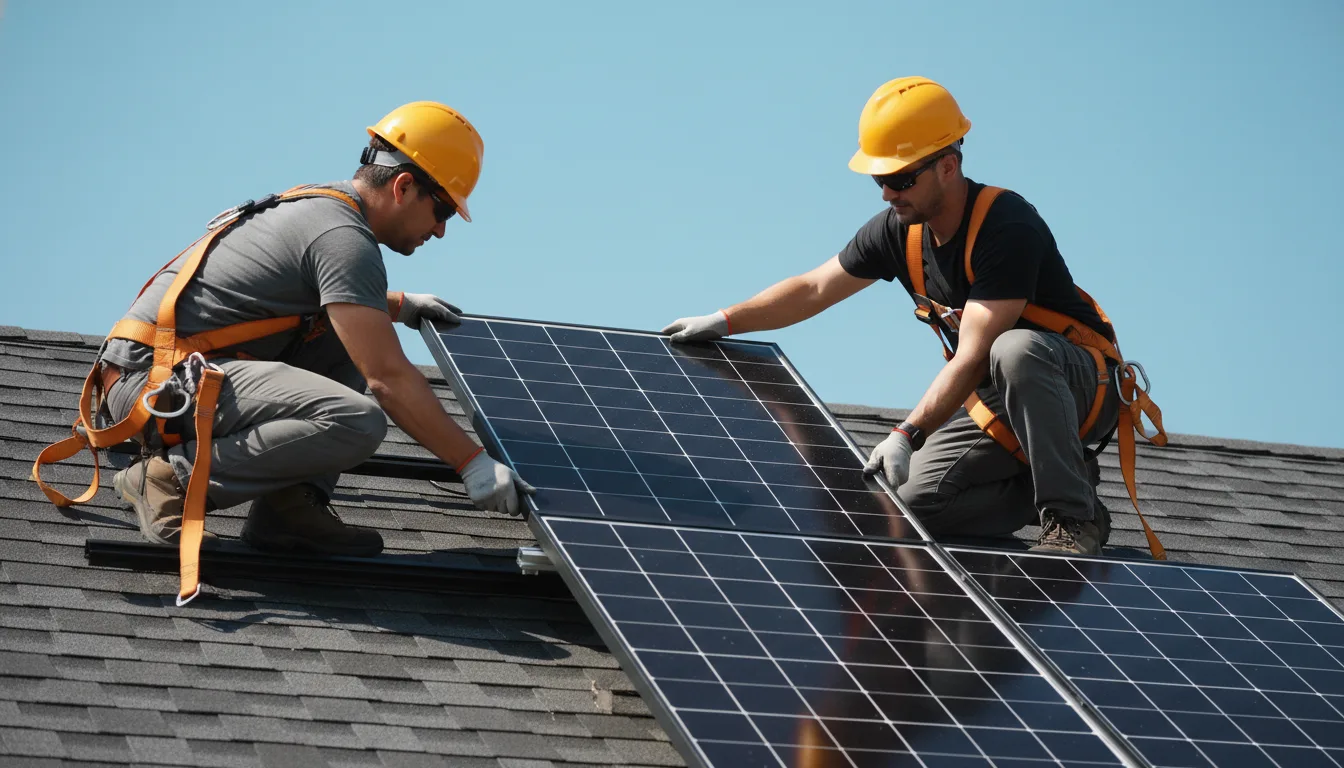
Labor is one of the largest variables, consuming roughly 15% to 20% of your budget. Installing solar is not a simple handyman job; it requires certified solar technicians, licensed electricians, and roofers to ensure your system is structurally sound, electrically safe, and completely watertight. Because of ongoing skilled labor shortages in 2026, regions with a high cost of living see significantly higher installation fees. If you are handy and considering mitigating these costs, you might explore DIY Solar Panel Installation, though professional installation is highly recommended for grid-tied systems.
4. Permitting, Interconnection, and Operational Costs
Before a single panel is mounted, your installer must navigate a maze of red tape. This includes local building permits, electrical permits, and the interconnection agreement with your local utility company. These soft costs, which also include the installer’s marketing and overhead margins, account for the remaining 35% to 40% of the total residential solar panel installation cost 2026. Delays in permitting can sometimes increase costs, though many states are actively adopting automated permitting platforms like SolarAPP+ to streamline this process.
Cost by System Size: Finding Your Perfect Fit
The size of your solar energy system is measured in kilowatts (kW) and dictates the vast majority of your overall pricing. The average US household consumes about 10,500 kilowatt-hours (kWh) per year, which typically requires a 7kW to 9kW system to offset completely. However, your specific needs will depend on your home’s square footage, your local climate, and your usage habits. If you use intensive Smart Home Energy Systems or charge an electric vehicle (EV), you will need a larger system. Below is a detailed breakdown of average costs by system size, assuming a national average of $2.85 per watt.
| System Size (kW) | Home Size / Energy Usage | Gross Cost (Before Tax Credit) | Net Cost (After 30% ITC) |
|---|---|---|---|
| 5 kW | Small Home (1,000 – 1,500 sq ft) | $14,250 | $9,975 |
| 7 kW | Medium Home (1,500 – 2,200 sq ft) | $19,950 | $13,965 |
| 10 kW | Large Home (2,200 – 3,000 sq ft) | $28,500 | $19,950 |
| 12 kW | Extra Large / EV Owners (3,000+ sq ft) | $34,200 | $23,940 |
How Location Impacts Your Residential Solar Panel Installation Cost 2026
Geography plays a massive role in solar pricing. The residential solar panel installation cost 2026 fluctuates wildly across the US and Canada due to state-specific labor rates, varying permit fees, regional competition among installers, and varying local incentives. Below is a look at what an average 8kW system costs across key markets.
| State / Province | Average Cost per Watt | Gross Cost for 8kW System | Market Characteristics |
|---|---|---|---|
| California (CA) | $2.95 | $23,600 | High labor costs, but massive competition keeps hardware pricing tight. |
| Texas (TX) | $2.65 | $21,200 | Lower labor and regulatory costs; excellent year-round sun exposure. |
| New York (NY) | $3.10 | $24,800 | Strict permitting, higher labor rates, but offset by generous state rebates. |
| Florida (FL) | $2.55 | $20,400 | Hurricane-rated mounting requirements add hardware cost, but highly competitive. |
| British Columbia (BC) | $2.70 CAD | $21,600 CAD | Growing market, strong provincial focus on green transition. |
| Ontario (ON) | $2.60 CAD | $20,800 CAD | Mature installer network ensuring competitive pricing in the Toronto metro. |
What Affects Your Final Price? The Hidden Variables
Beyond size and location, several granular factors can swing your final quote by thousands of dollars. Understanding these variables ensures you are fully prepared when negotiating with local installers.
Roof Type and Complexity
Your roof is the foundation of your solar array. Standard asphalt shingles are the easiest and cheapest to work with. If you have a metal roof (standing seam), installers can attach panels without penetrating the roof, which is excellent but requires specialized mounting hardware. Conversely, Spanish tile, slate, or very steep multi-pitch roofs drastically increase labor time and risk, driving up the installation cost. Sometimes, older roofs need replacing before solar can be added, which is an ideal time to consider broader Eco-Friendly Home Renovations.
Shading and Direction
Solar panels are most efficient on south-facing roofs with zero obstruction. If your roof is heavily shaded by ancient oaks or neighboring buildings, your installer will likely recommend microinverters or power optimizers. While these prevent a shaded panel from dragging down the entire system’s output, they add roughly $1,000 to $2,500 to the overall residential solar panel installation cost 2026.
Equipment Quality and Installer Margins
Just like cars, solar panels come in budget, mid-range, and luxury tiers. A system built with standard tier-1 panels will cost less than a system utilizing ultra-premium panels boasting 24% efficiency and 40-year warranties. Furthermore, big national installation companies often have higher overhead and marketing costs built into their pricing compared to local, family-owned electrical businesses.
Always get at least 3 to 4 quotes from a mix of national and local installers. Data shows that prices can vary by as much as 25% between installers for the exact same equipment. Do not let aggressive sales tactics push you into a single-quote contract.
Federal & State Incentives in 2026: Slashing Your Costs
The sticker shock of solar is significantly mitigated by aggressive government incentives designed to accelerate the green energy transition. The most critical program in the US is the Federal Solar Investment Tax Credit (ITC), which allows you to deduct 30% of your total system cost from your federal taxes. This credit remains locked at 30% through 2032 due to the Inflation Reduction Act. This means a $20,000 system actually costs $14,000.
Beyond federal help, local incentives can further reduce your residential solar panel installation cost 2026. For example, New York offers a state tax credit covering an additional 25% of the cost (capped at $5,000). Many states also participate in Solar Renewable Energy Certificate (SREC) markets, where you actually earn cash for the clean energy you produce. In Canada, federal and provincial grants (such as the Canada Greener Homes initiatives) offer thousands of dollars in upfront rebates or interest-free loans, making adoption highly favorable. For a broader look at whether the investment makes sense across all variables, check out our guide on Residential Solar Power: Is It Worth It?.
Advantages and Disadvantages of Going Solar in 2026
While the financial and environmental benefits are immense, solar is a major construction project and long-term commitment. It is important to weigh the pros and cons honestly.
Advantages
- Drastic Bill Reduction: Many homeowners eliminate their electrical bill entirely, saving tens of thousands of dollars over 25 years.
- Increased Property Value: According to Zillow and the National Renewable Energy Laboratory (NREL), homes with solar sell for an average of 4.1% more.
- Energy Independence: Shield yourself from the volatile, ever-increasing utility rates sweeping the nation.
- Carbon Footprint Reduction: A standard home solar system offsets roughly 3 to 4 tons of carbon emissions annually.
Disadvantages
- High Initial Capital: Even with financing, the upfront commitment is substantial and can tie up credit.
- Weather Dependent: Generation drops during prolonged cloudy spells or snowy winters, though net metering offsets this by crediting summer overproduction.
- Roof Compatibility Issues: If your roof is old, highly shaded, or structurally complex, installation costs soar or become entirely unviable.
Solar Financing Options: How to Pay for Your System
How you choose to finance your system directly impacts your lifetime savings and your effective residential solar panel installation cost 2026. Here is a breakdown of the four main avenues homeowners use to go green.
| Financing Method | Who Owns the System? | Do You Get the Tax Credit? | Best For… |
|---|---|---|---|
| Cash Purchase | You | Yes | Maximum long-term ROI and immediate ownership without interest fees. |
| Solar Loan | You | Yes | Homeowners who want ownership and tax credits but lack liquid upfront cash. (Beware of high dealer fees). |
| Solar Lease | Installer | No | Fixed monthly payment for the equipment, ideal for those without tax liability. Lower long-term savings. |
| Power Purchase Agreement (PPA) | Installer | No | You only pay for the power the panels generate at a locked-in rate lower than the utility. No maintenance worries. |
Frequently Asked Questions
Is solar worth it in 2026?
Yes, absolutely. Utility rates are rising faster than inflation. Securing your energy costs by installing a residential solar system acts as a hedge against future utility hikes, making the investment incredibly sound for anyone planning to stay in their home for more than 5 years.
How long does it take to break even?
The average payback period across North America is between 7 and 9 years. If you live in a state with extremely high utility costs (like California or Massachusetts) and strong state-level incentives, your payback period could be as short as 4 to 5 years. After that point, your electricity is essentially free for the remaining 15-20 years of the system’s lifespan.
What does “Cost Per Watt” mean?
Cost per watt is the metric used to compare the value of different solar quotes, much like “price per square foot” in real estate. You calculate it by dividing the total system cost by the total wattage of the system. In 2026, a healthy, fair price per watt is between $2.60 and $3.10 depending on your location and equipment tier.
Do I still have electricity during a grid outage?
Standard grid-tied solar systems automatically shut down during a grid outage for safety reasons (to protect utility workers repairing the lines). If you want backup power, you must add a solar battery storage system (like a Tesla Powerwall or Enphase IQ Battery), which will increase your total residential solar panel installation cost 2026 by $10,000 to $15,000.
Conclusion
Navigating the complex waters of renewable energy can feel overwhelming, but understanding the true residential solar panel installation cost 2026 puts the power back in your hands. By grasping the breakdown of hardware, labor, and soft costs, and utilizing available federal and state incentives, you can protect yourself from predatory pricing and lock in decades of sustainable savings. Always remember to collect multiple quotes, scrutinize your financing options, and evaluate your roof’s unique needs. Ready to see exactly how much you can save and what your personal payback period looks like?