
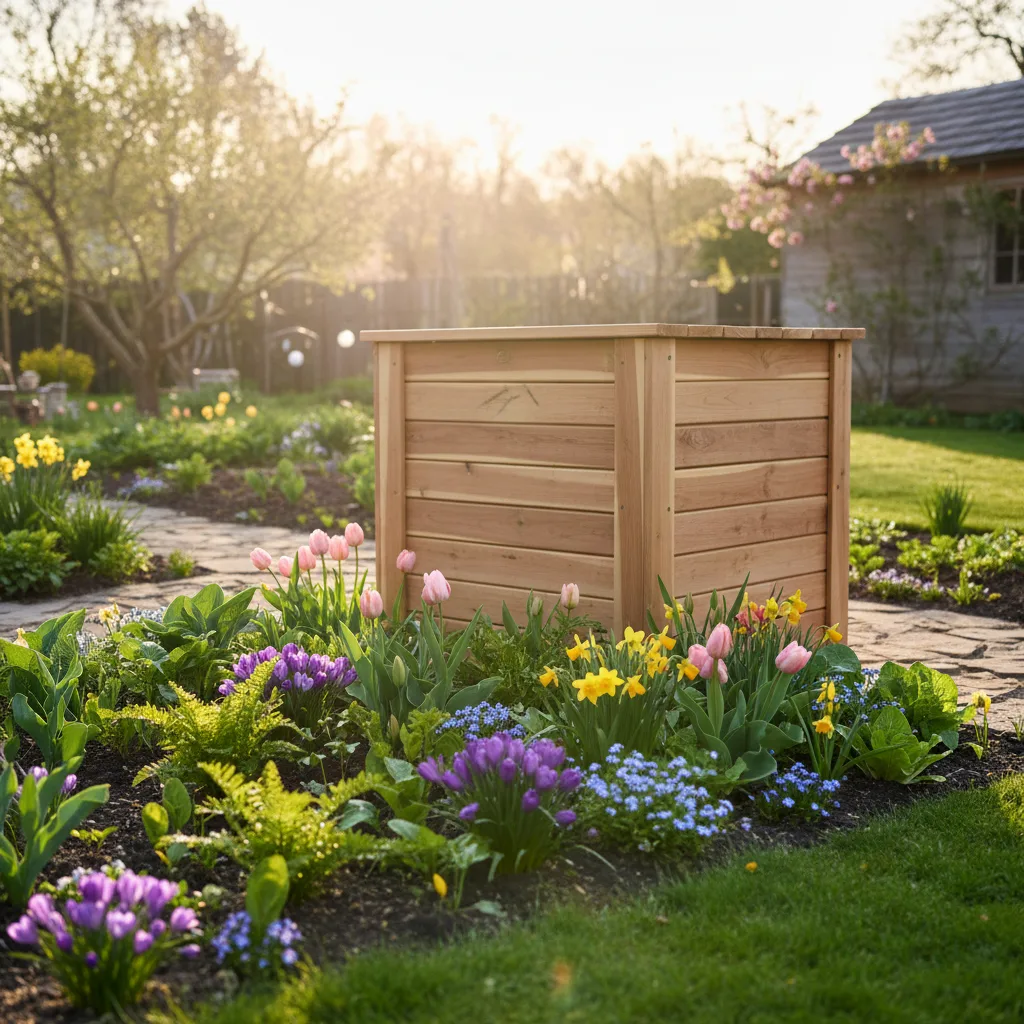
I clearly remember the morning in early March when I looked at my overflowing trash can and realized nearly half of it was vegetable peels and coffee grounds. It felt like a wasted opportunity for my garden. Consequently, I decided to master the 5 Easy Steps to Start Home Composting This Spring to transform my waste into what gardeners call “black gold.” In 2026, with rising fertilizer costs and a greater focus on soil health, there has never been a better time to reclaim your organic waste. This guide is built from my personal trials, errors, and eventual success in building a thriving ecosystem right in my backyard.
Table of Contents
- ●Step 1: Select Your Composting Method
- ●Step 2: Find the Perfect Location
- ●Why Drainage is Non-Negotiable
- ●Step 3: Master the Greens and Browns Ratio
- ●Common Greens vs. Browns
- ●Step 4: Maintenance – Air and Water
- ●Troubleshooting Common Issues
- ●Step 5: Harvesting Your Black Gold
- ●How to Use Your Finished Compost
- ●Advantages and Disadvantages of Home Composting
- ●Advantages
- ●Disadvantages
- ●Frequently Asked Questions
- ●Can I compost in the winter?
- ●Why does my compost smell like vinegar?
- ●How long does it take for compost to be ready?
- ●Conclusion
Key Takeaways for Spring 2026
- Choose the Right System: Match your bin to your space, whether you have a massive yard or a tiny balcony.
- Master the Ratio: Balance “Greens” (nitrogen) and “Browns” (carbon) for a smell-free experience.
- Moisture is Vital: Keep your pile as damp as a wrung-out sponge to keep microbes active.
- Aeration Matters: Turn your pile regularly to speed up the decomposition process.
Step 1: Select Your Composting Method
Before you toss a single banana peel outside, you must decide which vessel will house your decomposition factory. Specifically, your choice depends on your available space and how much effort you want to exert. For my first setup, I chose a simple plastic tumbler because I lived in a neighborhood with strict aesthetic rules. However, if you have more space, a three-bin wooden system might be more efficient for high-volume waste.
The EPA suggests that choosing the right bin is the foundation of preventing pests. If you are dealing with limited space, consider vermicomposting—using worms to break down scraps indoors. Alternatively, a traditional backyard pile is the most cost-effective way to implement the 5 Easy Steps to Start Home Composting This Spring. Below is a comparison of common systems used in 2026.
[IMAGE_PLACE_HOLDER_1]| Bin Type | Best For | Maintenance Level |
|---|---|---|
| Stationary Bin | Large backyards | Moderate (Turning required) |
| Tumbling Bin | Small spaces / Speed | Low (Easy to turn) |
| Worm Farm | Apartments / Indoor | High (Requires care) |
Step 2: Find the Perfect Location
Location is everything when you start your journey with the 5 Easy Steps to Start Home Composting This Spring. You want a spot that is convenient enough for you to visit daily but far enough from your back door to avoid any temporary odors. Ideally, place your bin on level, well-drained soil. This allows beneficial organisms, like earthworms and microbes, to migrate from the ground into your pile.
Furthermore, accessibility during the wet spring months is crucial. If the path to your compost pile becomes a mud pit, you will likely stop using it. I learned this the hard way during a particularly rainy April. Therefore, consider placing stepping stones or a gravel path leading to your bin. According to the Cornell Waste Management Institute, a partially shaded area helps keep the pile from drying out too quickly in the summer heat.
Why Drainage is Non-Negotiable
If your compost sits in a puddle, it will become anaerobic. This leads to a foul, rotten-egg smell that will quickly annoy your neighbors. Instead, ensure the base of your pile allows excess water to seep away. You can even start your pile with a layer of small branches or straw to improve airflow from the bottom up.
Step 3: Master the Greens and Browns Ratio
Successful composting is essentially a chemistry experiment. You need to balance nitrogen-rich “Greens” with carbon-rich “Browns.” A common mistake beginners make when following the 5 Easy Steps to Start Home Composting This Spring is adding too many kitchen scraps without enough dry material. This creates a slimy, smelly mess.
Generally, you should aim for a ratio of 3 parts Brown to 1 part Green by volume. Browns provide the energy for microbes, while Greens provide the protein for growth. NRDC research emphasizes that this balance is key to achieving high temperatures that kill weed seeds. Below is a quick reference for your 2026 spring garden setup.
[IMAGE_PLACE_HOLDER_2]Common Greens vs. Browns
- Greens (Nitrogen): Vegetable scraps, fruit peels, coffee grounds, fresh grass clippings, and nitrogen-fixing plant residues.
- Browns (Carbon): Dried leaves, cardboard, straw, sawdust, and shredded newspaper.
Avoid adding meat, dairy, or oily foods, as these attract rodents and slow down the process. Additionally, never add pet waste or diseased plants to a standard home pile, as the temperatures usually don’t get high enough to kill pathogens safely. For more specialized advice, see the USDA’s People’s Garden composting guide.
Step 4: Maintenance – Air and Water
Once your pile is built, it requires ongoing care. Think of your compost pile as a living organism. It needs to breathe and stay hydrated. Specifically, you must turn the pile every 1-2 weeks. This introduces oxygen, which aerobic bacteria need to break down organic matter efficiently. Without oxygen, the process slows significantly and begins to smell.
Moreover, monitoring moisture levels is essential. If the pile is too dry, decomposition stops. If it is too wet, it becomes a swamp. Ideally, your compost should feel like a damp sponge. In 2026, many gardeners use simple compost thermometers to check the “core” temperature. A healthy, active pile should reach between 130°F and 160°F. Expert resources like Penn State Extension recommend regular turning to maintain these peak temperatures.
Troubleshooting Common Issues
If your pile isn’t heating up, it likely needs more Greens or more water. Conversely, if it smells like ammonia, you have too many Greens and need to mix in more dry Browns like shredded cardboard. Always keep a bag of dry leaves or straw next to your bin so you can easily adjust the mix. This is a fundamental part of the 5 Easy Steps to Start Home Composting This Spring.
Step 5: Harvesting Your Black Gold
The final and most rewarding phase of the 5 Easy Steps to Start Home Composting This Spring is the harvest. Depending on the weather and how often you turn it, your compost should be ready in 3 to 6 months. You will know it is finished when it looks like dark, crumbly soil and has a pleasant, earthy scent. There should be no recognizable scraps of food left in the mix.
Before using it, I recommend screening your compost through a simple hardware cloth frame. This removes any large chunks or sticks that haven’t fully decomposed yet. You can then return those unfinished pieces to your new pile to act as an “activator.” According to studies published in Nature, high-quality compost significantly improves soil water retention and carbon sequestration.
[IMAGE_PLACE_HOLDER_3]How to Use Your Finished Compost
- Garden Beds: Mix 2-3 inches into the top layer of soil before planting.
- Potting Mix: Blend equal parts compost, peat moss (or coconut coir), and perlite.
- Lawn Top-Dressing: Spread a thin layer over your lawn to boost nutrients naturally.
- Compost Tea: Steep finished compost in water to create a liquid fertilizer for indoor plants.
For the best results, consult our ultimate 2026 planting calendar to time your compost application perfectly with your spring sowings.
Advantages and Disadvantages of Home Composting
While the benefits are immense, it is important to be realistic about the challenges. Composting is a commitment to a biological process. Here is a breakdown of what to expect as you implement the 5 Easy Steps to Start Home Composting This Spring.
Advantages
- Reduced Waste: Diverts up to 30% of household waste from landfills, reducing methane emissions.
- Cost Savings: Eliminates the need for expensive chemical fertilizers and store-bought soil.
- Soil Health: Introduces beneficial microbes and improves soil structure.
- Water Conservation: Compost-rich soil holds more moisture, reducing the need for frequent watering.
Disadvantages
- Initial Effort: Setting up the bin and establishing the right ratio takes time.
- Pest Attraction: If not managed correctly, piles can attract rodents or insects.
- Weather Dependence: Decomposition slows down significantly in freezing temperatures.
Frequently Asked Questions
Can I compost in the winter?
Yes, but the process slows down. Microbes become dormant in freezing temperatures. You should continue adding material, but don’t expect it to turn into soil until the spring thaw. Insulating your bin with straw can help keep the process moving slowly through the colder months.
Why does my compost smell like vinegar?
A sour or vinegary smell usually means the pile is too wet and lacks oxygen. To fix this, turn the pile thoroughly and add plenty of dry Browns, such as shredded newspaper or dry leaves. This will balance the moisture and reintroduce air to the microbes.
How long does it take for compost to be ready?
Under ideal conditions with regular turning, you can have finished compost in as little as 2-3 months. However, for most home gardeners, a timeframe of 6 to 9 months is more typical. Using a tumbler or adding a compost starter can speed up the results significantly.
Conclusion
Starting your composting journey is one of the most impactful things you can do for the planet in 2026. By following these 5 Easy Steps to Start Home Composting This Spring, you aren’t just getting rid of trash; you are creating a closed-loop system that feeds your garden and heals the earth. It takes a little patience and a bit of trial and error, but the first time you run that rich, dark soil through your fingers, you’ll realize it was worth every bit of effort. Ready to dive deeper into sustainable gardening? Check out our other resources to maximize your impact this year.

Written by Mangaleswaran
Mangaleswaran is a dedicated sustainable living expert and the founder of EcoDweller. With a deep passion for renewable energy, he specializes in simplifying complex green technologies—like solar power and home efficiency—for the modern homeowner. His mission is to empower individuals to reduce their environmental impact while building more cost-effective, eco-friendly homes for the future.
Follow on Facebook