
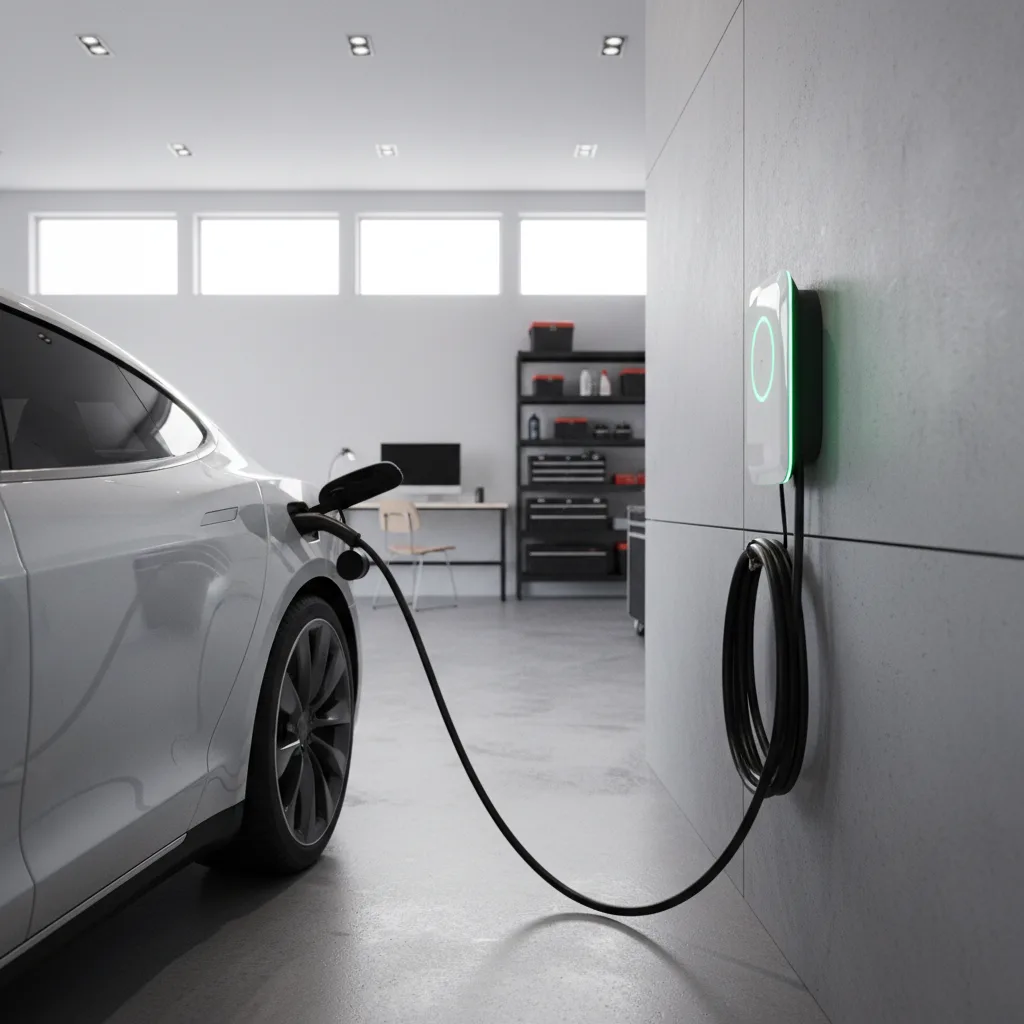
You bought the electric car. Now you’re staring at a standard 120-volt wall outlet, doing the math on a brutal 40-hour charge time. You probably need an upgrade.
Table of Contents
- ●What drives the level 2 EV charger installation cost?
- ●The cost of the hardware itself
- ●Labor and electrical work
- ●Why your electrical panel dictates the final bill
- ●The full panel upgrade
- ●The load management hack
- ●Hardwired vs. plug-in chargers
- ●The NEMA 14-50 outlet route
- ●The hardwired approach
- ●Interactive EV charger cost estimator
- ●Permits, inspections, and hidden fees
- ●More on electrifying your home
- ●Can you offset the bill with tax credits?
- ●The Alternative Fuel Vehicle Refueling Property Credit
- ●Utility rebates
- ●Is a Level 2 charger worth the investment?
- ●The resale value bump
- ●Getting the right quote
Before you call an electrician, you need to understand the actual level 2 EV charger installation cost. The internet throws wild numbers around. Some forums claim you can do it for $500. Others warn you about a massive $5,000 panel rebuild.
Your final bill will likely land between $1,000 and $3,000. I want to strip back the confusion. Here are the exact numbers you’ll probably see on an invoice this year.
- Hardware runs $400 to $800 depending on the brand and Wi-Fi features.
- Labor, wire, and permits add another $600 to $1,500 for a standard garage setup.
- If your home requires a full 200-amp electrical panel upgrade, expect an extra $2,000 to $3,000.
- Federal tax credits can cover up to 30% of your total hardware and installation expenses.
What drives the level 2 EV charger installation cost?
Pricing an EV charging station relies on the physical distance between your breaker box and your parking spot. Every foot of thick copper wire adds real dollars to the quote.
The cost of the hardware itself
Walk into any hardware store or browse online, and you’ll see units priced from $400 to well over $1,200. You’re mostly paying for the badge and the Wi-Fi connectivity.
A Tesla Wall Connector currently costs about $475. It natively handles the NACS charging port. If you own a non-Tesla, you can just use their Universal Wall Connector version.
Companies like ChargePoint and Enphase build durable alternatives. The ChargePoint Home Flex runs closer to $550. Consumer Reports testing regularly ranks these units high for their simple smartphone apps and thick, cold-weather cables.
Cheap chargers flood online marketplaces for $200. I’d highly recommend avoiding them. You’re running 40 amps of electricity continuously through these devices for 8 hours a night. A cheap plastic casing and uncertified internal relays pose a literal fire hazard. Stick to UL-listed equipment backed by recognized NEMA standards.
Labor and electrical work
Electricians charge for time and materials. A standard installation involves running conduit and wiring a new dedicated 240-volt circuit into your main panel.
Copper wire costs fluctuate daily. An electrician running a 50-amp circuit usually pulls 6-gauge THHN copper wire. That specific wire costs roughly $2 to $3 per foot.
If your electrical panel sits directly on the other side of your garage wall, you’ll probably get the minimum labor charge of maybe $600. But if the electrician has to crawl through a finished basement to reach the garage, the labor scales up fast.
Why your electrical panel dictates the final bill
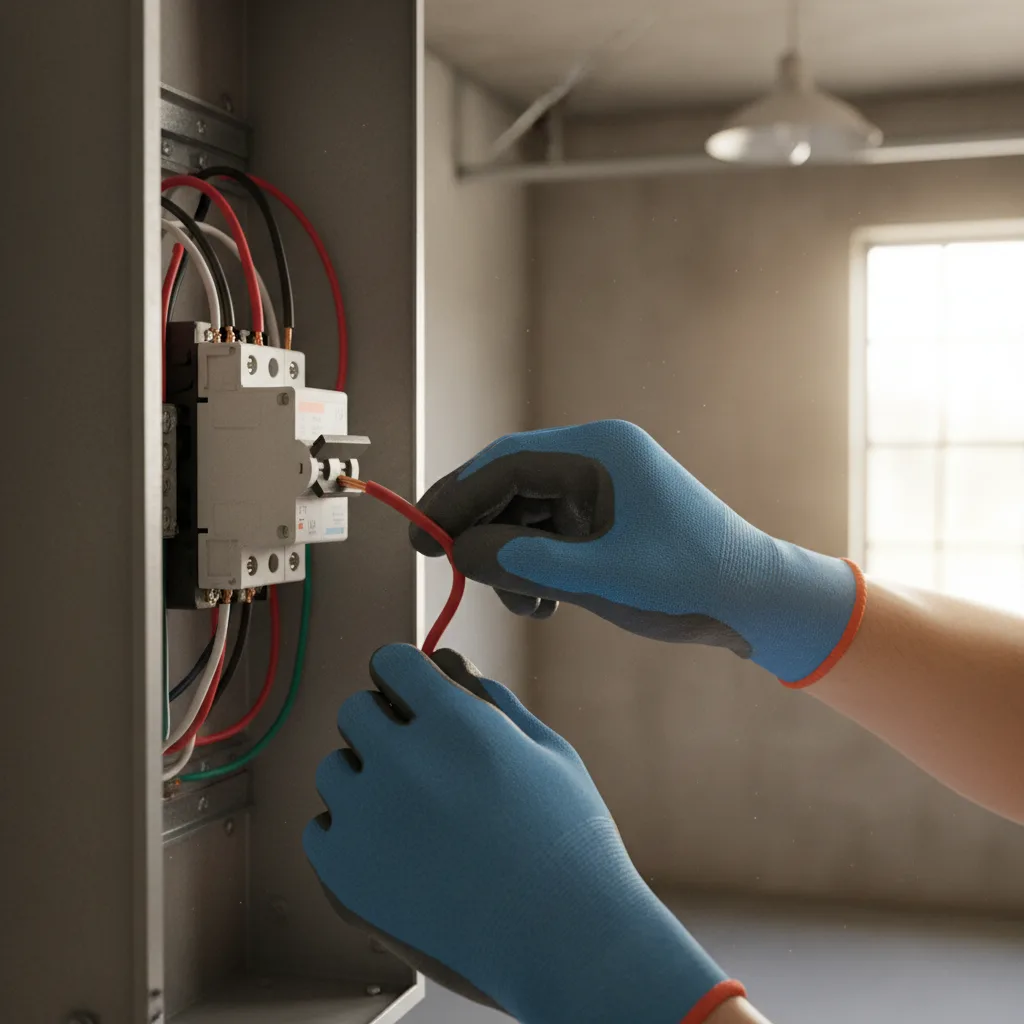
Older homes run on 100-amp electrical services. That was plenty of juice for a house built in 1980. Add an induction stove and an EV pulling 40 amps for 6 hours straight. The main breaker trips.
The full panel upgrade
You might need a heavy-up to a 200-amp panel. This physically involves pulling new service lines from the street and replacing the metal box in your basement. It bolts an extra $2,000 to $3,000 onto the project.
If you suspect your electrical capacity is maxed out, check out my guide on the smart electrical panel upgrade cost 2026. The math changes once you factor in federal rebates for panel upgrades.
The load management hack
If your house only has a 100-amp service, electricians can install a load management device like a DCC-9 or a SimpleSwitch. These physical boxes splice directly into your main power feed.
They monitor the total amperage your house pulls in real time. If you turn on your electric oven and your air conditioner at once, the load manager temporarily cuts power to the EV charger.
The device itself costs around $600. Bolting it to the wall takes an hour of labor. It saves you from paying $3,000 for a utility service upgrade.
Hardwired vs. plug-in chargers
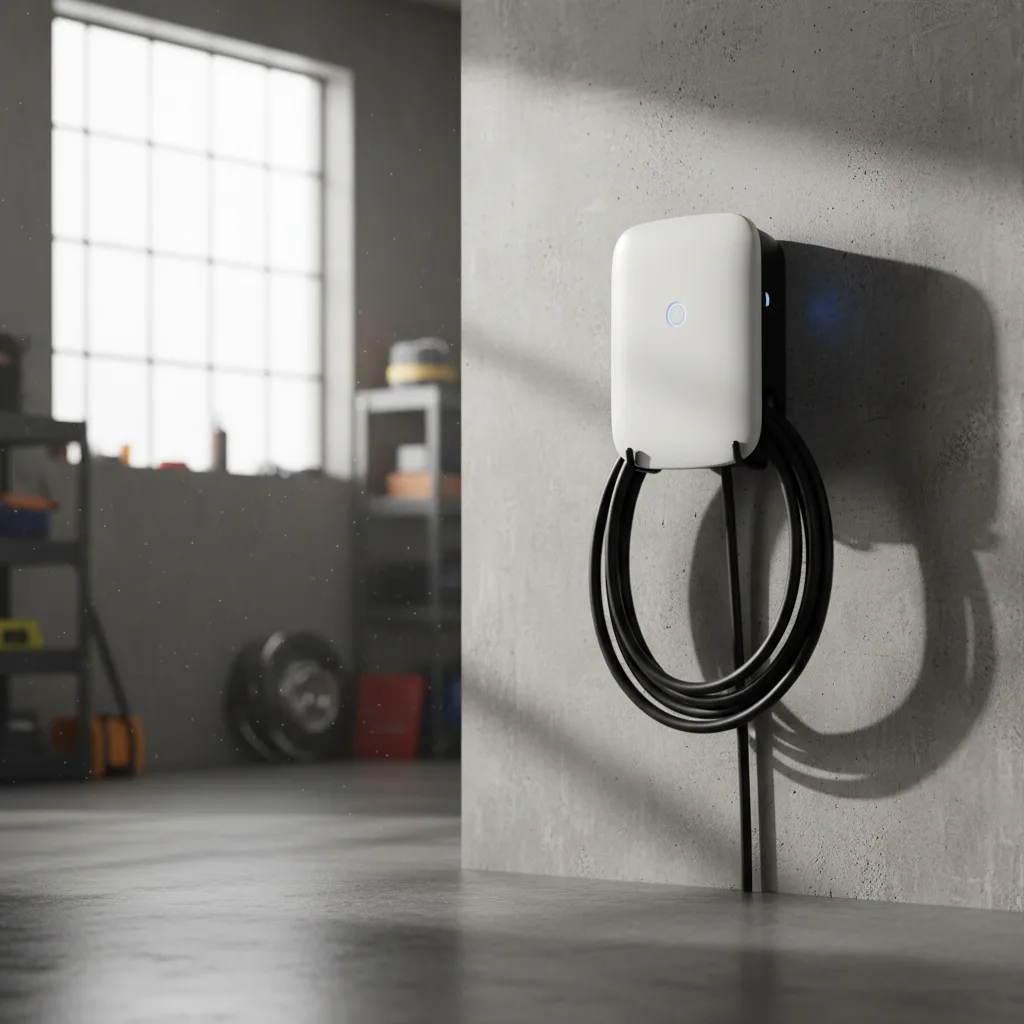
You have 2 physical connection options for a Level 2 unit. You can hardwire the machine directly into your home’s electrical grid. Or you can have a NEMA 14-50 outlet installed and simply plug the charger in.
The NEMA 14-50 outlet route
Installing a 240-volt outlet gives you flexibility. If your charger breaks, you unplug it and swap it out. If you move, you take the unit with you.
You’ll need to buy a specific industrial-grade receptacle, though. Cheap builder-grade outlets melt under the sustained 40-amp load of an EV. Those heavy-duty receptacles run about $50 to $90 for the part alone.
The National Electrical Code also requires a GFCI breaker for 240-volt receptacles in a garage. A 50-amp GFCI breaker costs about $150.
The hardwired approach
If you ask the electrician to hardwire the charger directly, you skip the outlet entirely. The EV charger contains its own internal ground fault protection circuitry.
The electrician just uses a standard $20 double-pole breaker. So hardwiring literally saves you $130 in parts right out of the gate.
Plus, you eliminate a potential point of failure. Outlets degrade. Plugs get loose. Hardwired connections stay permanently bolted down to the terminal lugs inside the charger housing.
Interactive EV charger cost estimator
Select your installation variables below to calculate a rough estimate of your final level 2 EV charger installation cost.
| Component | Low End Estimate | High End Estimate |
|---|---|---|
| Level 2 Hardware | $400 | $800 |
| Electrical Labor (Standard) | $400 | $900 |
| Wiring & Conduit Materials | $100 | $500 |
| City Permit | $50 | $300 |
| Total Baseline Cost | $950 | $2,500 |
Permits, inspections, and hidden fees
Municipalities want to know when you alter your home’s electrical infrastructure. Your electrician must pull a permit before starting work.
Permit fees fluctuate based on your zip code. Some rural counties charge $50. Urban areas might charge $300 or more. The permit guarantees an independent city inspector will review the wiring.
The city inspector checks the torque on the breaker lugs. They verify the wire gauge matches the breaker size. They make sure the conduit is glued tight.
Never skip the permit. If a DIY electrical fire damages your garage, your insurance provider will ask for the inspection paperwork. If you can’t produce it, they deny the claim instantly.
More on electrifying your home
Once you install a charger, you might look at other ways to dial in your home’s energy use. I covered the mechanics of powering your home from your car in the V2H bidirectional charging system cost 2026 breakdown. You can also read my guide on how to electrify your life in 2026.
Can you offset the bill with tax credits?
The initial quote hurts, but you rarely pay the sticker price. Federal and local incentives sand down the final out-of-pocket expense.
The Alternative Fuel Vehicle Refueling Property Credit
The IRS allows you to claim 30% of the total level 2 EV charger installation cost, maxing out at $1,000. This includes the hardware, the wire, the permit, and the labor.
If you tell your accountant you installed a charger, they’ll file IRS Form 8911 for you. The Department of Energy’s Alternative Fuel Data Center tracks exactly who qualifies for this 30C federal tax credit.
The catch involves your zip code. The government now restricts this credit to specific census tracts to encourage infrastructure in non-urban or low-income areas. Check the official federal mapping tool before you count on that refund.
Utility rebates
Your power company tracks the EPA Green Vehicle Guide just like we do. They know thousands of EVs plug into their grid every afternoon.
They want you to charge at 2:00 AM when the neighborhood sleeps. Many utility providers hand out instant rebates if you install a smart charger that connects to their network. They might literally cut you a check for $500.
If you’re searching for your local utility rebates, use this exact search string to bypass the marketing fluff: [Your Utility Name] residential EV charging rebate 2026.
Is a Level 2 charger worth the investment?
Relying on a standard wall plug tests your patience. A Level 1 charger drips 2 or 3 miles of range into your battery per hour.
A Level 2 unit pumps in 20 to 30 miles of range per hour. You plug in at 7:00 PM and wake up to a full battery at 6:00 AM. The convenience changes the ownership experience.
The resale value bump
The Edmunds EV charging guide tracks the growing demand for plug-in ready homes.
Real estate agents actively market “EV-ready” garages in their property listings. Buyers pay a premium to avoid contractor delays after closing. You’re essentially parking your installation money in the equity of your house.
If you also install a solar canopy to power the car, the property value jumps even higher. I broke down those numbers in the residential solar carport installation cost 2026 guide.
Getting the right quote
You need 3 bids.
Call licensed electricians who actually specialize in EV infrastructure. Companies like Qmerit maintain networks of certified installers who do this work every single day.
A generic electrician might drastically overbid the job because they don’t want to deal with the specific load calculations. A specialized EV installer knows exactly what gauge wire to pull and which load management device fits your existing panel.
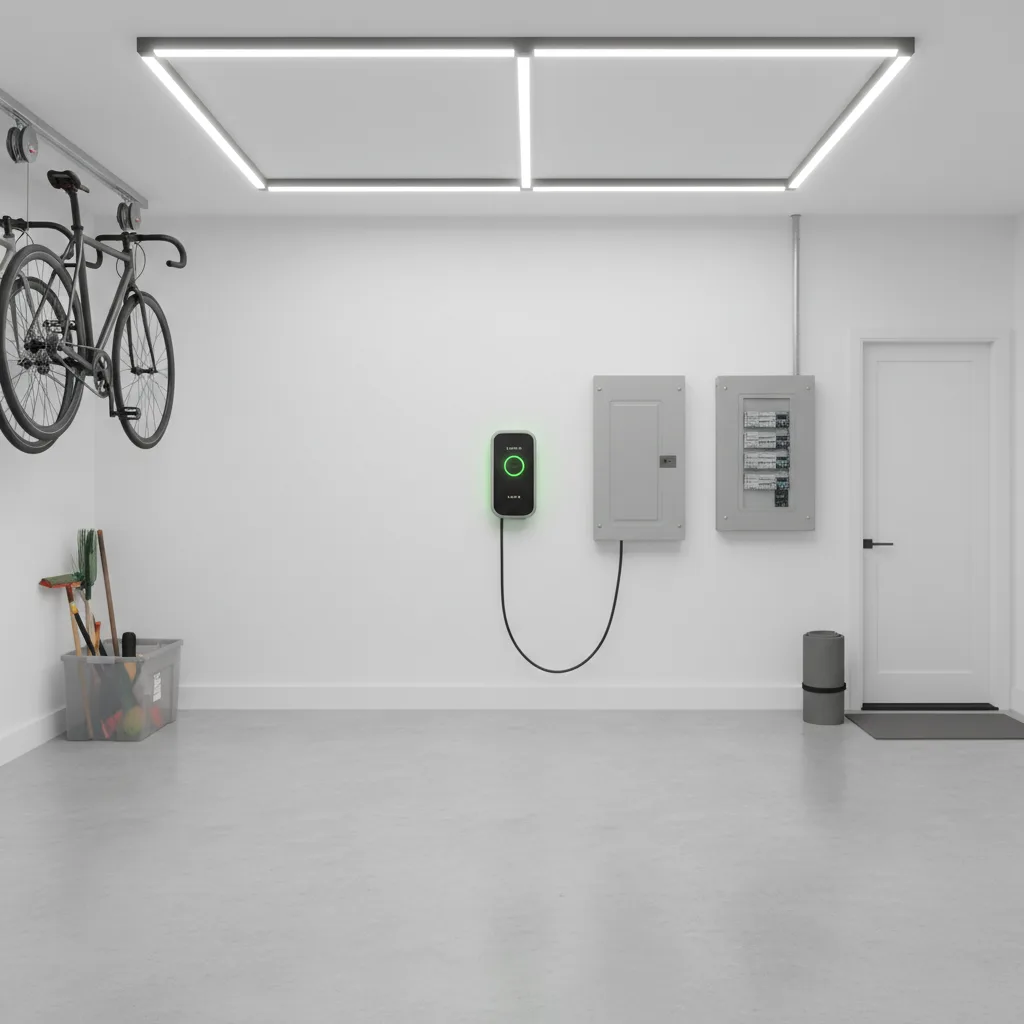
Once the unit powers on and the green light pulses, you have your own refueling station.

Written by Mangaleswaran
Mangaleswaran is a dedicated sustainable living expert and the founder of EcoDweller. With a deep passion for renewable energy, he specializes in simplifying complex green technologies—like solar power and home efficiency—for the modern homeowner. His mission is to empower individuals to reduce their environmental impact while building more cost-effective, eco-friendly homes for the future.
Follow on Facebook