
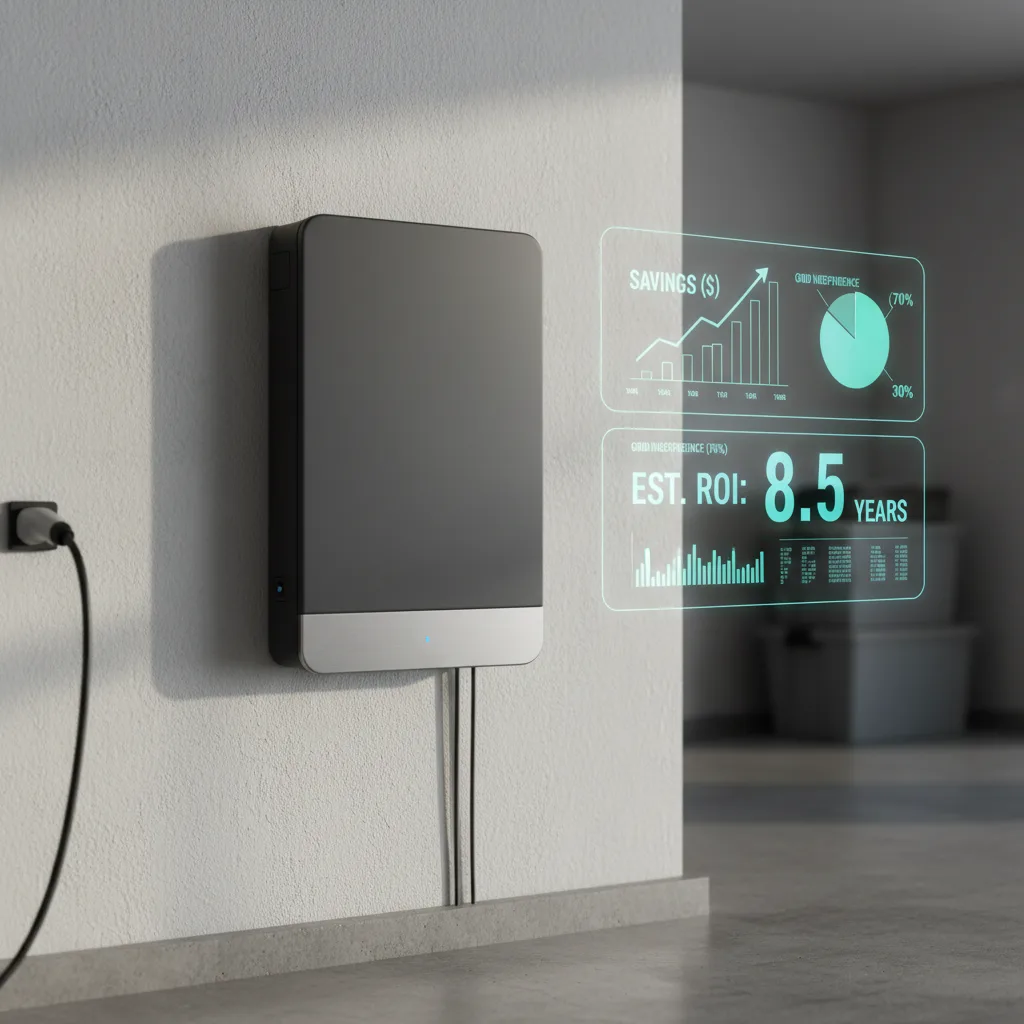
The average home solar battery pays for itself in 8 to 12 years. Apply the 30% federal tax credit, and that window shrinks to 6 to 9 years. Pinning down your exact solar battery storage ROI home calculation requires looking at your specific grid setup. You need to know your electricity rate, your utility’s time-of-use pricing, outage frequency, and your daily peak-rate consumption.
Table of Contents
- ●Key Takeaways
- ●The 4 Variables That Determine Your Solar Battery ROI
- ●ROI by State: Where Solar Batteries Pay Back Fastest in 2026
- ●How to Calculate Your Personal Battery Payback Period (Formula)
- ●Interactive ROI Calculator
- ●Time-of-Use Pricing: The Hidden Multiplier for Battery ROI
- ●Tesla Powerwall 3 vs Enphase IQ Battery: ROI Comparison
- ●When Solar Battery Storage Is NOT Worth It: Honest Scenarios
- ●Frequently Asked Questions
Key Takeaways
- The 30% federal ITC instantly cuts years off your battery payback period.
- Time-of-Use (TOU) rates dictate your daily financial return.
- 1:1 net metering makes battery storage less financially attractive.
- Power outages carry a soft financial cost that heavily impacts ROI for remote areas.
The 4 Variables That Determine Your Solar Battery ROI
Your utility company dictates the math. Electricity rates vary wildly across North America. A homeowner paying $0.45 per kWh in San Diego sees a totally different payback than someone paying $0.11 in Idaho.
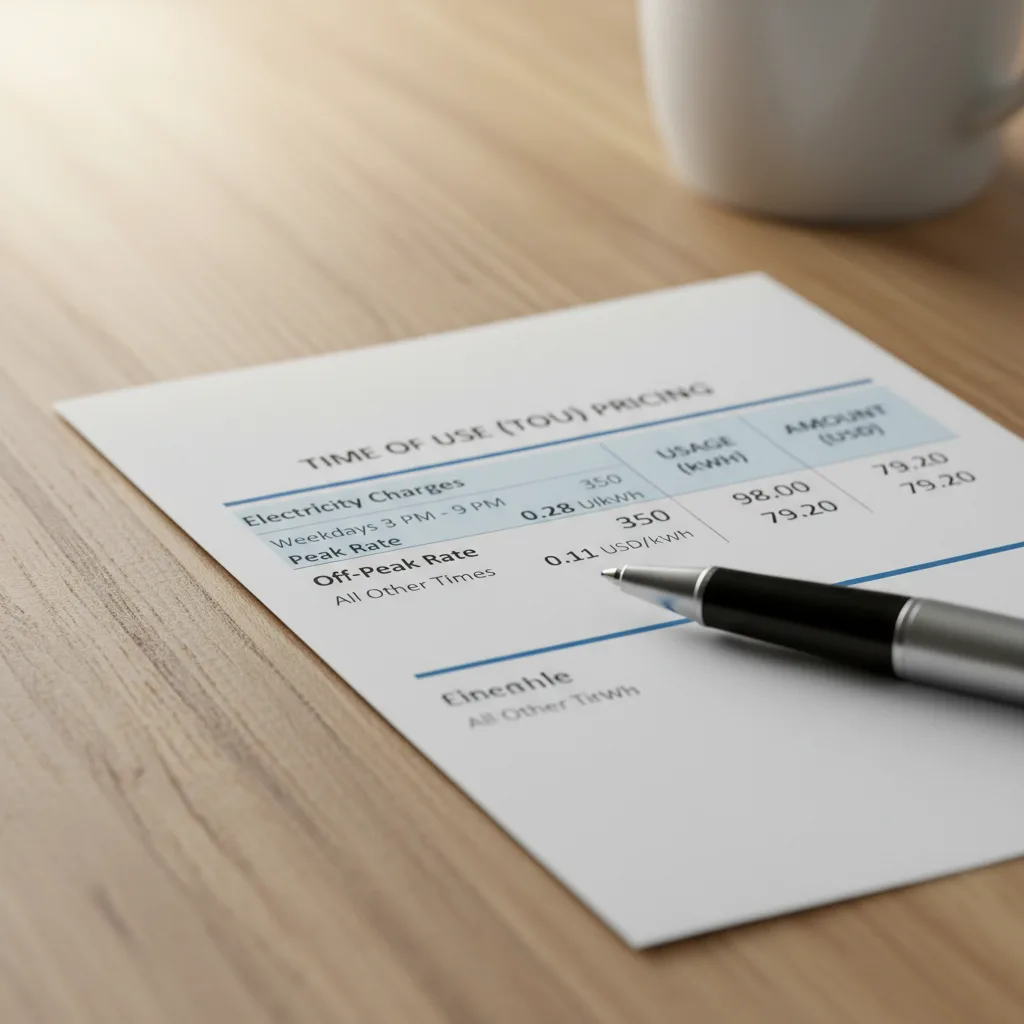
Utility time-of-use (TOU) pricing creates the daily savings mechanism. You charge the battery when power is cheap. You run the house off the battery when power gets expensive.
Outage frequency matters. Spoiled food and hotel stays carry a real price tag. If you lose power six times a year, the battery offsets those specific financial losses.
Your solar array size limits your storage potential. If you are pairing high-efficiency panels with battery storage in the PNW, you need enough daily sunlight to fill the battery while powering the home. Check your local utility rates through the U.S. Energy Information Administration to establish your baseline costs.
ROI by State: Where Solar Batteries Pay Back Fastest in 2026
Certain states practically force you to buy a battery. California’s NEM 3.0 policy slashed the value of exporting solar to the grid by 75%. If you live there, a battery is mandatory to see any real return on solar panels.
Hawaii has the highest electricity rates in the country. Their payback period easily drops below five years.
| State | Avg. Electricity Rate (per kWh) | Estimated Payback (w/ ITC) |
|---|---|---|
| Hawaii | $0.43 | 4.5 – 5.5 Years |
| California | $0.32 | 5.5 – 6.5 Years |
| Massachusetts | $0.28 | 6.5 – 7.5 Years |
| Texas | $0.14 | 8.5 – 10 Years |
If you live north of the border, the math changes based on provincial rebates. Review the battery storage ROI calculation for BC homeowners to see how BC Hydro’s tier system alters the timeline. You can also view state-level incentive maps at the DSIRE database.
How to Calculate Your Personal Battery Payback Period (Formula)
The formula relies on your net cost divided by your annual savings. Determine your net cost by taking the total installation price and subtracting the 30% federal tax credit.
Calculate your annual savings by multiplying your daily shifted kWh by the rate difference between peak and off-peak hours, then multiplying by 365. Add any estimated avoided outage costs. Divide the net cost by those annual savings.
Interactive ROI Calculator
Time-of-Use Pricing: The Hidden Multiplier for Battery ROI
Flat-rate electricity turns a battery into a pure backup power appliance. TOU pricing makes it a daily financial asset. Between 4 PM and 9 PM, grids experience peak demand. Utilities charge a steep premium during these hours.
You can read the specific rate design guidelines published by the California Public Utilities Commission to see how aggressive these spikes get. A solar battery dumps stored power into your home exactly when the utility tries to charge you the most. You avoid peak pricing entirely.
Smart panels automate this behavior. Systems like the SPAN panel physically reroute energy based on grid pricing. Check out SPAN’s technical specs to see how circuit-level control extends battery life.

Tesla Powerwall 3 vs Enphase IQ Battery: ROI Comparison
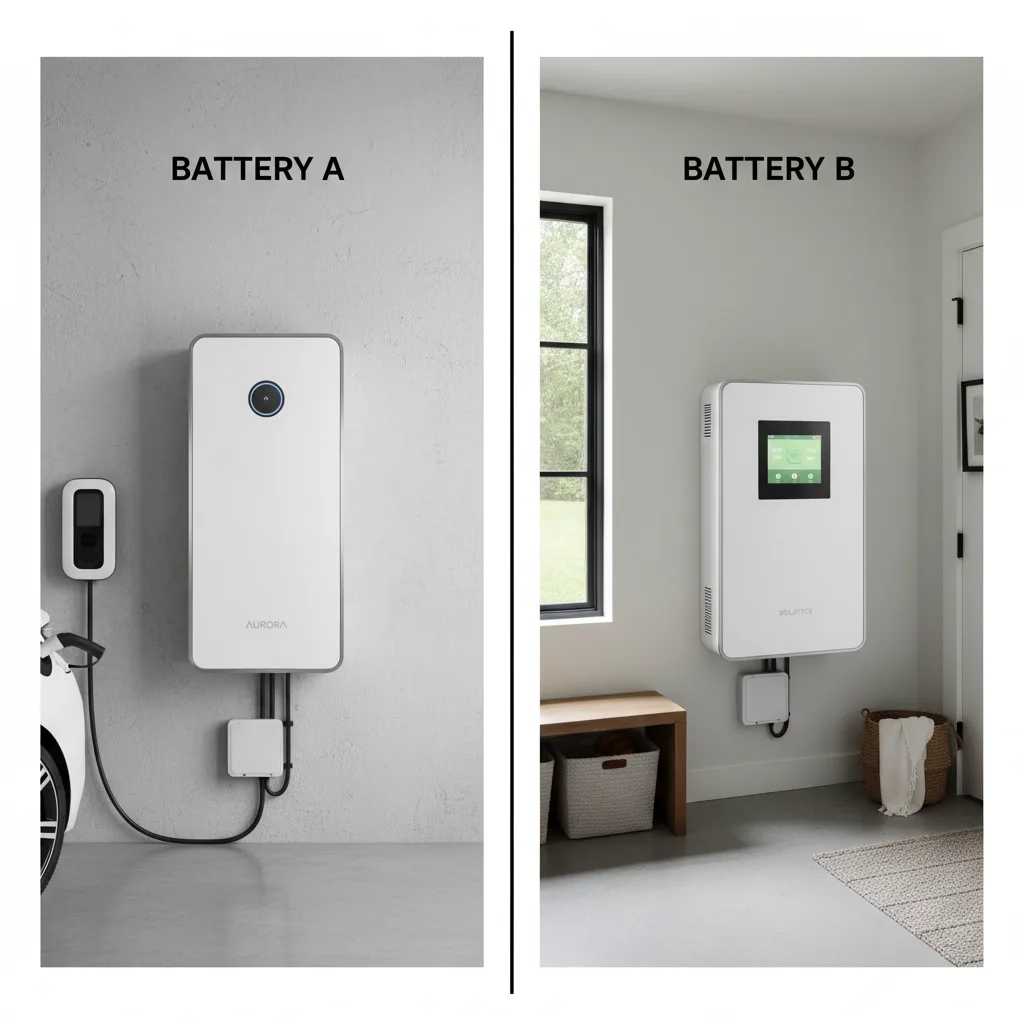
Two brands dominate the US market. The Tesla Powerwall 3 offers a massive 13.5 kWh capacity with a built-in solar inverter. This reduces hardware costs during a fresh install. Keep our Powerwall 3 cost breakdown to use in your ROI calculation handy when getting quotes.
The Enphase IQ Battery 5P takes a modular approach. You buy exactly the capacity you need in 5 kWh blocks. They use lithium iron phosphate (LFP) chemistry. LFP batteries degrade slower than the nickel-manganese-cobalt (NMC) cells used in older generation models.
The National Renewable Energy Laboratory tracks battery degradation rates, and LFP consistently shows superior lifespan. You can compare raw hardware pricing directly through Enphase’s consumer portal.
When Solar Battery Storage Is NOT Worth It: Honest Scenarios
Batteries rarely make financial sense in states with 1:1 net metering. If your utility pays you retail rate for every solar kilowatt you send to the grid, the grid acts as a free battery. You gain zero financial advantage from storing it locally.
Homes with exceptionally low grid electricity prices also struggle to justify the cost. If you pay 8 cents per kWh in Washington state, shifting loads won’t save enough cash to offset a $10,000 installation. You can verify regional pricing trends via the EIA Today in Energy reports.
A battery in these locations is purely an insurance policy against blackouts. If your neighborhood has buried power lines and a stable microgrid setup (like those mapped by the Microgrid Knowledge base), your blackout risk is minimal.
Frequently Asked Questions
1. How long does it take for a home solar battery to pay for itself?
Usually 6 to 9 years after applying the federal tax credit. High TOU rates accelerate this timeline significantly.
2. Is solar battery storage worth it in 2026?
Yes, if you live in a state with high electricity rates, TOU billing, or unstable grid infrastructure.
3. What is the ROI on a Tesla Powerwall 3?
A Powerwall 3 typically hits full ROI around year 8. Your specific math depends on daily peak offset and installation costs.
4. Does solar battery storage increase home value?
Yes. A study by Zillow showed that solar installations increase home value by roughly 4.1%. Batteries add physical equity to the property appraisal. You can confirm energy appraiser guidelines at the Appraisal Institute.
5. What states have the best ROI for home battery storage?
California, Hawaii, Massachusetts, and Texas offer the fastest payback periods due to high rates and local incentive programs.
Ready to calculate your personal solar battery ROI? Use our free Home Energy Savings Calculator. Enter your electricity rate, daily usage, and battery size to get your exact payback period and 25-year savings projection.

Written by Mangaleswaran
Mangaleswaran is a dedicated sustainable living expert and the founder of EcoDweller. With a deep passion for renewable energy, he specializes in simplifying complex green technologies—like solar power and home efficiency—for the modern homeowner. His mission is to empower individuals to reduce their environmental impact while building more cost-effective, eco-friendly homes for the future.
Follow on Facebook