
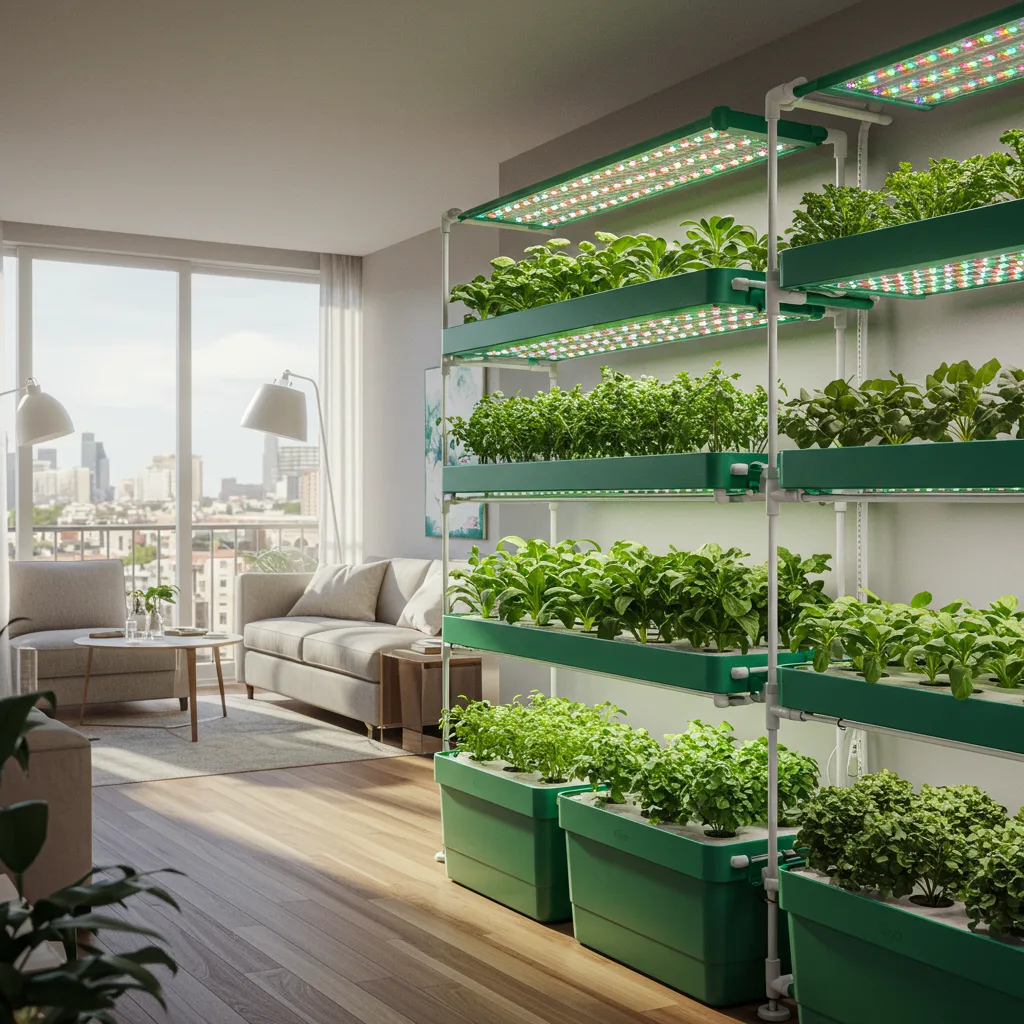
Deep Dive: DIY Hydroponic Gardening for Urban Apartments in 2026
DIY Hydroponic Gardening introduces urban dwellers to soilless, water-efficient cultivation, yielding fresh produce year-round in tight spaces. USDA data confirms hydroponic systems can reduce water usage by up to 90%, and EPA research demonstrates their positive impact on reducing stormwater runoff. Check out our Hydroponic Basics for foundational concepts.
Table of Contents
- ●DIY Hydroponic Gardening Advantages & Benefits of Urban Hydroponics
- ●Key Environmental & Economic Benefits
- ●DIY Hydroponic Gardening System Types & Indoor Hydroponic Systems
- ●DIY Hydroponic Gardening Implementation Steps for Apartment Hydroponics
- ●Choose Your DIY Hydroponic System Type
- ●Procure Quality DIY Hydroponic Supplies
- ●Assemble & Calibrate Your Urban Hydroponic Setup
- ●Install LED Lighting & Environment Control for Indoor Gardening
- ●Tip: Continuous Monitoring for Hydroponic Gardening
- ●Germinate & Transplant in Your DIY Hydroponic System
- ●Maintain & Harvest Your Urban Hydroponic Garden
- ●DIY Hydroponic Gardening FAQs: Indoor & Vertical Hydroponics
- ●What EC level is ideal for leafy greens?
- ●How often should nutrient solution be replaced?
- ●Is tap water suitable?
- ●Conclusion: Embrace DIY Hydroponic Gardening in Urban Apartments
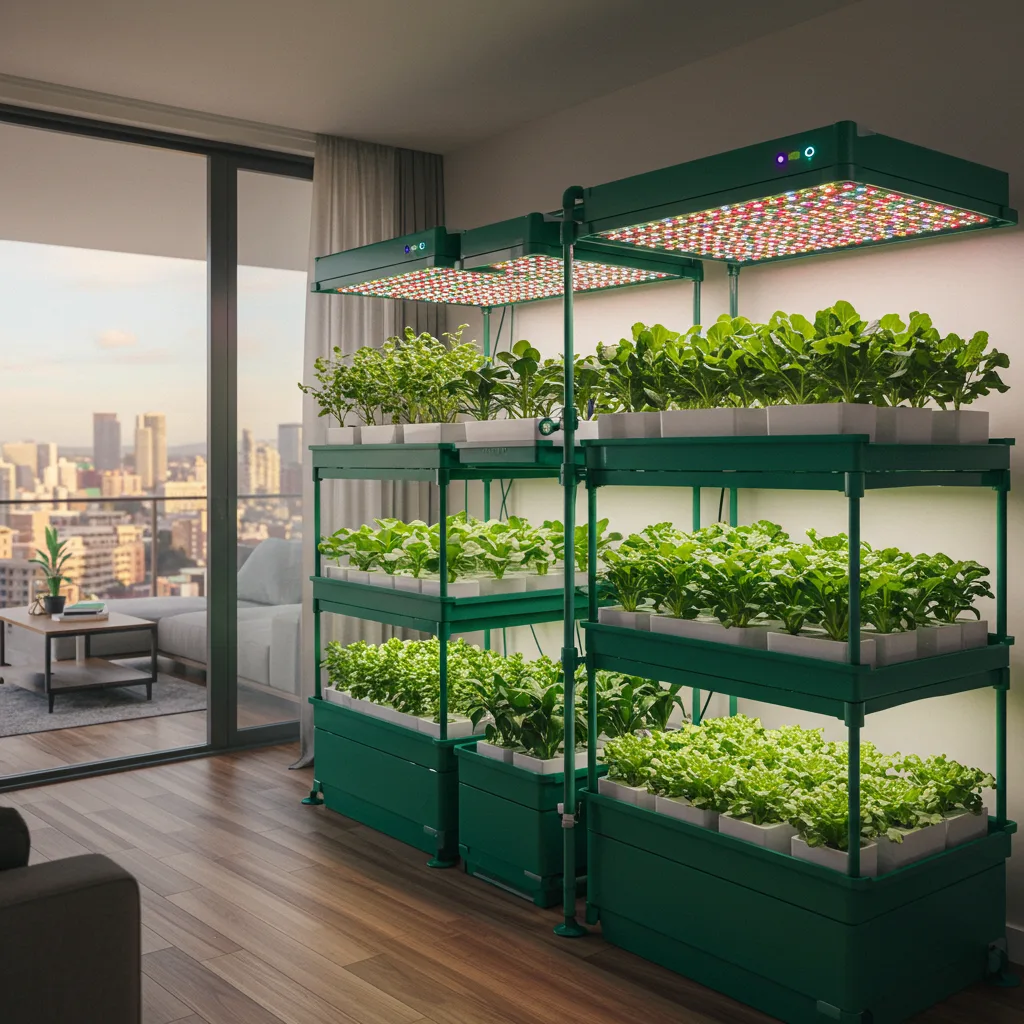
DIY Hydroponic Gardening Advantages & Benefits of Urban Hydroponics
Key Environmental & Economic Benefits
- Water Savings: Up to 90% less usage compared to soil gardening (NREL).
- Space Efficiency: Vertical hydroponics maximize yield in 30% of the footprint.
- Faster Growth: Nutrient film systems deliver 30–50% quicker harvest cycles.
- Local Food Security: Urban hydroponics minimize transport emissions and improve access.
- Year‑Round Harvest: Seasonal independence ensures continuous production.
DIY Hydroponic Gardening System Types & Indoor Hydroponic Systems
| System | Water Use (L/week) | Footprint (ft²) | Startup Cost (USD) | Monthly Yield |
|---|---|---|---|---|
| Deep Water Culture (DWC) | 10–15 | 1–2 | 80–120 | 6–8 lettuce heads |
| Nutrient Film Technique (NFT) | 8–12 | 1–1.5 | 90–150 | 8–10 salad servings |
| Ebb & Flow | 12–18 | 2–3 | 100–180 | 10 herb pots |
| Aeroponics | 5–8 | 1–2 | 150–250 | 12–15 microgreens trays |
DIY Hydroponic Gardening Implementation Steps for Apartment Hydroponics
Choose Your DIY Hydroponic System Type
Select from DWC, NFT, ebb & flow, or aeroponic setups based on budget, space constraints, and targeted yield.
Procure Quality DIY Hydroponic Supplies
Gather essentials: reservoir, submersible pump, tubing, net pots, growing medium (coco coir or rockwool), and nutrient solution.
Assemble & Calibrate Your Urban Hydroponic Setup
Ensure airtight connections, calibrate pH to 5.5–6.5, and measure EC per manufacturer specs.
Install LED Lighting & Environment Control for Indoor Gardening
Position full-spectrum LEDs 12–16 hours daily; maintain ambient temperatures between 65–75°F (18–24°C).
Tip: Continuous Monitoring for Hydroponic Gardening
Use digital pH/EC meters and water-temperature probes to detect fluctuations early and keep growth consistent.
Germinate & Transplant in Your DIY Hydroponic System
Start seeds in starter plugs, transplant once roots emerge (7–10 days), and gently place them in net pots.
Maintain & Harvest Your Urban Hydroponic Garden
Top up nutrient solution weekly, replace completely every 4 weeks, and harvest mature greens at 4–6 weeks for continuous production.
DIY Hydroponic Gardening FAQs: Indoor & Vertical Hydroponics
What EC level is ideal for leafy greens?
Maintain an EC between 1.2–1.8 mS/cm for lettuce and herbs. See our EC & Nutrients FAQ.
How often should nutrient solution be replaced?
Fully replace every 4 weeks; top up weekly to prevent nutrient imbalances.
Is tap water suitable?
Tap water works if heavy metals are low; consider a carbon filter per EPA guidelines.
Conclusion: Embrace DIY Hydroponic Gardening in Urban Apartments
DIY hydroponic gardening offers efficient, year-round, pesticide-free produce for apartment dwellers. By leveraging soilless systems, precise monitoring, and best practices, you can transform any indoor space into a thriving micro-farm. Get started on our Getting Started page and share your hydroponic journey below!

Written by Mangaleswaran
Mangaleswaran is a dedicated sustainable living expert and the founder of EcoDweller. With a deep passion for renewable energy, he specializes in simplifying complex green technologies—like solar power and home efficiency—for the modern homeowner. His mission is to empower individuals to reduce their environmental impact while building more cost-effective, eco-friendly homes for the future.
Follow on Facebook