
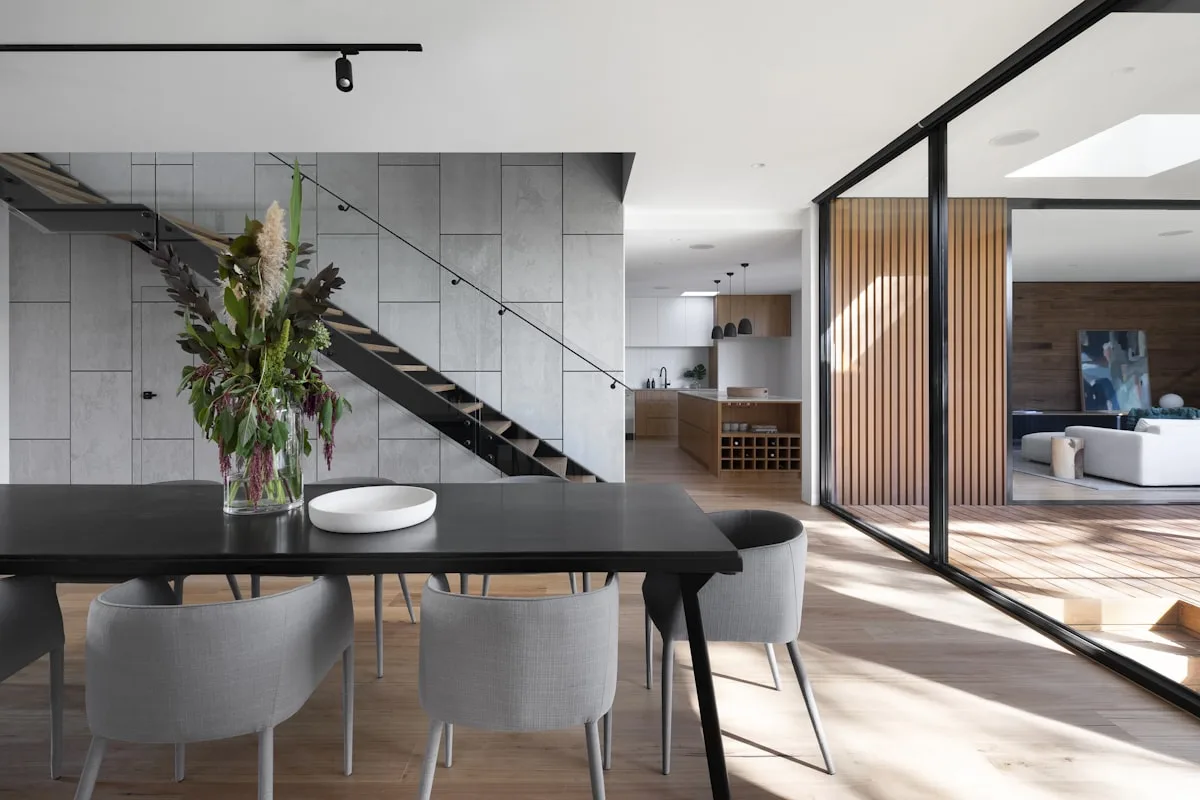
I remember the first time I walked into a passive solar home during a record-breaking cold snap in early 2026. Outside, the wind was howling and the temperature was well below freezing. But inside, the air was warm, still, and incredibly bright. What struck me most was the silence—there was no furnace humming, no vents blowing. The house was simply doing its job, capturing the energy of the sun and holding onto it like a warm stone. Consequently, I became obsessed with the principles of passive solar heating and cooling, realizing that the most sustainable home isn’t just one with a big battery, but one that is designed to work with the environment, not against it.
Table of Contents
- ●Key Takeaways: The Power of Passive Solar
- ●The Fundamentals: Heating Your Home with Physics, Not Fuel
- ●The 5 Pillars of Passive Solar Design
- ●1. The Aperture (The Collector)
- ●2. The Absorber (The Surface)
- ●3. The Thermal Mass (The Battery)
- ●4. Distribution (The Movement)
- ●5. Control (The Brain)
- ●Passive Cooling: Staying Chill Without the AC
- ●Cost Comparison: Passive vs. Traditional Homes
- ●Common Pitfalls and How to Avoid Them
- ●Frequently Asked Questions
- ●Do passive solar homes work in cloudy climates?
- ●Can I retrofit my existing home for passive solar?
- ●What is the best material for thermal mass?
- ●Conclusion: Harmony with the Sun
Key Takeaways: The Power of Passive Solar
- Zero-Energy Comfort: Passive solar design can reduce your heating and cooling loads by up to 80% without any mechanical systems.
- The 5 Core Elements: Success depends on the Aperture (windows), Absorber, Thermal Mass, Distribution, and Control.
- Seasonal Intelligence: Using the sun’s natural angles to provide heat in the winter and shade in the summer.
- High Resilience: A passive solar home remains comfortable even during power outages or grid failures.
The Fundamentals: Heating Your Home with Physics, Not Fuel
Passive solar design is the art of building a house that acts as its own energy system. It’s not about “active” solar panels (which generate electricity), but about using the building’s orientation, windows, and materials to manage heat naturally. In 2026, as energy prices fluctuate, this “low-tech” approach is becoming the gold standard for luxury sustainable living.
The concept is simple: you want to let the sun in when it’s cold and keep it out when it’s hot. This is achieved through careful window placement—primarily on the south-facing side of the home in the Northern Hemisphere. Furthermore, the heat captured by these windows must be “stored” in the building’s structure. Without storage, the house would overheat during the day and freeze at night. Specifically, this is where the concept of “thermal mass” comes in.
The 5 Pillars of Passive Solar Design
1. The Aperture (The Collector)
This is the large glass area through which sunlight enters the building. In a passive solar home, at least 7% to 12% of the floor area should be south-facing glass. In 2026, we have access to incredible high-performance glazing that allows light in while preventing heat from escaping. However, the orientation is critical. Even a 15-degree deviation from true south can significantly reduce the system’s efficiency.
2. The Absorber (The Surface)
The absorber is the surface that the sunlight hits. This is usually a dark-colored floor or wall located directly in the path of the sun. The dark color helps the surface absorb more solar radiation rather than reflecting it. In my own renovations, I used a deep charcoal slate for the entryway, which becomes a natural “radiator” by midday.
3. The Thermal Mass (The Battery)
This is the most misunderstood part of passive solar. Thermal mass consists of heavy materials like concrete, brick, stone, or even water. These materials have a high “heat capacity,” meaning they can absorb and store large amounts of heat. During the day, the mass soaks up the solar energy. As the temperature drops at night, it slowly releases that heat back into the living space. Therefore, thermal mass acts as a natural stabilizer, preventing the wild temperature swings common in standard wood-frame homes.
4. Distribution (The Movement)
How does the heat get from the sun-drenched south room to the rest of the house? Distribution happens naturally through conduction, convection, and radiation. In simple designs, we use open floor plans and “transom” windows above doors to allow warm air to circulate. Specifically, in more complex homes, small, low-wattage fans might be used to help move air to north-facing rooms, but the goal is always to minimize mechanical assistance.
5. Control (The Brain)
A passive solar house needs a way to “turn off” in the summer. This is achieved through controls like roof overhangs, electronic sensors, and operable shades. An appropriately sized overhang will block the high summer sun from hitting the windows, keeping the interior cool. In the winter, when the sun is lower in the sky, it shines right under the overhang and into the house. Consequently, the house “knows” what season it is based solely on its geometry.
Passive Cooling: Staying Chill Without the AC
While we often focus on heating, the “cooling” part of passive solar is just as important, especially as summers get hotter. Passive cooling relies on natural ventilation and shading to keep temperatures comfortable. By placing windows strategically on opposite sides of the house, you can encourage “cross-ventilation,” where cool breezes are pulled through the living space.
Another powerful technique is the “thermal chimney” or “stack effect.” Because warm air rises, you can place high-level windows or vents in an attic or stairwell. As the hot air escapes out the top, it creates a vacuum that pulls cool air in through lower windows. This natural airflow can make a home feel 10 degrees cooler without ever touching a thermostat. Therefore, a well-designed passive solar home is a year-round comfort machine.
Cost Comparison: Passive vs. Traditional Homes
Many homeowners worry that passive solar design adds massive costs to a build. In reality, much of it comes down to “better design,” not necessarily “more expensive materials.” Below is a breakdown of the typical cost considerations in 2026.
| Feature | Estimated Cost Increase | Avg. Annual Savings | Payback Period |
|---|---|---|---|
| South-Facing Orientation | $0 (Planning only) | 10% – 20% | Immediate |
| High-Performance Glazing | $2,000 – $5,000 | 15% – 25% | 3 – 5 Years |
| Interior Thermal Mass | $3,000 – $7,000 | 20% – 35% | 5 – 8 Years |
| Automatic Shading Systems | $1,500 – $3,000 | 5% – 15% (Cooling) | 4 – 6 Years |
In addition to monthly savings, passive solar homes often have a higher resale value. In the 2026 real estate market, “energy resilience” is a top-tier feature. Buyers are willing to pay a premium for a home that will remain livable even if the grid goes down. Furthermore, many regions now offer Green Building Credits for homes that meet specific solar-gain-to-mass ratios, further reducing the net cost.
Common Pitfalls and How to Avoid Them
Designing a passive solar home is a delicate balance. If you get it wrong, you could end up with a house that is either freezing in the winter or a greenhouse in the summer. Here are the most common mistakes I’ve seen:
- Over-Glazing: Too many windows on the south side without enough thermal mass to absorb the heat. This leads to rapid overheating. Always follow the 1:3 ratio (1 square foot of glass to 3 square feet of mass).
- Ignoring the North: While you want big windows on the south, you want minimal, high-performance windows on the north. The north side is where heat escapes. Specifically, I recommend using “triple-pane” glass for all north-facing windows.
- Poor Insulation: Passive solar is only as good as the envelope it’s in. If your walls are leaking air, the solar heat will vanish instantly. For more on this, read our guide on choosing the right eco-friendly insulation.
Frequently Asked Questions
Do passive solar homes work in cloudy climates?
Yes! Even on cloudy days, a significant amount of solar radiation penetrates the atmosphere. While the system won’t be as efficient as it would be in Arizona, a well-designed home in the Pacific Northwest can still capture enough energy to drastically reduce heating needs. Specifically, the thermal mass helps “buffer” those stretches of grey weather by releasing stored heat over several days.
Can I retrofit my existing home for passive solar?
Retrofitting is more challenging than building new, but it is possible. You can add “sunspaces” or solariums to the south side, replace old windows with high-gain glazing, and add thermal mass by installing stone tile over concrete subfloors. Consequently, even small changes like adding an overhang to south windows can have a noticeable impact on comfort.
What is the best material for thermal mass?
Water is technically the most efficient because it has the highest heat capacity, but it’s difficult to integrate into home design. Most modern homes use high-density concrete or earth-bricks (rammed earth). In 2026, we are also seeing the rise of “phase-change materials” (PCMs) that can be integrated into drywall, offering the mass of a concrete wall in a much lighter package.
Conclusion: Harmony with the Sun
Passive solar heating and cooling is more than just a building technique; it’s a philosophy of living in harmony with the natural rhythms of the earth. By understanding the path of the sun and the properties of materials, we can create homes that are not only sustainable but also deeply comfortable and beautiful. As we look toward the future of housing in 2026 and beyond, these timeless principles will continue to light the way toward a truly green and resilient world.
Ready to combine passive design with modern technology? Don’t miss our latest deep-dive on the efficiency of heat pump water heaters to see how you can further optimize your home’s energy profile.

Written by Mangaleswaran
Mangaleswaran is a dedicated sustainable living expert and the founder of EcoDweller. With a deep passion for renewable energy, he specializes in simplifying complex green technologies—like solar power and home efficiency—for the modern homeowner. His mission is to empower individuals to reduce their environmental impact while building more cost-effective, eco-friendly homes for the future.
Follow on Facebook