
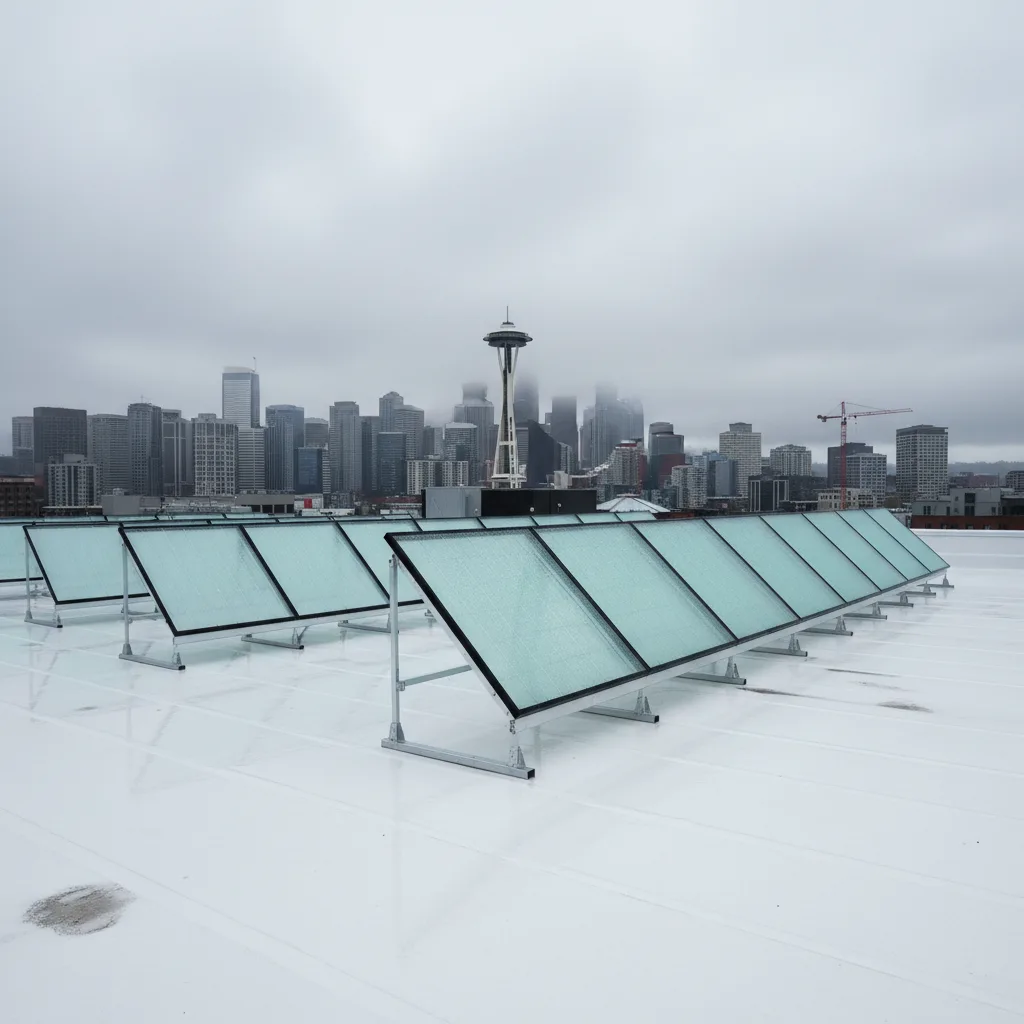
For bifacial solar panels, cloudy climate performance is one of the most misunderstood topics in the renewable energy world. To answer the burning question: Yes, bifacial solar panels are worth it in a cloudy climate—but only if you optimize your installation for the albedo effect. In low-light regions like the Pacific Northwest or the Great Lakes, bifacial panels can produce 5% to 15% more energy than traditional monofacial panels by capturing diffuse light reflected off the ground, roof surface, and even clouds. However, simply slapping them on a black asphalt roof will yield almost no benefit. Success depends on your mounting height, tilt, and the reflectivity of the surface beneath the panels.
Table of Contents
- ●What Makes Bifacial Solar Panels Different From Regular Panels?
- ●How Bifacial Panels Capture Light on Overcast Days (The Science)
- ●Real Output Gain: Bifacial vs Monofacial in Cloudy Regions (Data Table)
- ●When Bifacial Panels Are NOT Worth It in a Cloudy Climate
- ●Best Roof Types and Mounting Setups to Maximize Bifacial Gain
- ●Bifacial vs TOPCon vs HJT: Which Technology Wins in Low Light?
- ●Interactive Mini-Calculator: Estimate Your Bifacial Gain
- ●Truth & Warning: The Hidden Costs of Bifacial
- ●FAQ: Everything You Need to Know
- ●Final Thoughts: Is Bifacial Right for You?
Quick Summary: The Bifacial Advantage
- Diffuse Light Efficiency: Bifacial panels are superior at capturing “scattered” light, which is the primary source of energy on overcast days.
- The Albedo Factor: Their performance is dictated by the reflectivity of the surface below them (e.g., snow or white roofs).
- Mounting is Key: Unlike standard panels, bifacial modules require a gap between the panel and the roof to allow light to reach the back side.
- ROI: While 10% more expensive, the 5-15% gain in energy can shorten your payback period in northern latitudes.
What Makes Bifacial Solar Panels Different From Regular Panels?
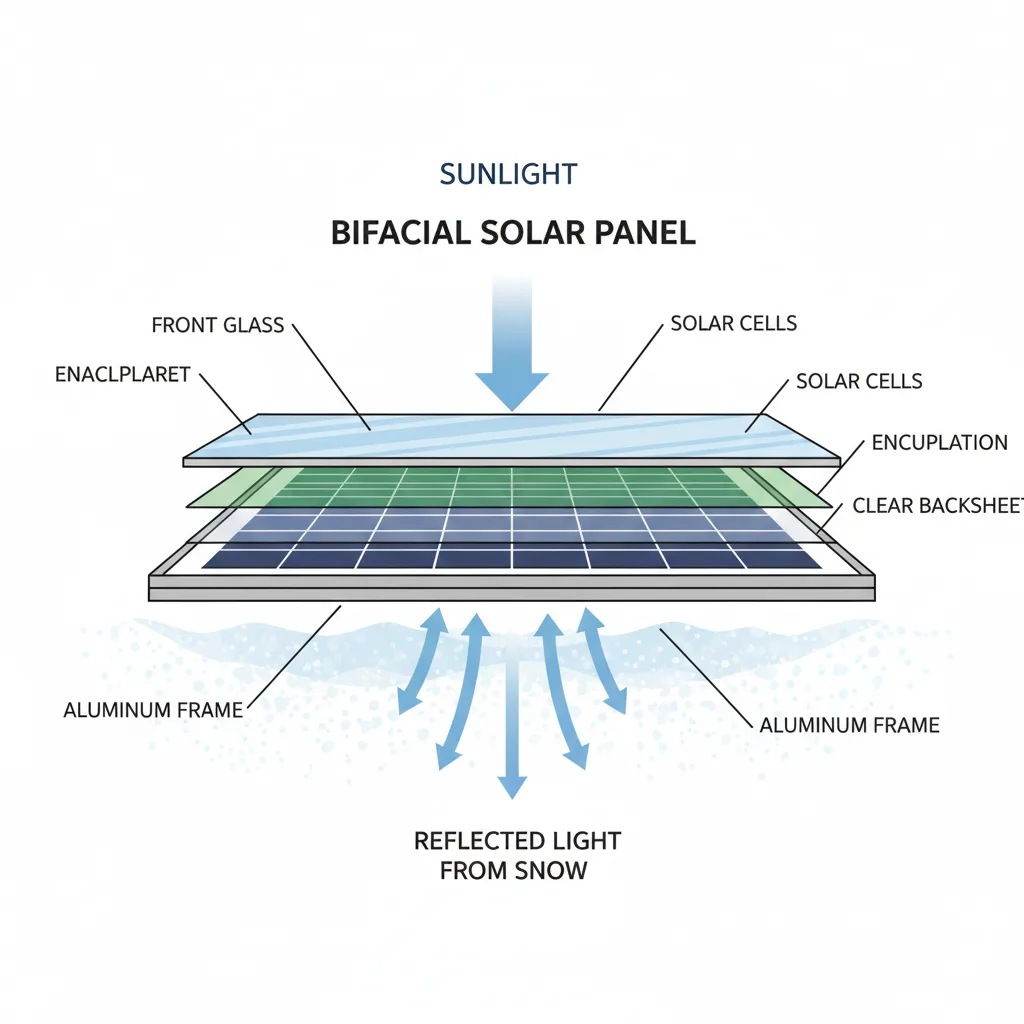
I remember the first time I saw a bifacial module on a commercial site in Vancouver. It looked sleek, almost like a sheet of darkened glass. Unlike standard monofacial panels that have an opaque backsheet (usually white or black), bifacial panels have a transparent back or glass-on-glass construction. This allows them to generate power from both sides.
Standard panels are essentially one-way streets. Bifacial panels, however, are “double-sided,” meaning they harvest:
- Direct Sunlight: Harvested from the front side, just like a normal panel.
- Reflected Light (Albedo): Sunlight that bounces off the ground, a neighboring wall, or the roof.
- Diffuse Light: Sunlight scattered by clouds or humidity in the atmosphere.
For a homeowner relying on bifacial solar panels in overcast weather, that third point—diffuse light—is the secret sauce. While traditional panels struggle when the sun is obscured, the glass-on-glass design of bifacial units captures photons that would otherwise be lost. According to the National Renewable Energy Laboratory (NREL), bifacial systems can increase annual energy production significantly when compared to monofacial arrays of the same nameplate capacity.
How Bifacial Panels Capture Light on Overcast Days (The Science)
Many people assume that clouds “turn off” solar panels. In reality, clouds just change the type of light reaching your yard. On a clear day, 90% of light is direct. On a heavily overcast day, nearly 100% of the light is diffuse. This light is coming from all angles of the sky, rather than one point.
Bifacial panels thrive here because they have a higher bifaciality factor. This is a percentage that describes how efficient the back side is compared to the front. Most modern modules have a bifaciality factor of 70% to 90%. This means the back of the panel is nearly as powerful as the front.
- Ray Tracing: In cloudy weather, light bounces between the ground and the bottom of the clouds. Bifacial panels sit in this “light sandwich.”
- Low Light Sensitivity: Modern bifacial cells often use TOPCon or HJT technology, which perform better at lower light intensities.
- Spectrum Capture: The transparent nature of the module allows for better thermal management, which indirectly helps voltage stability during erratic cloud cover.
If you’re wondering how much output to expect on an overcast day, the answer is usually 10-25% of the panel’s rated capacity. However, a bifacial panel can squeeze an extra few percentage points out of that gloom by capturing the “back-scattered” light from the horizon.
Real Output Gain: Bifacial vs Monofacial in Cloudy Regions (Data Table)
When considering bifacial solar panel viability in low-light regions, you have to look at the “Bifacial Gain.” This is the percentage of extra energy you get over a standard panel. In a sun-drenched desert, the gain might be 20% on white sand. In a cloudy city like Seattle or Toronto, the gain is more modest but still impactful.
| Surface Type | Albedo (Reflectivity) | Cloudy Climate Gain | Clear Sky Gain |
|---|---|---|---|
| Asphalt (Dark) | 5-10% | 2-3% | 4-5% |
| Grass/Greenery | 20-25% | 5-7% | 8-10% |
| White Gravel / TPO Roof | 60-80% | 11-13% | 15-22% |
| Fresh Snow | 80-90% | 14-16% | 25-30% |
These figures are based on research from Fraunhofer ISE. Notice the “Fresh Snow” row. In Canada and the Northern US, bifacial panels are a game changer in winter. While snow blocks the front of the panel, the light reflecting off the snow on the ground hits the back of the panel, generating enough heat to help the snow on the front slide off faster.
When Bifacial Panels Are NOT Worth It in a Cloudy Climate
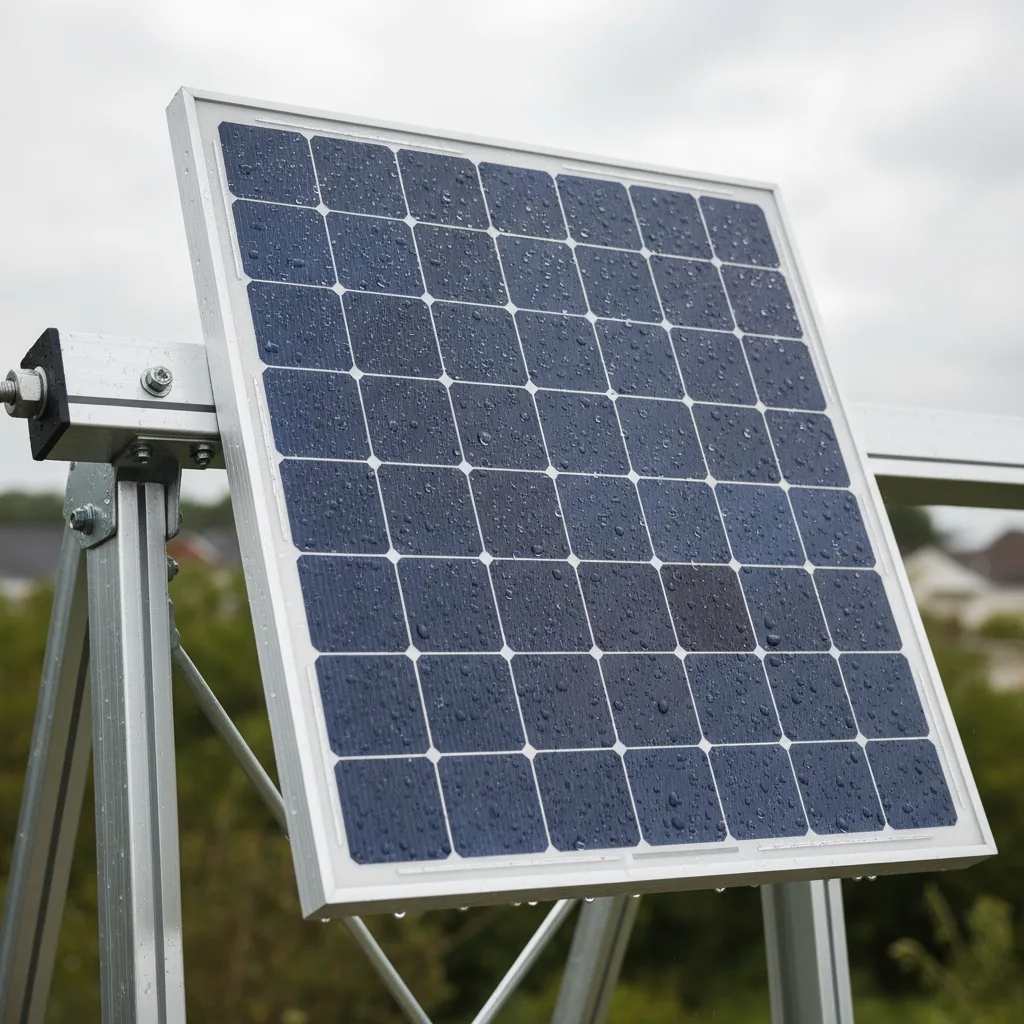
I see this mistake all the time: a homeowner spends $3,000 extra on bifacial panels and then mounts them flush against a dark gray asphalt roof. This is a waste of money. To get the true benefit of bifacial modules in overcast conditions, you need space.
- Flush Mounting: If there is only 3-4 inches of clearance between the panel and the roof, no light can reach the back side. You are essentially paying for a monofacial panel.
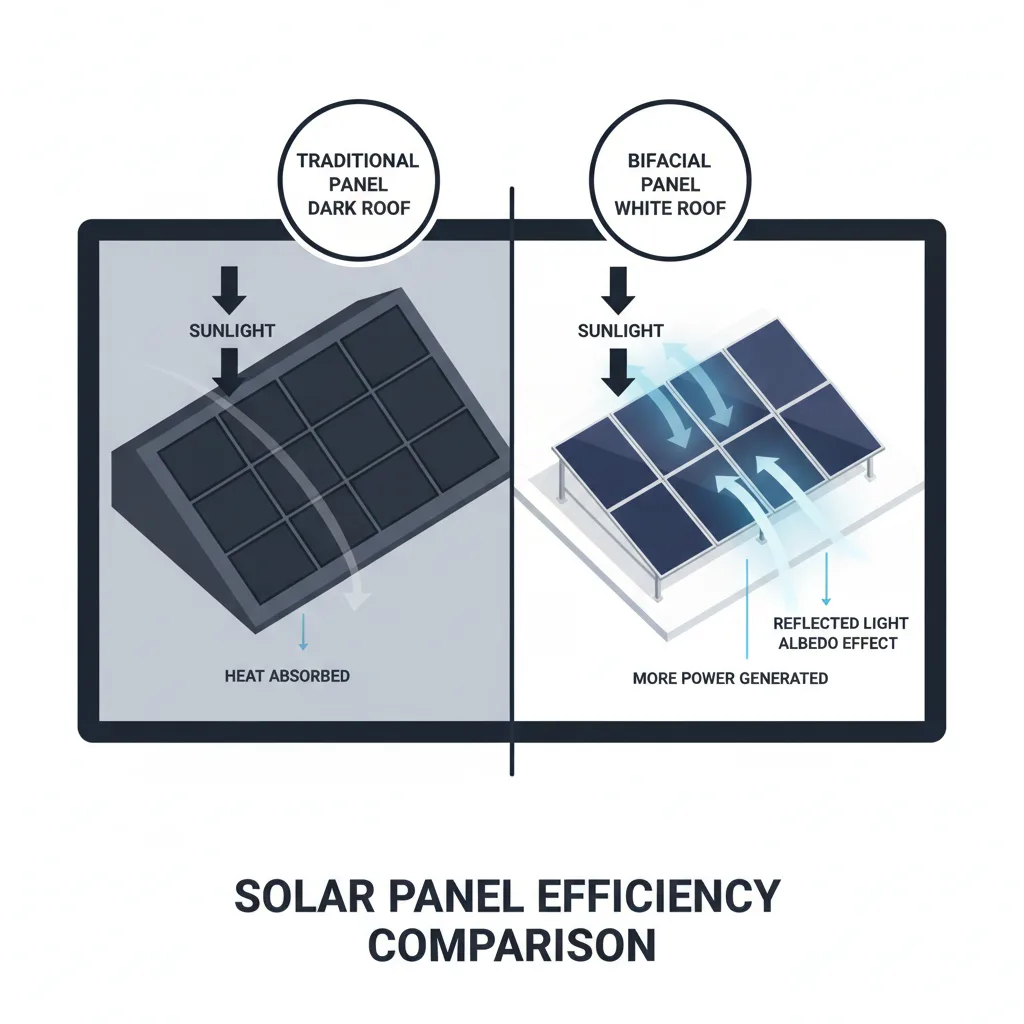
- Dark Surfaces: If your roof is black or dark brown shingles, it absorbs 90% of the light. There is nothing left for the back of the panel to harvest.
- Self-Shading: If the mounting rails are directly behind the cells, they block the reflected light. You need “bifacial-optimized” racking.
- Tight Spacing: In a multi-row array, the front rows can cast shadows on the ground that prevent the back rows from getting their rear-side boost.
If your home has a standard pitched roof with dark shingles and you aren’t planning to change the roof color or use tilt-up racks, stick to standard panels. You won’t see the ROI. Instead, you might want to look into sustainable gardening practices to spend your green budget elsewhere.
Best Roof Types and Mounting Setups to Maximize Bifacial Gain
To maximize your investment in a cloudy region, you need to think about the environment around the panels. The goal is to turn your roof or yard into a giant mirror.
- Flat Roofs with White TPO: White Thermoplastic Polyolefin (TPO) or EPDM membranes are the gold standard for bifacial panels. They reflect up to 80% of light.
- Ground Mounts: These are the best for bifacial. You can set them 3 to 5 feet off the ground and tilt them perfectly. If you have grass, crushed limestone, or snow below, the results are incredible.
- Solar Carports: Since the bottom of the panels is completely exposed, carports are perfect candidates. Check out our guide on best solar panels for cloudy climates for more on these setups.
- Commercial Metal Roofs: Light-colored standing seam metal roofs provide excellent reflectivity and easy mounting for bifacial arrays.
Pro Tip: If you are installing on a ground mount in a rainy climate, consider putting a layer of white gravel or crushed marble directly under the panels. It drastically increases the light bounce and prevents mud from splashing onto the back of your expensive glass modules.
Bifacial vs TOPCon vs HJT: Which Technology Wins in Low Light?
If you’re shopping for panels in 2026, you’ll see acronyms like TOPCon and HJT. It’s important to understand that these are cell technologies, whereas “Bifacial” is a module design. You can have a Bifacial TOPCon panel or a Bifacial HJT panel.
- TOPCon (Tunnel Oxide Passivated Contact): This is the current industry standard. TOPCon outperforms PERC in low-light conditions because it has lower carrier recombination losses.
- HJT (Heterojunction Technology): This is the “Ferrari” of solar. HJT cells are naturally bifacial and have the best temperature coefficients. In cloudy, cool climates, HJT is the king of efficiency.
- Bifacial PERC: The older standard. Still good, but being phased out by TOPCon due to the latter’s better response to diffuse light.
If you are researching the “bifacial solar panels cloudy climate” connection to find the ultimate setup, I recommend a Bifacial HJT module. They have the highest bifaciality factor (often 90%+) and work better when the sun is low on the horizon, which is common during northern winters. Companies like REC and Longi are leading the charge here. You can read more about the technical details on PV Magazine, which tracks these efficiency breakthroughs monthly.
Interactive Mini-Calculator: Estimate Your Bifacial Gain
Calculate how much extra energy you could generate based on your roof type and local cloud cover.
Truth & Warning: The Hidden Costs of Bifacial
Don’t be fooled by high-pressure sales tactics. While the panels themselves are great, there are logistics to consider.
- Weight: Bifacial panels use two layers of glass. This makes them significantly heavier. You must ensure your roof structure (especially on older homes in the US/Canada) can handle the dead load.
- Racking Costs: You can’t use cheap, standard rails that cover the back of the panel. Specialized racking is required, which usually costs 10-15% more.
- Inverter Sizing: Because bifacial panels can exceed their nameplate rating (a 400W panel might act like a 450W panel), you need an inverter with enough DC-to-AC ratio headroom. Otherwise, you’ll experience “clipping” where extra energy is wasted.
For more on costs and structural considerations, the Department of Energy provides excellent resources on residential solar basics. Always get a structural engineering report if you’re installing a large bifacial array on an older attic structure.
FAQ: Everything You Need to Know
1. Do bifacial solar panels work better than monofacial in cloudy weather?
Yes. Because they can capture light from all directions (diffuse light), they generally outperform standard panels by 5-10% in overcast conditions, provided they are not flush-mounted.
2. How much more power do bifacial panels produce on overcast days?
While total power is lower on cloudy days, the *gain* from the rear side stays consistent or even increases as a percentage of total output because diffuse light is more uniform.
3. Are bifacial solar panels worth the extra cost in rainy climates?
If you are using a ground mount or a flat roof with white coating, the ROI is usually 4-6 years faster than monofacial. On a dark shingle roof, they are rarely worth it.
4. What color roof gives bifacial panels the best output?
White is best. Any light-colored surface (silver, light gray, white) will significantly boost the performance of bifacial modules.
5. Can bifacial panels be used on a standard residential roof?
Yes, but you must use a “tilt-up” racking system to create space between the roof and the panel. Flush mounting will eliminate the bifacial advantage.
Final Thoughts: Is Bifacial Right for You?
Choosing bifacial solar panels for a cloudy climate is a smart move for those looking to maximize their energy independence in 2026. If you live in a region where the sun is often a stranger, every photon counts. By utilizing the back side of the panel, you’re not just buying hardware; you’re buying resilience against the weather.
However, remember the golden rule: Reflectivity + Clearance = Revenue. If you can’t provide both, stick to high-efficiency monofacial TOPCon panels. If you can provide a white surface and some air gap, you’ll be laughing all the way to the bank every time it snows.
Still unsure if bifacial panels will pay off on your specific roof? Check out our Solar Panel Payback Period Calculator—enter your roof type, location, and current electricity bill to see exactly how much extra energy bifacial technology would generate for you.

Written by Mangaleswaran
Mangaleswaran is a dedicated sustainable living expert and the founder of EcoDweller. With a deep passion for renewable energy, he specializes in simplifying complex green technologies—like solar power and home efficiency—for the modern homeowner. His mission is to empower individuals to reduce their environmental impact while building more cost-effective, eco-friendly homes for the future.
Follow on Facebook