
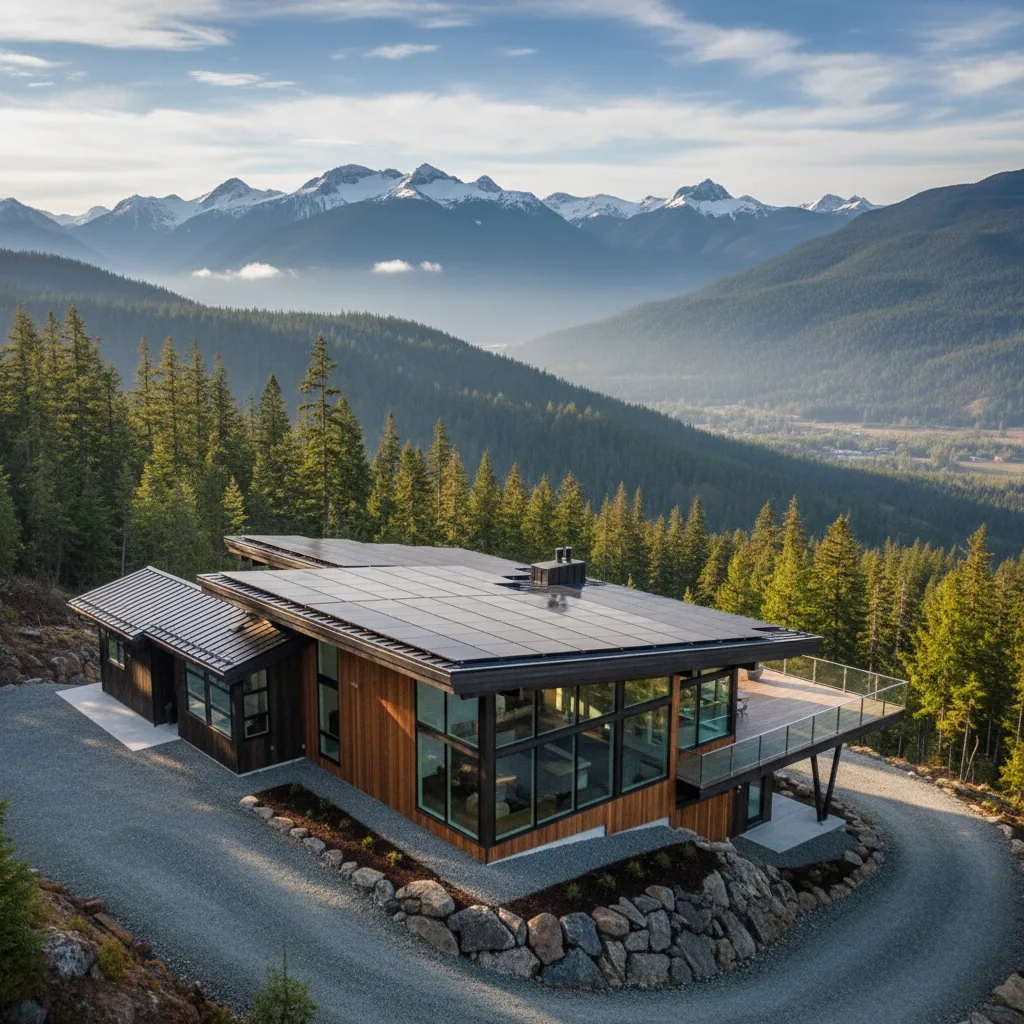
Solar is worth it in British Columbia in 2026 — but the answer depends heavily on where in BC you live. Vancouver homeowners typically see a 10 to 14 year payback period, while Interior BC homeowners in Kelowna and Kamloops see 7 to 9 years due to significantly more annual sunshine hours. With BC Hydro rates rising and federal rebates still available, the financial case for solar in BC is stronger now than ever.
Table of Contents
- ●How Much Sun Does British Columbia Actually Get? (City by City Data)
- ●Real Solar Savings for BC Homeowners: Vancouver vs Kelowna vs Victoria
- ●The Vancouver Humidity Factor
- ●BC Hydro Net Metering Explained: How You Get Paid for Excess Solar
- ●Every Solar Rebate and Incentive Available in BC in 2026
- ●Solar Payback Period Calculator for BC Homes (Interactive)
- ●BC Solar ROI Calculator
- ●The Best Solar Panels for British Columbia Weather in 2026
- ●Common Mistakes & Truth/Warning
- ●Common Mistakes in BC Solar Projects:
- ●FAQ
- ●1. Is solar power worth it in Vancouver BC given all the rain and clouds?
- ●2. How much does a solar panel system cost in British Columbia in 2026?
- ●3. Does BC Hydro buy back excess solar power from homeowners?
- ●4. What government rebates are available for solar panels in BC?
- ●5. How many solar panels do I need for a home in British Columbia?
- ●The Verdict: Should You Go Solar in BC?
- Kelowna/Kamloops: Highest ROI in the province with under 9-year payback.
- Vancouver/Victoria: Slower ROI but protected against BC Hydro’s tiered rate increases.
- Net Metering: Essential for BC residents to ‘bank’ summer energy for dark winters.
- Property Value: BC homes with solar often see a 3-4% valuation bump.
When I first moved to the North Shore, I was told solar was a waste of money because of the ‘Raincouver’ reputation. I spent months digging into the data, and what I found surprised me. Modern solar technology doesn’t need direct blazing sun; it needs daylight. In 2026, the technology has advanced so far that even on a misty November day in Burnaby, you’re still harvesting energy. But let’s be real: if you are living in the shadows of a mountain in Deep Cove, your numbers will look very different than a rancher in the Okanagan.
How Much Sun Does British Columbia Actually Get? (City by City Data)
It is a common misconception that BC is too cloudy for solar. While we aren’t Arizona, many parts of BC actually rival Germany—the world leader in residential solar adoption. The ‘solar resource’ in the Interior is world-class, while the coast is ‘good’ but requires better panel placement. Understanding your local irradiance is the first step in deciding if is solar worth it in British Columbia Canada for your specific postal code.
| City | Annual Sun Hours | Solar Potential | Avg Payback Period |
|---|---|---|---|
| Kelowna | 2,040 hrs | Excellent | 7-9 years |
| Kamloops | 2,000 hrs | Excellent | 7-9 years |
| Victoria | 1,870 hrs | Very Good | 8-10 years |
| Vancouver | 1,630 hrs | Good | 10-14 years |
| Prince George | 1,480 hrs | Moderate | 12-15 years |
- Micro-climates matter: Richmond gets significantly more sun than North Vancouver due to the ‘cloud push’ against the mountains.
- Snow Reflection: In the Interior, snow on the ground can actually increase panel output via the albedo effect.
- Tilt Angle: In BC, a steeper tilt (approx 35-45 degrees) is often better to shed rain and maximize winter sun.
Real Solar Savings for BC Homeowners: Vancouver vs Kelowna vs Victoria
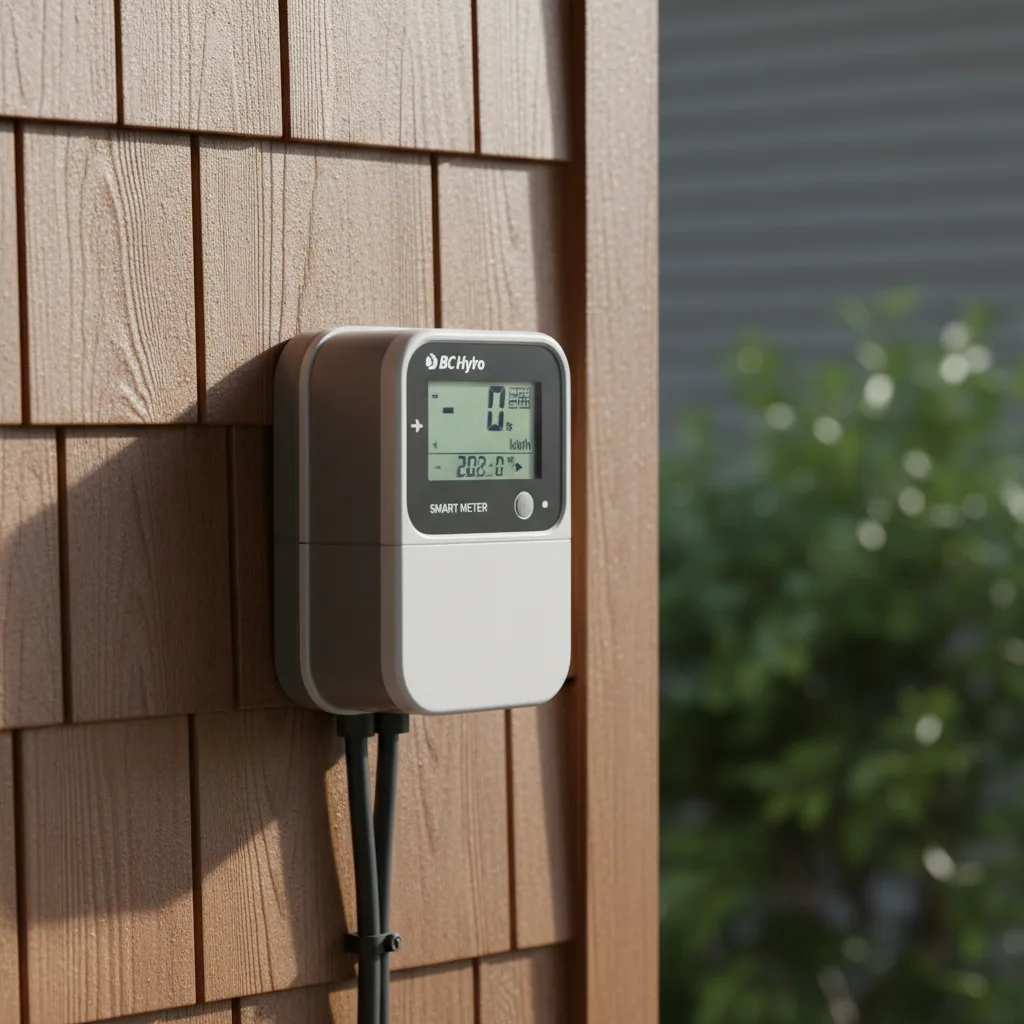
To understand the math, we have to look at the ‘Avoided Cost.’ This is the money you are NOT paying to BC Hydro. BC Hydro currently uses a two-tier residential rate. If you consume a lot of energy, you move into ‘Step 2,’ which is significantly more expensive. Solar helps you stay in ‘Step 1’ or eliminates your bill entirely. When asking is solar worth it in British Columbia Canada, you have to factor in the 4-6% annual utility rate hikes expected over the next decade.
The Vancouver Humidity Factor
Vancouver’s humidity and salt air (if you are near the coast) require higher-quality racking systems to prevent corrosion. This adds about 5-10% to the initial installation cost compared to a dry climate like Kamloops. However, the mild temperatures in Vancouver are actually good for solar panel efficiency, as panels lose power as they get too hot in extreme summer heat.
- Efficiency loss: Most panels lose 0.3% efficiency for every degree above 25°C.
- Coastal cooling: Vancouver’s breeze keeps panels at an optimal operating temperature.
- Cleaning: The rain in BC actually saves you money on maintenance by naturally washing away dust.
BC Hydro Net Metering Explained: How You Get Paid for Excess Solar
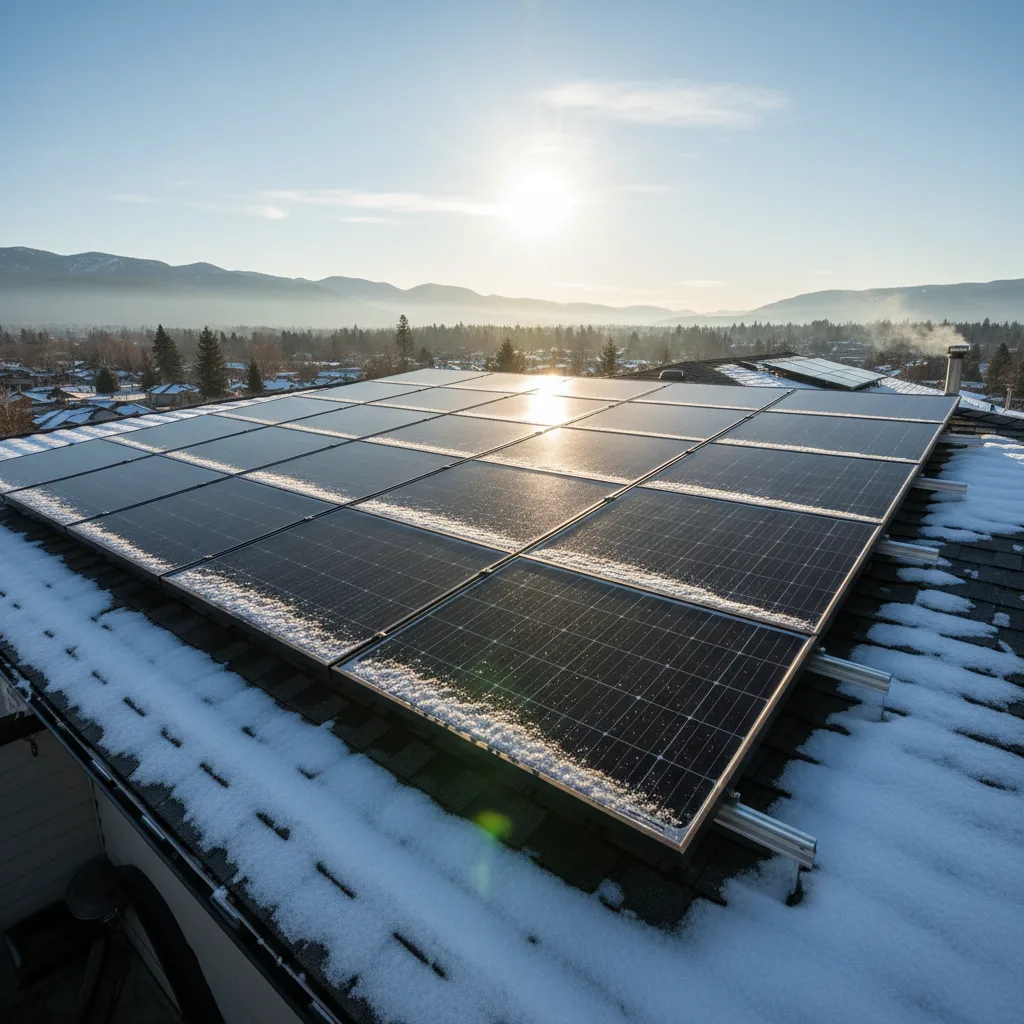
The secret sauce to making solar worth it in British Columbia is the BC Hydro Net Metering program. Because BC has such short days in December and 16-hour days in June, your production is wildly seasonal. Without net metering, you’d have too much power in summer and not enough in winter.
- Energy Credits: When you produce more than you use, your meter literally spins backward, and you earn credits on your bill.
- The Anniversary Date: Once a year, if you still have a credit balance, BC Hydro will cut you a check at their ‘market price’ (currently around 9.99 cents per kWh).
- Battery vs Net Metering: In BC, batteries like the Tesla Powerwall 3 are primarily for backup during outages rather than financial ROI, because the grid acts as a ‘free’ battery through net metering.
Every Solar Rebate and Incentive Available in BC in 2026
The upfront cost of solar is the biggest hurdle. In 2026, several programs make the ‘is solar worth it in British Columbia Canada’ equation much more attractive. You can significantly reduce your initial investment through a combination of federal and local initiatives. If you are doing a larger renovation, you should also check out the how to claim the Canada Greener Homes Grant for solar guide for the most up-to-date filing requirements.
- CleanBC Better Homes: Often provides top-up rebates for heat pumps and solar when installed together.
- PST Exemption: Solar equipment and some installation labor are exempt from BC’s 7% Provincial Sales Tax.
- Canada Greener Homes Loan: Up to $40,000 in interest-free financing over 10 years. This is a game-changer for cash flow.
- Municipal Grants: Some cities like Saanich or Nelson occasionally offer additional localized incentives.
Solar Payback Period Calculator for BC Homes (Interactive)
Stop guessing and start calculating. This mini-tool uses BC-specific sunlight averages and BC Hydro’s tiered rate structure to estimate your break-even point.
BC Solar ROI Calculator
The Best Solar Panels for British Columbia Weather in 2026
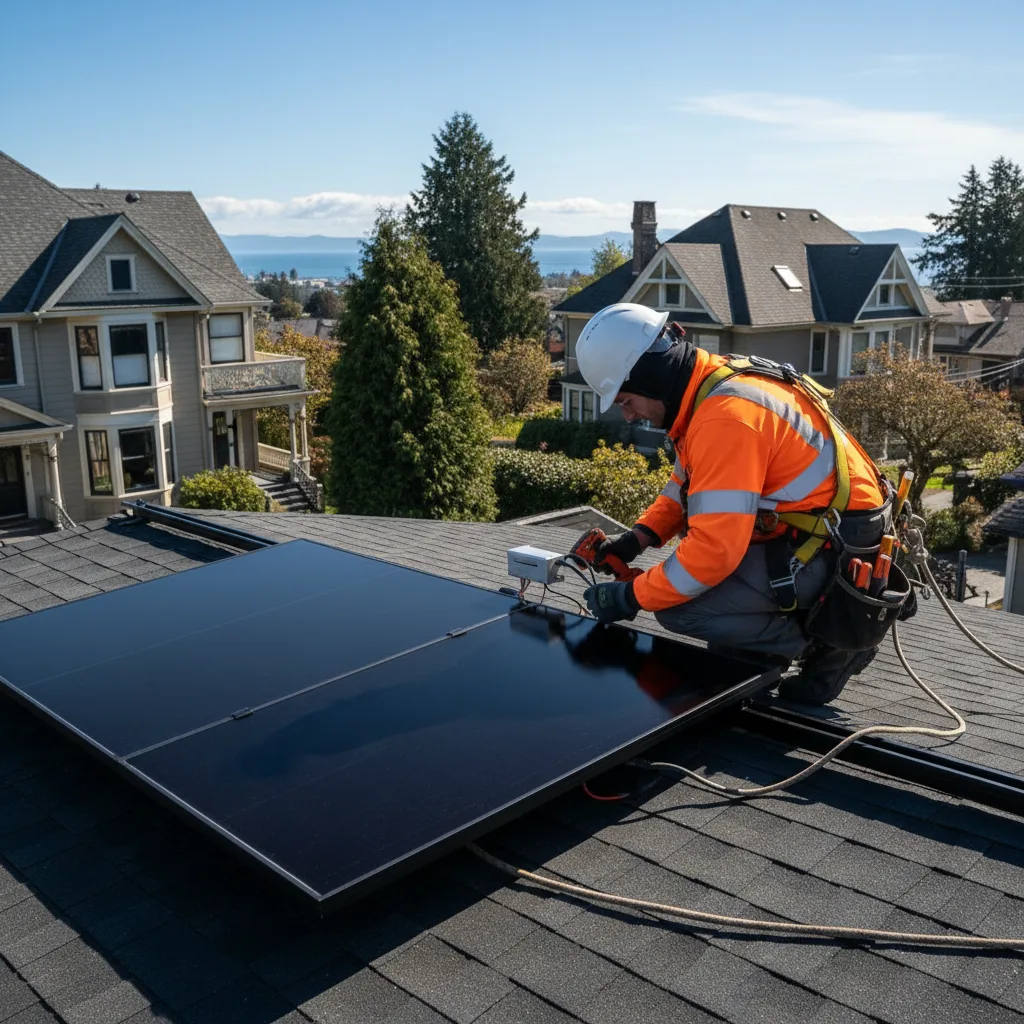
Choosing the right hardware is critical for the Pacific Northwest. If you are on the coast, you need panels that excel in ‘diffuse light’ (cloudy days). If you are in the Interior, you need panels that can handle heavy snow loads. I highly recommend looking into the best low-light solar panels for coastal BC homes before signing a contract.
- TOPCon Technology: This is the current gold standard. You should understand why TOPCon panels perform better in Vancouver’s overcast winters compared to older PERC models. They have a lower light-induced degradation rate.
- Bifacial Panels: If you have a flat roof or a ground mount, bifacial solar panels can harvest reflected light from snow or light-colored roofing materials.
- Snow Load Rating: Ensure your racking and panels are rated for at least 5400 Pa (Pascal) if you live in high-snow areas like Revelstoke or Prince George.
Common Mistakes & Truth/Warning
Common Mistakes in BC Solar Projects:
- Ignoring Shading: Even a small chimney shadow can drop a string-inverter system’s output by 50%. Use micro-inverters or optimizers for BC’s treed lots.
- Undersizing for EVs: If you plan to buy an electric vehicle in the next 3 years, size your solar system NOW. Adding panels later is twice as expensive.
- Forgetting the Roof Age: Never put 25-year solar panels on a roof that only has 5 years of life left. The cost to remove and reinstall them is $3,000 – $5,000.
FAQ
1. Is solar power worth it in Vancouver BC given all the rain and clouds?
Yes. While production is lower than in the desert, Vancouver receives enough annual irradiance to make solar financially viable, especially as BC Hydro rates increase. High-efficiency TOPCon panels are specifically designed to harvest energy from diffuse light on cloudy days.
2. How much does a solar panel system cost in British Columbia in 2026?
For an average 7kW to 10kW residential system, expect to pay between $15,000 and $25,000 before rebates. After the federal loan and available incentives, the ‘out of pocket’ monthly cost is often lower than the monthly BC Hydro savings.
3. Does BC Hydro buy back excess solar power from homeowners?
Yes, through their Net Metering program. They credit you at the retail rate for energy you use, and once a year, they pay out any remaining surplus at a set market price (approx 9.99 cents/kWh).
4. What government rebates are available for solar panels in BC?
As of 2026, the main incentives include the PST exemption on solar hardware and the Canada Greener Homes interest-free loan (up to $40,000). Always check for local municipal top-ups via CleanBC.
5. How many solar panels do I need for a home in British Columbia?
Most BC homes require between 18 and 28 panels (7kW to 11kW system) to reach ‘net zero’ electricity usage, depending on whether the home uses electric heating or has an EV charger.
The Verdict: Should You Go Solar in BC?
If you live in the Interior (Kelowna, Kamloops, Penticton), the answer is a resounding YES. The ROI is among the best in Canada. If you are in Vancouver or Victoria, the answer is ‘Yes, but be patient.’ You are playing the long game of energy independence and inflation protection. With the 2026 carbon tax shifts making electric-based living more attractive, solar is the ultimate hedge against rising costs. Wondering exactly how much you would save with solar on your BC home? Use our free Solar Savings Calculator — enter your city, monthly BC Hydro bill, and roof size to get your personalised payback period and 25-year savings estimate in under 60 seconds.

Written by Mangaleswaran
Mangaleswaran is a dedicated sustainable living expert and the founder of EcoDweller. With a deep passion for renewable energy, he specializes in simplifying complex green technologies—like solar power and home efficiency—for the modern homeowner. His mission is to empower individuals to reduce their environmental impact while building more cost-effective, eco-friendly homes for the future.
Follow on Facebook