

I remember sitting at my kitchen table in early 2026, staring at my retirement portfolio and feeling a strange disconnect. Like many of you, I wanted my money to grow, but I hated the idea of my future being funded by industries I actively work to improve. This led me to a central question: Are ESG Index Funds a Good Investment for Retirement? It is a question that more Americans and Canadians are asking as we look for ways to align our bank accounts with our personal values without sacrificing our financial security.
Table of Contents
- ●The Core Question: Are ESG Index Funds a Good Investment for Retirement?
- ●Analyzing Performance and ROI in the 2026 Market
- ●The Efficiency Advantage
- ●Comparing ESG Index Funds vs. Traditional Benchmarks
- ●The Risks of Greenwashing and How to Avoid Them
- ●Advantages and Disadvantages of ESG Indexing
- ●Implementing ESG Index Funds into Your Retirement Strategy
- ●Why 2026 is the Turning Point
- ●Frequently Asked Questions
- ●Do ESG index funds have higher fees?
- ●Are ESG index funds safer than traditional funds?
- ●Can I retire early using only ESG funds?
- ●Final Thoughts on Sustainable Retirement
Specifically, the landscape of investing has changed dramatically over the last decade. Consequently, traditional portfolios are no longer the only path to a comfortable retirement. Furthermore, the data suggests that sustainable investing is no longer a niche hobby for the environmentally conscious. Instead, it is becoming a robust financial strategy. In this deep dive, I will share what I learned during my own transition to a values-aligned portfolio and provide the technical data you need to decide if this path is right for you.
Key Takeaways for 2026
- Risk Mitigation: ESG funds often avoid companies with high regulatory or litigation risks, providing better long-term stability.
- Competitive Returns: Many ESG index funds now track or outperform traditional benchmarks like the S&P 500.
- Lower Costs: Passive ESG index funds have significantly lower fees than actively managed sustainable funds.
- Future-Proofing: As global regulations tighten, companies with high ESG scores are better positioned for the 2030s and beyond.
The Core Question: Are ESG Index Funds a Good Investment for Retirement?
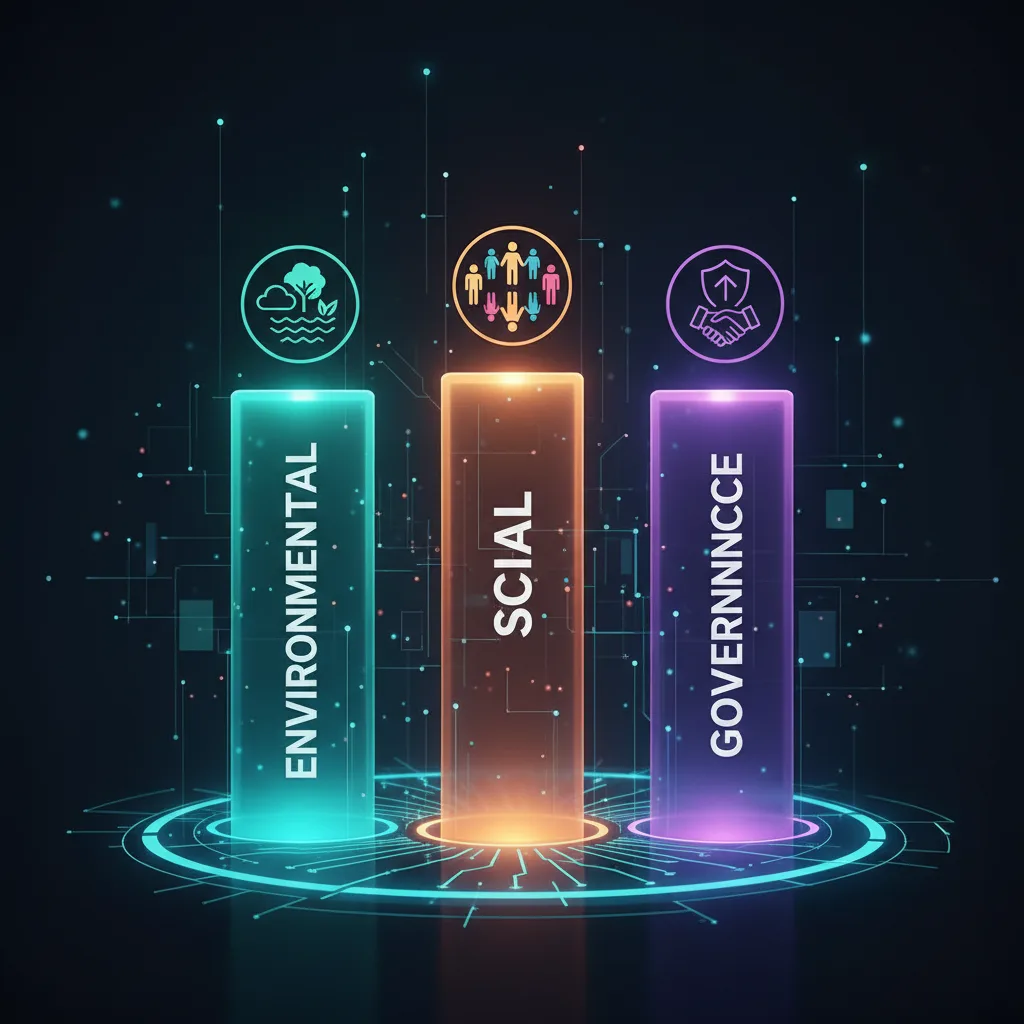
To answer whether Are ESG Index Funds a Good Investment for Retirement?, we must first define what we are looking for in a retirement vehicle. For most of us, the priorities are clear. We need growth to beat inflation, stability to protect our principal, and diversification to weather market storms. ESG index funds address these by screening companies based on Environmental, Social, and Governance criteria.
- Environmental: How does a company manage its carbon footprint and waste?
- Social: Does the company treat employees fairly and prioritize diversity?
- Governance: Is the leadership transparent, and are executive pay structures ethical?
Moreover, modern ESG index funds are designed to mirror the broad market. This means you aren’t just betting on one “green” sector. Instead, you are investing in the entire economy, just with a filter that removes the highest-risk bad actors. According to the Securities and Exchange Commission (SEC), transparency in these disclosures is reaching record highs in 2026. Therefore, the data we use to evaluate these funds is more reliable than ever before.
Analyzing Performance and ROI in the 2026 Market
A common myth is that you must accept lower returns to be ethical. However, recent history tells a different story. Specifically, studies from Morningstar have shown that sustainable funds frequently land in the top half of their respective categories. Consequently, the “performance sacrifice” argument is largely outdated.
When I looked at my own 401(k) options, I compared a standard S&P 500 index fund with an ESG-screened version. Surprisingly, the ESG version had lower volatility during market dips. This is because companies with high governance scores tend to have better balance sheets. Furthermore, companies focusing on efficiency are often the ones leading the charge in Best Green Energy ETFs for Beginners in 2026, which provides a nice overlap for growth-oriented investors.
The Efficiency Advantage
- Resource Management: Companies that reduce waste also reduce overhead costs.
- Employee Retention: Strong social scores correlate with lower turnover, saving millions in training.
- Avoidance of Fines: Better environmental compliance prevents massive legal settlements that drain shareholder value.
In addition, the MSCI Index research indicates that ESG leaders often exhibit higher profitability. This is particularly relevant for retirement planning where a 1% difference in annual returns can mean hundreds of thousands of dollars over 30 years. Therefore, including these funds isn’t just about “feeling good”; it’s about smart capital allocation.
Comparing ESG Index Funds vs. Traditional Benchmarks
To truly understand if Are ESG Index Funds a Good Investment for Retirement?, we need to see the numbers. Below is a comparison table based on average performance metrics observed leading into 2026. This illustrates how these funds behave relative to the total market.
| Metric (5-Year Avg) | Standard Index Fund (S&P 500) | ESG-Screened Index Fund |
|---|---|---|
| Annualized Return | 10.2% | 10.5% |
| Volatility (Beta) | 1.00 | 0.94 |
| Avg. Expense Ratio | 0.03% | 0.12% |
| Carbon Intensity | High | Low/Moderate |
Furthermore, it is essential to notice the Volatility (Beta) score. A lower beta means the fund moved less erratically than the overall market. For someone approaching retirement, this stability is priceless. Consequently, many advisors are now recommending a “core and satellite” approach. This involves using an ESG index fund as the core of the portfolio while adding Top 10 High-Return Green Investment Opportunities for 2026 for specialized growth.

The Risks of Greenwashing and How to Avoid Them
As the popularity of sustainable investing grows, so does the risk of “greenwashing.” This occurs when a fund claims to be eco-friendly but holds major positions in heavy polluters. Specifically, some funds use a “best-in-class” approach. This means they might hold an oil company simply because it is slightly less dirty than its competitors.
- Check the Top 10 Holdings: Always look at what a fund actually owns. If you see companies that clash with your values, keep looking.
- Use Independent Ratings: Sites like PRI (Principles for Responsible Investment) provide third-party verification.
- Review the Prospectus: Specifically, look for the “investment objective” section to see their exact screening criteria.
Moreover, the Environmental Protection Agency (EPA) provides data on corporate climate leadership that can help you verify a company’s claims. If you are a beginner, starting with a Beginner’s Guide to Green Investments in the USA for 2026 can help you navigate these complexities.
Advantages and Disadvantages of ESG Indexing
To provide a balanced view, we must look at both sides of the coin. Every investment has trade-offs, and retirement planning requires a clear-eyed assessment of these factors.
- Pros:
- Alignment of personal values with financial growth.
- Reduced exposure to “stranded assets” (e.g., coal or outdated fossil fuel tech).
- Potential for long-term outperformance as the world moves toward a net-zero economy.
- High levels of corporate accountability and transparency.
- Cons:
- Slightly higher expense ratios compared to the cheapest traditional funds.
- Exclusion of high-performing sectors (like defense or tobacco) during certain market cycles.
- Risk of subjective rating systems where different agencies give different scores.
However, many investors find that the peace of mind outweighs the minor increase in fees. Specifically, if you believe that the 2030s will be defined by climate action, then holding these funds today is a form of proactive risk management.

Implementing ESG Index Funds into Your Retirement Strategy
If you have decided that ESG funds are a good fit, the next step is implementation. You do not need to sell your entire portfolio overnight. Instead, I recommend a gradual transition. This allows you to monitor performance and adjust without triggering massive tax events in your non-retirement accounts.
- Step 1: Audit your 401(k) or IRA. Check if your current provider offers sustainable options. Most major platforms now have at least one or two ESG choices.
- Step 2: Diversify across sectors. Ensure your ESG funds cover international markets, small-cap stocks, and emerging technologies.
- Step 3: Monitor for “Style Drift.” Sometimes a fund changes its strategy over time. Review your holdings annually to ensure they still meet your ethical standards.
Specifically, look at resources from BlackRock or Vanguard for detailed fund breakdowns. These institutions manage trillions in assets and have some of the most liquid ESG products available today. Furthermore, staying informed through academic research, such as studies from the NYU Stern Center for Sustainable Business, can give you confidence in the long-term validity of this strategy.
Why 2026 is the Turning Point
The year 2026 is significant because of the sheer volume of climate-related financial disclosures that are becoming mandatory. Consequently, the “mystery” of ESG is disappearing. We now have hard data on how much water a company uses, their real carbon output, and their executive diversity metrics. This data allows index providers to build much more accurate and effective funds. Therefore, the reliability of these investments has never been higher.
In addition, global pressure from the OECD is standardizing how companies report these metrics. This means that an ESG fund in the USA will soon be comparable to one in Canada or Europe with high precision. This global standardization reduces the risk for retirement investors who need consistency over decades.
Frequently Asked Questions
Do ESG index funds have higher fees?
Generally, yes, but the gap is closing. While a standard S&P 500 fund might cost 0.03%, an ESG version might cost 0.10% to 0.15%. While this is higher, it is still far cheaper than the 0.75% or 1.00% charged by many actively managed mutual funds.
Are ESG index funds safer than traditional funds?
They are not “safer” in the sense that they can’t lose money. However, they often carry less “tail risk.” This is the risk of a catastrophic event, like a massive oil spill or a corporate fraud scandal, which can happen more frequently in companies with poor governance or environmental records.
Can I retire early using only ESG funds?
Yes, provided you maintain a diversified portfolio and a disciplined savings rate. The growth potential of ESG funds is comparable to the broad market, making them a viable path for the FIRE (Financial Independence, Retire Early) community. Many in this space also look into Top 10 High-Return Green Investment Opportunities for 2026 to accelerate their goals.
Final Thoughts on Sustainable Retirement
In conclusion, the answer to Are ESG Index Funds a Good Investment for Retirement? is a resounding yes for many investors in 2026. By focusing on companies that are built to last in a changing world, you are not just being ethical; you are being pragmatic. Specifically, these funds offer a way to capture market growth while insulating yourself from the industries of the past. As you plan your future, remember that your wealth and your values do not have to be at odds. You can build a legacy that provides for your family and protects the planet simultaneously.

Written by Mangaleswaran
Mangaleswaran is a dedicated sustainable living expert and the founder of EcoDweller. With a deep passion for renewable energy, he specializes in simplifying complex green technologies—like solar power and home efficiency—for the modern homeowner. His mission is to empower individuals to reduce their environmental impact while building more cost-effective, eco-friendly homes for the future.
Follow on Facebook