

You water it, mow it, and fertilize it. Then it turns brown anyway. Maintaining a traditional grass lawn feels like a bad part-time job you pay to do. Water districts across the US agree. They want your grass dead.
Table of Contents
- ●Key takeaways
- ●The financial case for killing your lawn
- ●The pre-approval trap
- ●Calculating your turf replacement rebate
- ●Turf rebate & ROI calculator
- ●Plant canopy and design requirements
- ●Upgrading the irrigation infrastructure
- ●Soil prep and permeable barriers
- ●The problem with artificial turf
- ●Tax status of your turf replacement rebate
- ●Material costs vs. payout
- ●Handling HOAs and city ordinances
- ●Environmental impact beyond the water bill
- ●The site plan and final inspection
Many local water authorities offer a turf replacement rebate to speed up the process. They pay you per square foot to rip out thirsty turf and plant drought-tolerant alternatives.
I pulled up 800 square feet of struggling fescue last fall. The local utility cut me a check for $2,400. The math makes sense. But the application process is a minefield of hyper-specific rules and random disqualifiers.
Key takeaways
- Most programs pay between $2 and $5 per square foot of removed grass.
- You must apply and get approved before you kill a single blade of grass.
- Your new yard needs a minimum plant canopy cover (usually 25% to 50%).
- Artificial turf rarely qualifies for modern conservation payouts.
The financial case for killing your lawn
The average suburban lawn drinks 10,000 gallons of supplemental water every summer. You pay the municipal utility for that water. Then you buy fertilizer and pay for gas to mow it.
Local governments realize this cycle is broken. Reservoirs sit at historic lows across the American West. Pumping and treating water requires massive amounts of electricity.
So water agencies are buying back your grass. They deposit cash directly into your bank account if you rip out the fescue and plant drought-tolerant natives.
The Southern Nevada Water Authority pays homeowners up to $5 per square foot. The SoCal WaterSmart portal averages $2 to $3.
A 1,000-square-foot front yard conversion nets you between $2,000 and $5,000. But getting that check requires navigating a rigid set of bureaucratic rules.
The pre-approval trap
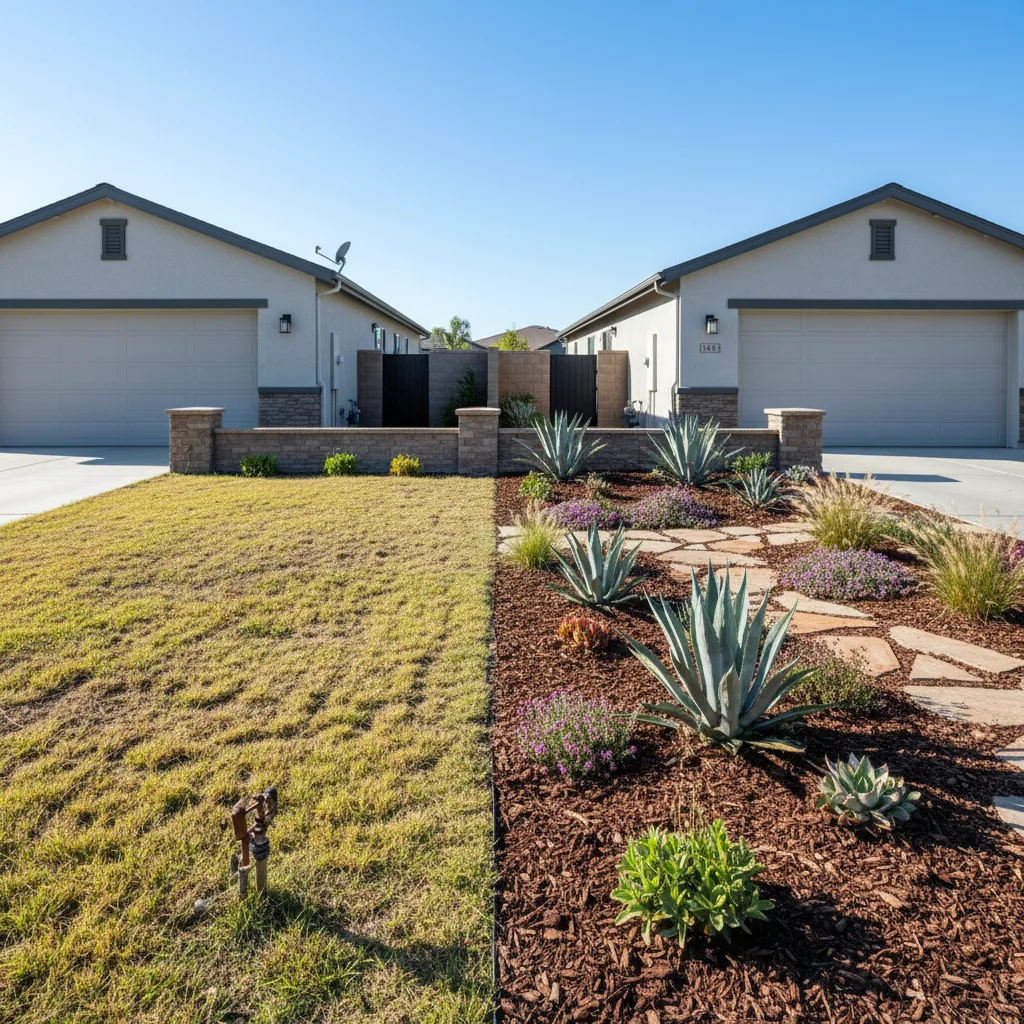
I watch homeowners make the same expensive mistake every spring. They rent a sod cutter on a Saturday morning and strip the yard bare. They pile the dead grass in a dumpster, then apply for the rebate.
The water district denies the application immediately.
Agencies demand proof that the grass is currently alive. They want to see green blades actively drinking municipal water. If the yard is already dirt, the utility has zero incentive to pay you.
You must take wide “before” photos. Include the sidewalk, street, and house numbers in the frame. Submit your site plan and wait for the official approval email. Do absolutely nothing to the grass until you get that document.
Common disqualifier alert:
Never start the physical work before receiving written confirmation. A verbal “looks good” from a phone rep means nothing. Get the approval PDF in your inbox first.
Calculating your turf replacement rebate
Budgeting for a yard conversion requires hard numbers. Grab a tape measure. Calculate the square footage of the grass you plan to remove.
Subtract the driveway, the concrete walkways, and any existing garden beds. Multiply that number by your local payout rate.
Use the calculator below to run your specific numbers.
Turf rebate & ROI calculator
Plant canopy and design requirements
Water districts hate gravel pits. Vast expanses of white rocks create urban heat islands that absorb the sun and bake your house.
Modern programs enforce strict plant coverage rules. You typically need the mature plant canopy to cover 25% to 50% of the converted area.
Buy native plants. Look up the California Native Plant Society database or your local university extension office. They list species that thrive on natural rainfall alone.
Agave, yucca, sage, and creeping thyme work exceptionally well. Group them by their water needs (a practice called hydrozoning). Keep the thirsty plants near the front porch and the desert plants out by the hot sidewalk.
If you want to grow food instead of ornamentals, check out these permaculture plants tailored for beginner gardens. Many utility companies allow fruit trees and perennial herbs to count toward your canopy requirement.
Upgrading the irrigation infrastructure
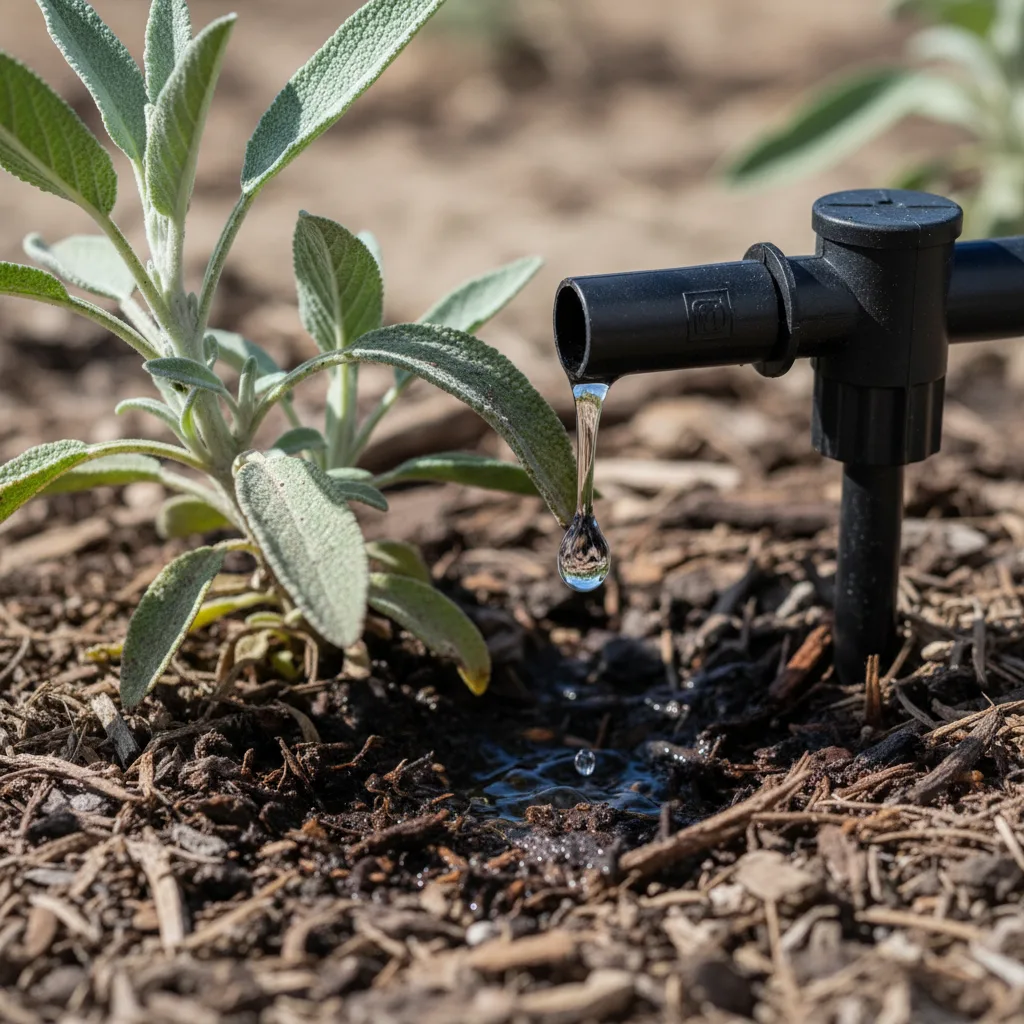
You must rip out or cap the old pop-up sprinklers. Spray heads lose massive amounts of water to wind drift and evaporation. Most municipalities actually require a full conversion to drip irrigation.
Drip emitters deliver water directly to the root zone. Attach a pressure regulator and a mesh filter to the main valve, then run half-inch poly tubing across the yard.
Punch quarter-inch lines into the main tube and route them to individual plants. Use a specialized hole punch tool to snap the emitters into the main line. Pushing them in by hand will destroy your thumbs.
You also need a smart controller. The EPA WaterSense program certifies weather-based controllers that automatically adjust watering schedules based on local rainfall and temperature data.
Maximize your water independence: Stop relying entirely on municipal water. Read our guide on building a DIY rain barrel system to capture free roof runoff for your new drought-tolerant yard.
Soil prep and permeable barriers
Grass leaves behind a dense mat of roots. You have to deal with it.
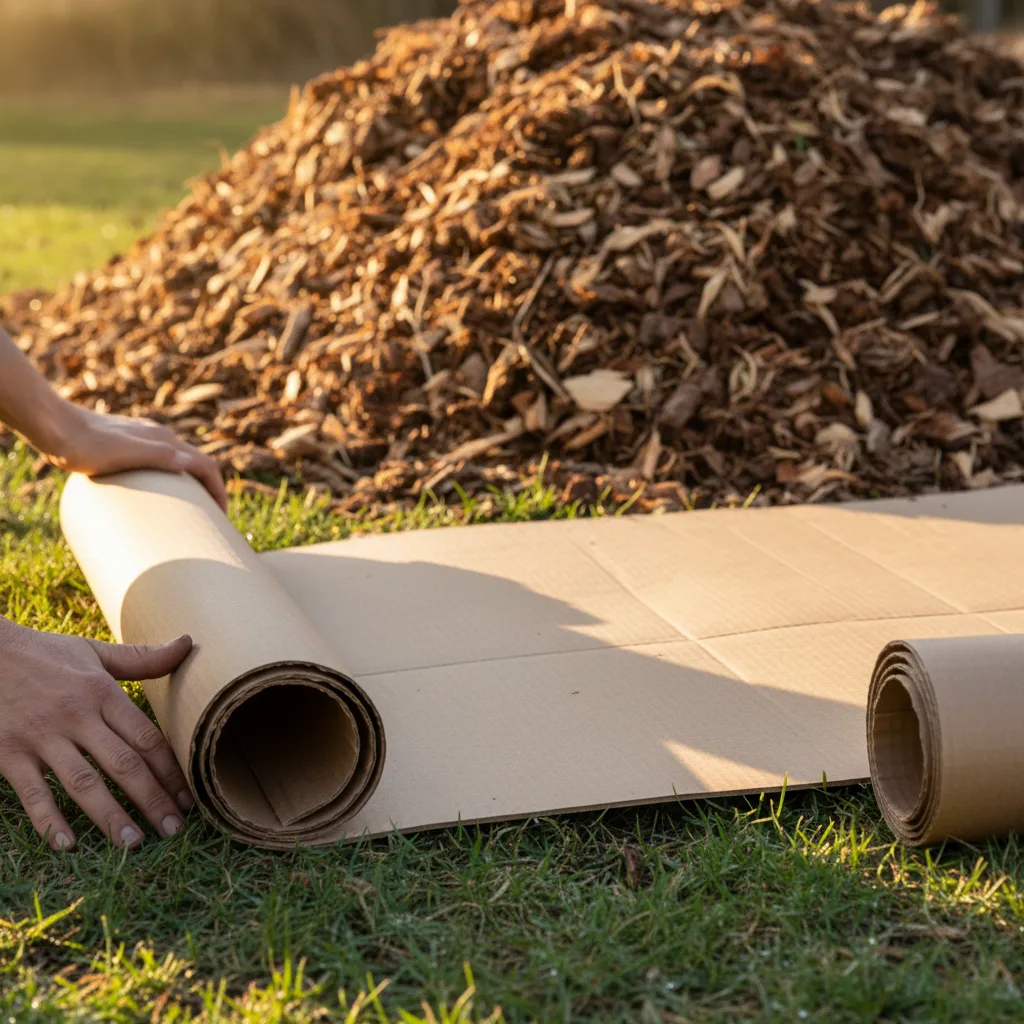
You can rent a gas-powered sod cutter to slice the grass off at the roots, but it’s exhausting work. The alternative is sheet mulching.
Sheet mulching requires zero heavy machinery. You mow the grass down to the dirt and cover the entire yard in overlapping layers of plain brown cardboard. Wet the cardboard down. Then dump three inches of arbor mulch on top.
The cardboard smothers the grass. Lack of light kills the root system. Over six months, the cardboard composts directly into the soil and invites earthworms.
Check your local program rules. Some turf replacement funds in Colorado and Nevada explicitly ban plastic weed barriers. Plastic fabric blocks oxygen and water from reaching the soil microbiology. It ruins the dirt. Use permeable barriers like cardboard instead.
The problem with artificial turf
Some people try to replace their real grass with fake grass. Water districts hate this.
Most modern agencies actively deny applications that include artificial turf. Fake grass traps heat, routinely reaching temperatures over 140 degrees in the summer sun. It creates a dead zone for local ecology.
The Alliance for Water Efficiency points out that artificial turf breaks down over time. It sheds microplastics directly into storm drains.
Water authorities want living yards. They want deep-rooted native plants that allow rainwater to infiltrate the soil and recharge underground aquifers. Fake grass prevents water infiltration.
If you want the rebate money, you have to plant real vegetation.
Tax status of your turf replacement rebate
Getting a $3,000 check from the government sounds great until tax season arrives.
Homeowners frequently ask if the cash is taxable income. The rules change depending on your state and the utility provider.
The IRS tax guidelines generally view water conservation payouts as subsidies. In states like California, specific laws shield these funds from state income tax. Federal taxability remains a gray area depending on how the utility structured the payout.
Some agencies will send you a 1099-G form if the amount exceeds $600. Keep every receipt. Track what you spent on plants, mulch, drip lines, and labor. You can usually offset the tax liability by showing that the grant money went directly into a capital improvement on the property.
Material costs vs. payout
You need to treat this project like a basic math problem. Will the check cover your expenses?
A sod cutter rental costs roughly $100 a day. Good organic arbor mulch runs $40 a yard. Five-gallon native plants cost $25 each, and a complete drip irrigation retrofit kit sets you back $300.
Doing the labor yourself usually keeps the material costs well below the total payout. You can actually make a small profit, according to data from the American Water Works Association.
Hiring a professional landscaping crew changes the math. Labor costs easily eat up the entire fund. The grant money subsidizes the contractor bill, but you’ll pay out of pocket to finish the job.
Sheet mulching with free cardboard and municipal compost is the most cost-effective strategy. You get to keep the majority of the check.
Handling HOAs and city ordinances
Homeowners Associations love their green grass. They actively fight replacement efforts.
But the legal environment is shifting. Several states have passed laws preventing HOAs from enforcing grass mandates during declared droughts. You have rights.
Before ripping out the lawn, check your local statutes. Submit your drought-tolerant design to the HOA architectural committee. Use the UC Davis Arboretum plant database to select aesthetically pleasing, low-profile plants that keep the neighborhood board happy.
Show them the water savings and the clean mulch lines. HOAs care about property values. A well-designed xeriscape looks intentional and clean. A dead, unwatered lawn looks abandoned. Give them a design they can easily approve.
Environmental impact beyond the water bill
The turf replacement rebate solves a localized water issue, but the ecological benefits go deeper.
Gasoline lawn mowers produce massive amounts of localized air pollution. The EPA estimates that a new gas-powered mower running for one hour produces the same emissions as 11 new cars driving for an hour.
Removing the grass eliminates the need for two-stroke engines on your property. It stops synthetic nitrogen fertilizers from washing off your yard and into the local watershed.
Use the i-Tree National Tree Benefit Calculator to estimate how your new native trees and shrubs filter the air and reduce stormwater runoff. Your yard becomes a functioning ecosystem.
Take your yard off the grid: Pair your new drought-tolerant design with a DIY greywater recycling system to keep your plants thriving all summer with zero municipal water.
The site plan and final inspection
Water districts love paperwork. Your application will require a site plan.
You don’t need an architect. Grab a piece of graph paper. Draw the footprint of your house and outline the property lines. Mark the square footage of the conversion area, and draw small circles where the new plants will go.
Label the plant species. Mention the type of mulch you plan to use.
Once you finish the physical work, submit your “after” photos. The utility company sends an inspector to your house. They walk the property, check the drip lines, and measure the canopy coverage.
If everything matches the approved site plan, they authorize the final payment. The check usually arrives four to six weeks later.
Eliminate the grass, cap the sprinklers, and build a climate-resilient garden bed that pays you back.

Written by Mangaleswaran
Mangaleswaran is a dedicated sustainable living expert and the founder of EcoDweller. With a deep passion for renewable energy, he specializes in simplifying complex green technologies—like solar power and home efficiency—for the modern homeowner. His mission is to empower individuals to reduce their environmental impact while building more cost-effective, eco-friendly homes for the future.
Follow on Facebook