
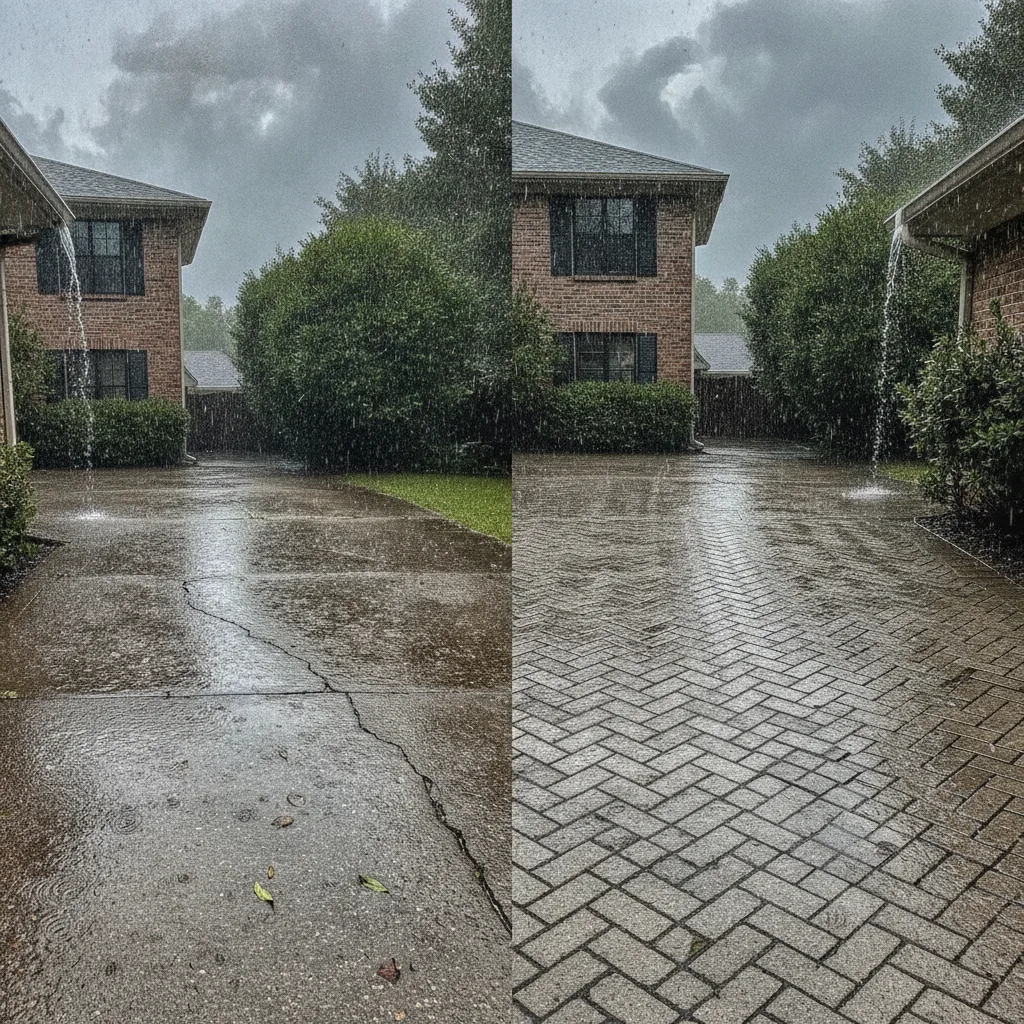
I stood at the edge of my property during a storm last spring. Water rushed down the driveway, picking up motor oil, brake dust, and fertilizer. That soup poured directly into the street grate. Concrete acts like a giant slip-and-slide for rain. It gives water nowhere to go but out.
Table of Contents
- ●Key takeaways
- ●The problem with traditional slabs
- ●How permeable pavers actually work
- ●The excavation reality
- ●The layer breakdown
- ●Crunching the rainwater numbers
- ●Stormwater absorption calculator
- ●Permeable pavers vs concrete: direct comparison
- ●Winter weather performance
- ●The maintenance reality check
- ●The cleaning routine
- ●Municipal rebates and financial offsets
- ●Making your final decision
I decided to tear it up. Permeable pavers changed how I look at residential hardscaping. I wanted my yard to absorb rain like a forest floor, but I also needed a driveway that could hold a heavy truck without cracking.
I spent weeks researching load capacities and drainage rates. Here is how these 2 surfaces actually perform under weather pressure.
Key takeaways
- Concrete pushes 100 percent of rainfall into municipal storm drains.
- Permeable pavers capture and filter rain into the ground.
- Installation depth for permeable systems is nearly triple that of a standard slab.
- You have to actively sweep paver joints to preserve drainage rates.
- Frost heave shatters rigid concrete slabs over time, while pavers flex and settle safely.
The problem with traditional slabs
Pouring a standard concrete driveway seals off a massive piece of your property. The EPA classifies this as impervious cover. When rain hits a sealed surface, it accelerates, causing flash flooding in surrounding soil and overwhelming municipal sewer systems.
Most homes built in the last 50 years rely entirely on surface runoff. Builders grade the dirt so water runs away from the foundation. The driveway acts as a primary channel. That just moves the problem downstream. Heavy runoff scours local creeks. Sun-baked concrete also heats up rainwater before dumping it into aquatic ecosystems.
I hated watching 500 gallons of usable water leave my property. My garden needed that moisture, and the deep aquifer needed that recharge.
How permeable pavers actually work
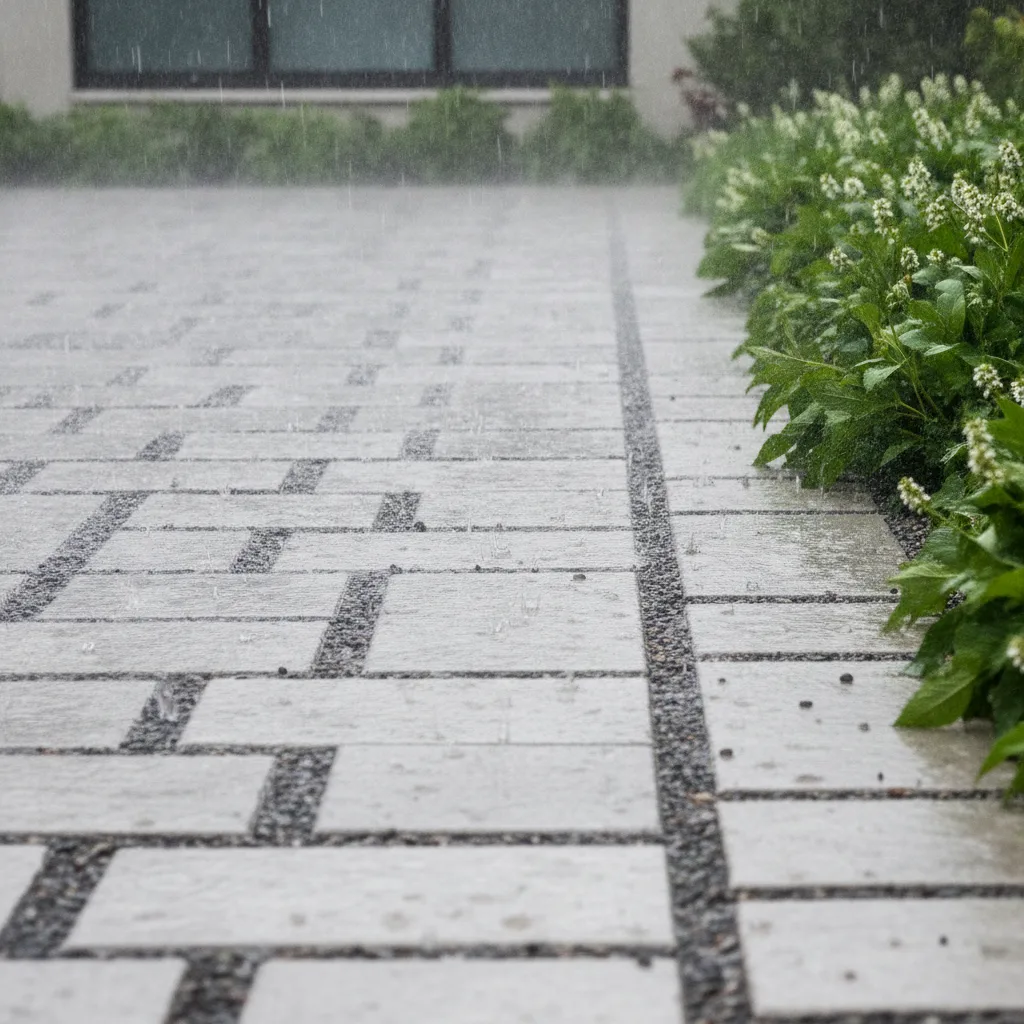
A permeable paver driveway looks like regular brick or stone. The blocks themselves are solid concrete and don’t absorb water. The drainage happens entirely in the gaps between them.
Installers leave specific voids around each paver. They fill these voids with small, washed aggregate. Water hits the surface and drops straight through the cracks into an engineered sub-base.
According to USGS surface runoff data, a properly designed permeable system can infiltrate up to 100 inches of rain per hour. You’ll probably never see a puddle on this driveway. The water vanishes instantly.
Internal Link: Want to capture roof runoff too? Read our guide on DIY Rainwater Harvesting: Affordable Water Conservation to build a complete home water strategy.
The excavation reality
Concrete requires a shallow dig. A crew scrapes off 4 inches of topsoil, lays down a thin layer of gravel, and pours the slab. The entire process takes 2 days.
Permeable systems demand serious excavation. My contractor dug down 18 inches. We hauled away dump trucks full of dirt. You have to create a massive subterranean bathtub. The Interlocking Concrete Pavement Institute (ICPI) mandates specific aggregate layers to hold the water while it percolates into the native soil.
The layer breakdown
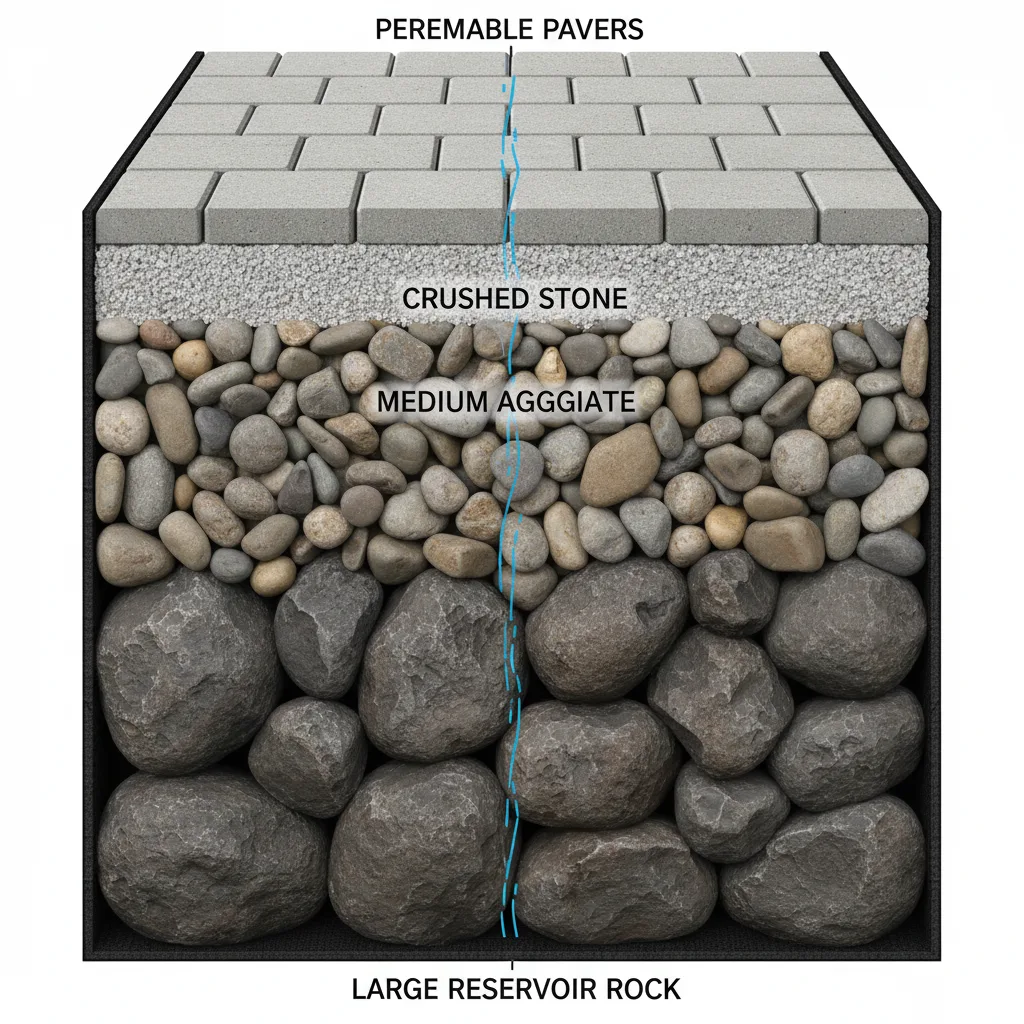
Fine particles like sand trap water, so you have to use open-graded crushed stone. Here’s the exact profile from the bottom up:
- Uncompacted subgrade: The native soil. Don’t smash it with a heavy roller. You want the natural pores open.
- Geotextile fabric: Keeps the dirt from migrating up into your clean stone.
- Sub-base (12 inches): Large, fist-sized clean stone (ASTM No. 2). This layer holds the bulk of the storm volume.
- Base (4 inches): Medium clean stone (ASTM No. 57). This locks the larger stones in place and provides a flat working surface.
- Bedding (2 inches): Small clean stone (ASTM No. 8). The pavers sit directly on this layer.
The system stores water in the empty space between the jagged rocks. The American Society of Landscape Architects notes that a standard open-graded crushed stone base has about 40 percent void space. An 18-inch deep driveway can hold roughly 7 inches of solid rainfall before overflowing.
Crunching the rainwater numbers
I wanted to know exactly how much water my driveway was intercepting. An inch of rain dropping on a standard driveway equals hundreds of gallons. That water previously scoured my lawn and washed topsoil into the street.
I built this calculator based on NOAA precipitation formulas. Plug in your own dimensions to see the math.
Stormwater absorption calculator
Enter your driveway dimensions to see how much water a permeable system keeps out of the storm drain.
Permeable pavers vs concrete: direct comparison
The National Ready Mixed Concrete Association produces incredibly durable materials. Concrete is cheap and pours fast. You can drive on it in a week. But rigid systems fail under specific geographic pressures.
| Feature | Standard concrete | Permeable pavers |
|---|---|---|
| Runoff reduction | 0% | Up to 100% |
| Installation time | 2-3 days | 5-7 days |
| Winter flex | Rigid (cracks easily) | Flexible (shifts safely) |
| Maintenance | Power wash occasionally | Sweep/vacuum joints annually |
Internal Link: If you struggle with property flooding, consider routing graywater properly. Check our guide on DIY Greywater Systems to manage indoor water safely.
Winter weather performance
Cold weather destroys bad driveways. I live in a climate where the temperature swings wildly. It rains, then freezes solid overnight.
Concrete acts like a sponge for trace amounts of surface water. When that water freezes, it expands by 9 percent. This hydraulic pressure snaps rigid concrete slabs in half. You get spalling, pitting, and spiderweb cracks. The FEMA mitigation guidelines identify frost heave as a major structural threat to residential hardscapes.
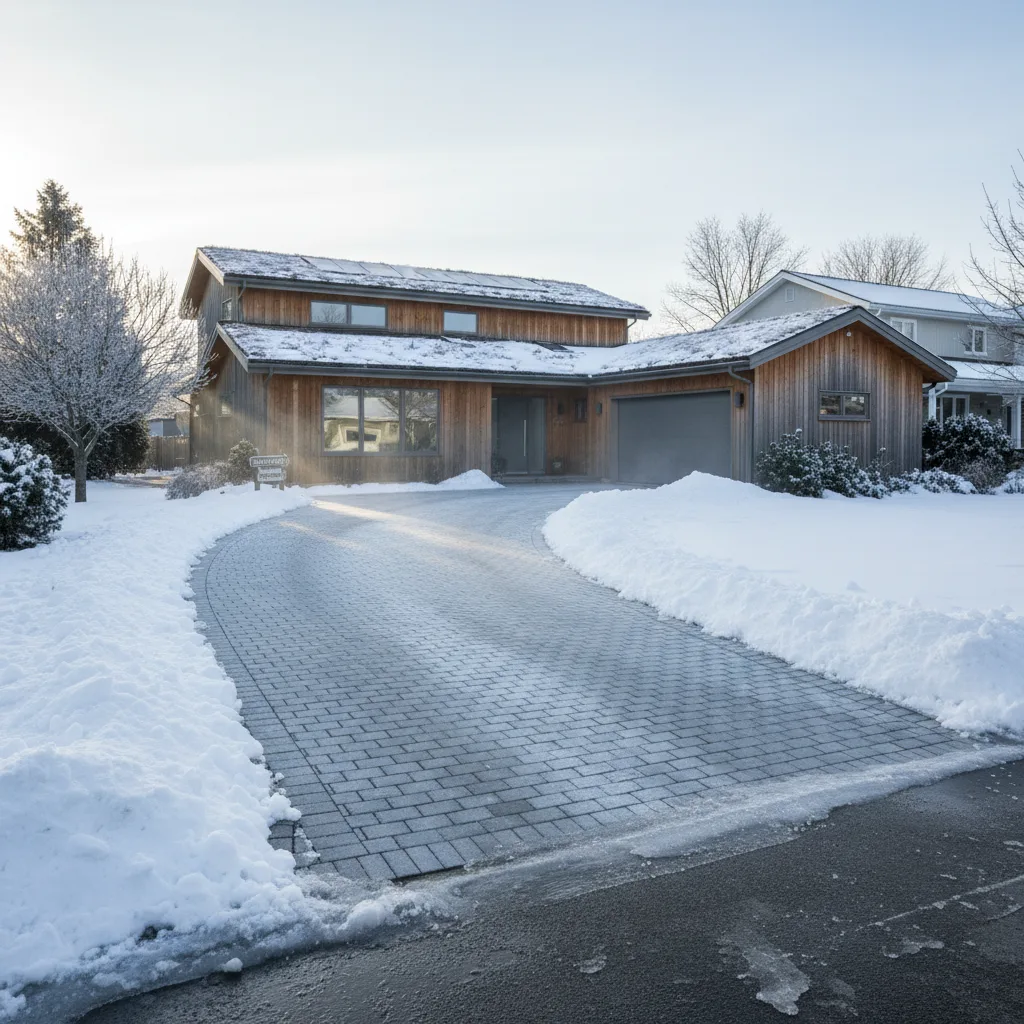
Permeable pavers handle freezing differently. The deep stone base acts as a capillary break. Moisture drains far below the frost line before it can freeze. If moisture does freeze near the surface, the pavers have room to shift. The joints act as built-in expansion gaps.
Snow melt behaves better too. On a sunny winter day, snow melts on a concrete driveway. At sunset, that puddle refreezes into a sheet of black ice. With permeable systems, the meltwater drops immediately through the gaps. The surface stays completely dry. I rarely use rock salt anymore, which keeps toxic chlorides out of the local groundwater.
The maintenance reality check
You can’t install a permeable driveway and ignore it. If you treat it like concrete, it’ll fail.
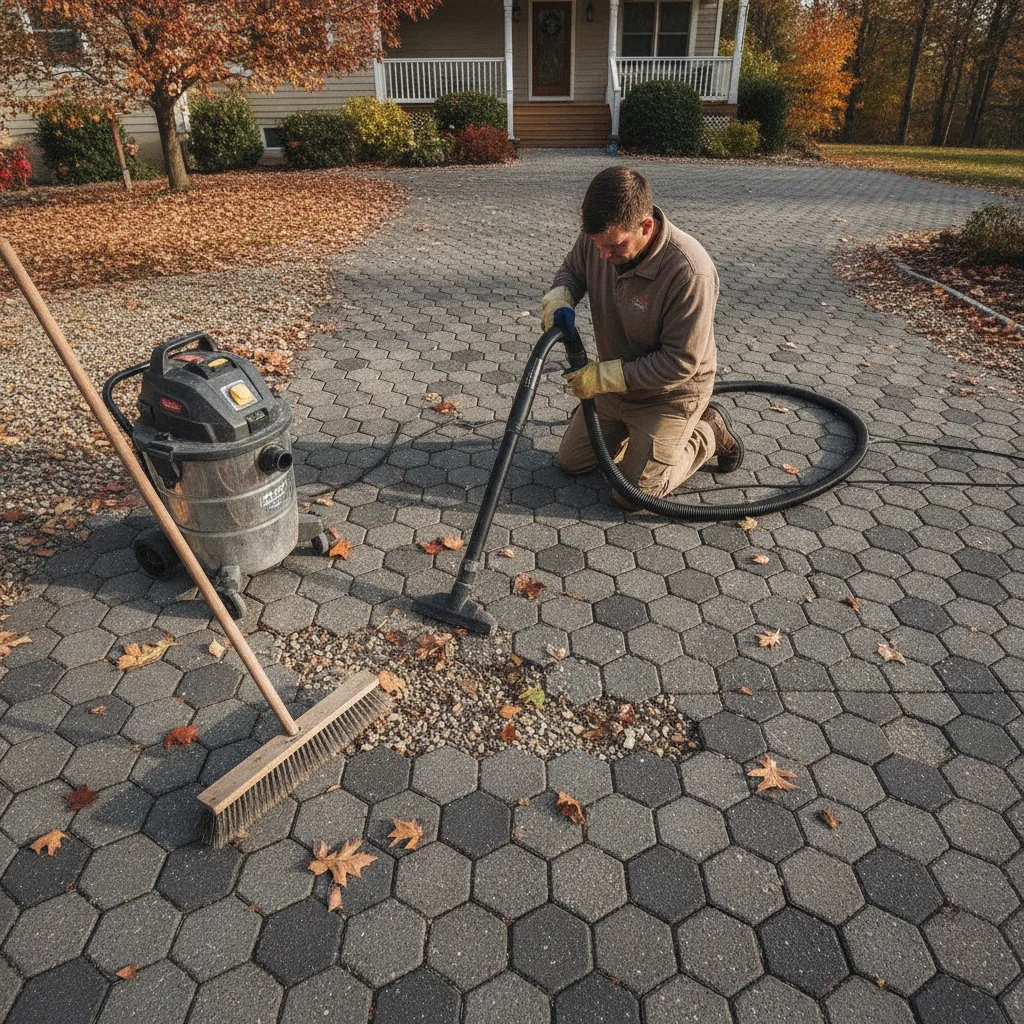
The joints between the pavers are tiny. Leaves and tire dirt settle into these gaps. Over time, organic matter rots and forms compost. That compost plugs the drainage holes. The Chesapeake Bay Foundation warns that neglected permeable surfaces eventually behave exactly like impervious concrete.
The cleaning routine
Once a year, usually in late fall, I run a heavy-duty shop vacuum over the entire driveway. I suck out the top half-inch of dirt and aggregate from the joints, then sweep fresh ASTM No. 8 clean stone back in.
Weeds occasionally sprout in the corners. Seeds blow in on the wind. Since the base has zero nutrients, the weeds root shallowly. I pull them by hand. If a stubborn patch emerges, I handle it with boiling water.
Internal Link: Dealing with weeds without chemicals? Check out 10 Natural Pest Control Methods for a Chemical-Free Garden.
Municipal rebates and financial offsets
The initial cost shocked me. Permeable pavers cost roughly double the price of a standard concrete pour. The price difference sits entirely in the labor and deep excavation.
But cities desperately want homeowners to manage their own stormwater. Municipal treatment plants overflow during heavy rains. Aging infrastructure can’t handle modern storm intensity. Researchers at the Penn State Extension estimate that urban runoff contributes up to 70 percent of water pollution in local streams.
Many local water districts offer cash rebates for removing impervious surfaces. I applied for a local stormwater grant. The county paid me by the square foot to tear out my concrete. This rebate absorbed a huge portion of the installation cost.
Some municipalities also reduce your monthly sewer bill if you prove you retain your stormwater on-site. The Center for Watershed Protection tracks many of these local incentive programs across the country. Check with your regional water authority before signing a contractor bid.
Internal Link: Want to learn how to navigate municipal eco-programs? Read The Ugly Truth About Getting Your Turf Replacement Rebate.
Making your final decision
Living with permeable pavers completely stopped the flooding in my side yard. The ground absorbs every drop of rain. The deep aggregate base acts like a subterranean reservoir. The tree roots adjacent to the driveway clearly benefit from the slow, steady water release deep underground.
Concrete provides a cheap, flat surface fast. Permeable pavers manage environmental impact. You trade a higher upfront cost and an annual sweeping routine for a driveway that actually protects your local watershed.
Hire a contractor who explicitly understands open-graded aggregate layers. If they talk about using sand or stone dust, walk away. The entire system relies on the empty space between the rocks.
Explore Financing Options for Eco-Upgrades

Written by Mangaleswaran
Mangaleswaran is a dedicated sustainable living expert and the founder of EcoDweller. With a deep passion for renewable energy, he specializes in simplifying complex green technologies—like solar power and home efficiency—for the modern homeowner. His mission is to empower individuals to reduce their environmental impact while building more cost-effective, eco-friendly homes for the future.
Follow on Facebook