
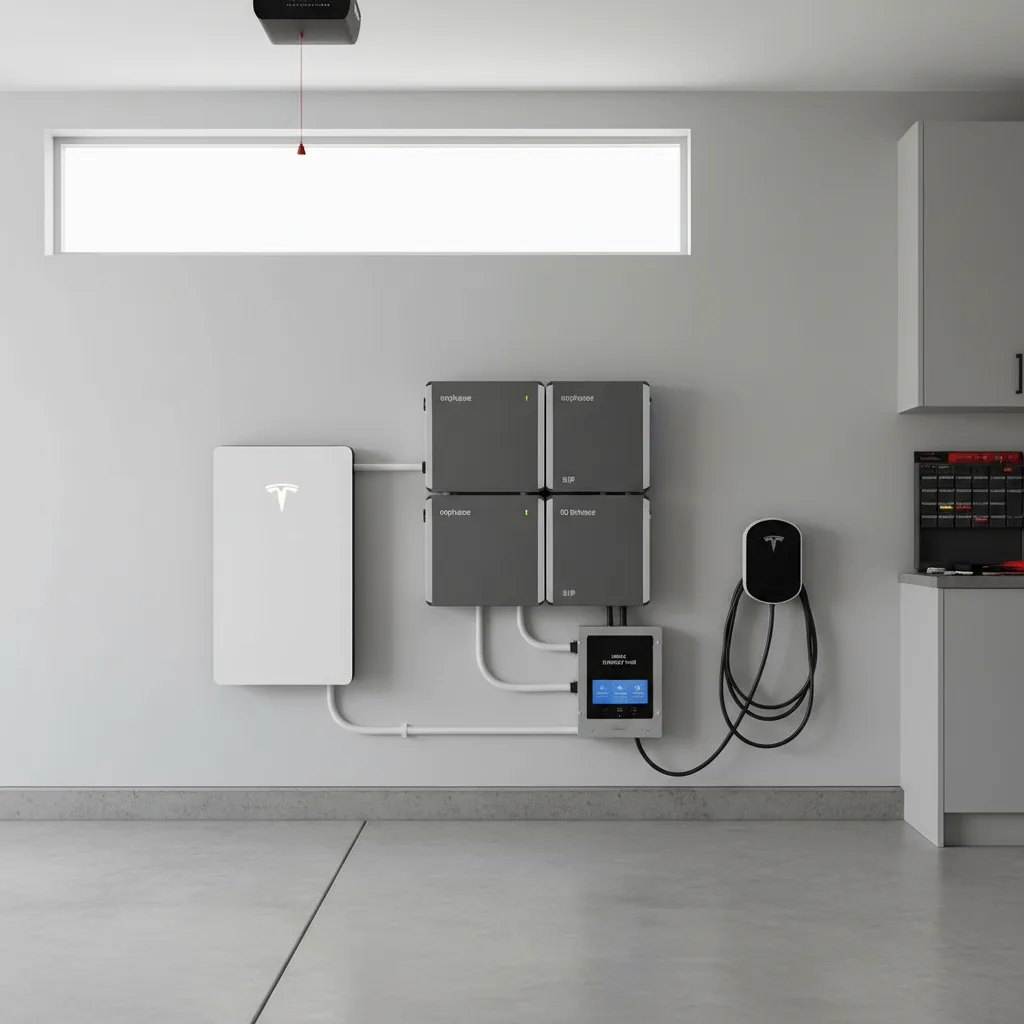
The Tesla Powerwall 3 13.5 kWh costs roughly $15,400 installed. The Enphase IQ Battery 5P costs $8,500 installed.
Table of Contents
- ●Quick answer by situation
- ●What you actually get for the money
- ●Full specs compared
- ●The inverter question nobody mentions upfront
- ●What the federal tax credit does to both prices
- ●Power output: where these two diverge completely
- ●Warranty: 5 years is a big difference
- ●Installer access: more competition, lower price
- ●Which one fits your situation
- ●Frequently asked questions
- ●How much does the Enphase IQ Battery 5P cost vs Tesla Powerwall 3?
- ●Does the Enphase IQ 5P qualify for the 30% federal tax credit?
- ●Can the Enphase IQ 5P power a central air conditioner?
- ●Which battery has the better warranty?
- ●Can I add more Enphase batteries later without replacing the whole system?
- ●Does the Powerwall 3 work with Enphase microinverters?
- ●Build the full system right
That’s the headline number. But it’s almost meaningless without context — because these two batteries aren’t built to do the same job.
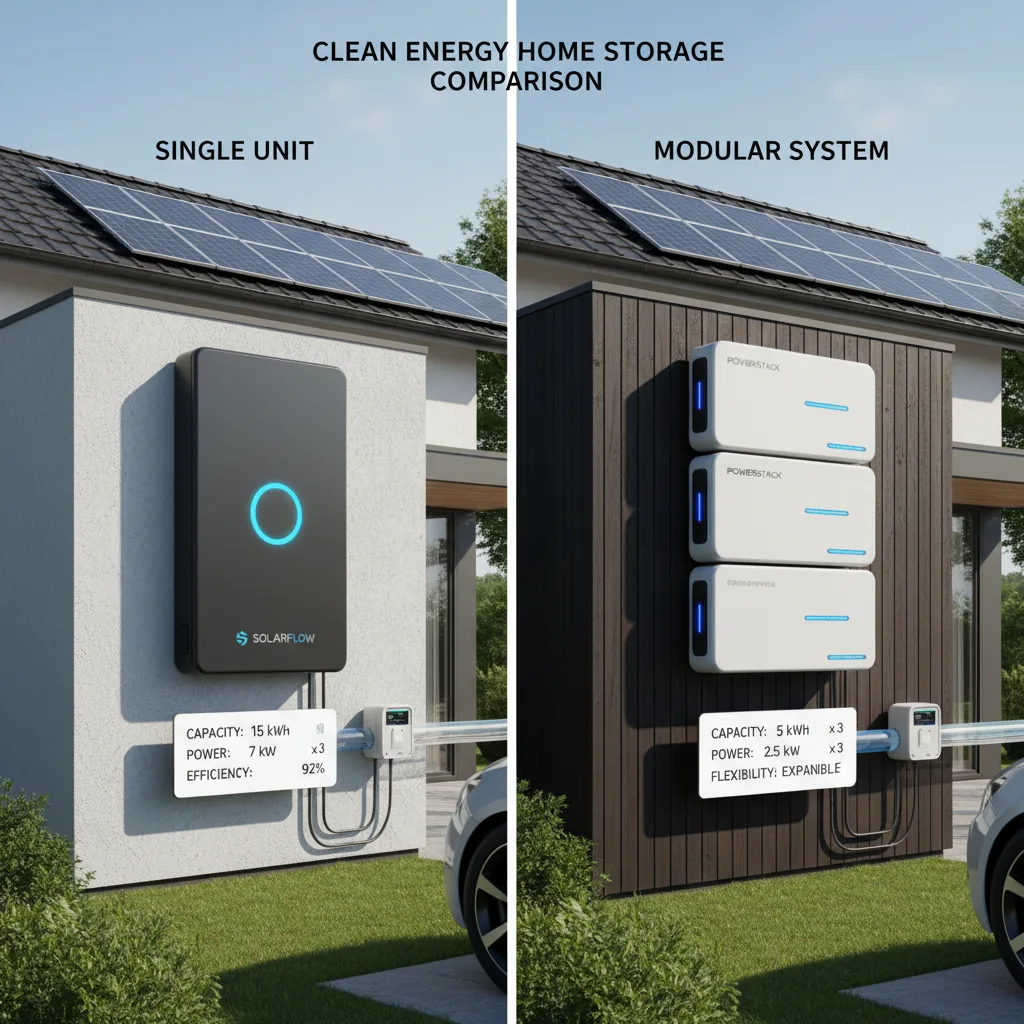
One is a whole-home backup unit with a built-in solar inverter. The other is a modular 5 kWh block you stack as your needs and budget grow. Comparing them purely on price is like comparing a truck to a compact car because both have 4 wheels.
Here’s the honest breakdown.
Quick answer by situation
| You have Enphase microinverters | Enphase IQ 5P — native integration, no extra equipment |
| New solar + storage install | Powerwall 3 — built-in inverter saves $2,000 to $3,000 |
| Budget under $10,000 | Enphase IQ 5P — start with 1 unit, add later |
| Whole-home backup with central AC | Powerwall 3 — 11.5 kW continuous handles it solo |
| 15+ year horizon, LFP chemistry priority | Enphase IQ 5P — 15-year warranty vs Powerwall’s 10 |
What you actually get for the money
The Powerwall 3 at $15,400 installed gives you 13.5 kWh of storage, 11.5 kW of continuous power output, and a built-in hybrid solar inverter. That last part matters: on a new solar install, you don’t need a separate string inverter. That’s $2,000 to $3,000 saved before you factor in any incentives.
The Enphase IQ Battery 5P at $8,500 installed gives you 5 kWh of storage and 3.84 kW of continuous power. It’s AC-coupled — connects directly to your home’s AC side and works with any existing solar setup, including Enphase microinverters.
To match the Powerwall’s 13.5 kWh capacity, you need 3 Enphase units. That’s roughly $22,500 installed — about $4,500 to $6,000 more than a single Powerwall 3 for the same storage volume.
Full specs compared
| Spec | Tesla Powerwall 3 | Enphase IQ Battery 5P |
|---|---|---|
| Installed cost (single unit) | $13,000 – $16,000 | $6,500 – $8,500 |
| Storage capacity | 13.5 kWh | 5 kWh per unit |
| Continuous power output | 11.5 kW | 3.84 kW per unit |
| Peak / surge power | 22 kW (185A motor start) | 7.68 kVA per unit |
| Battery chemistry | LFP (select markets) / NMC | LFP |
| Round-trip efficiency | 89% | 90% |
| Solar inverter included | Yes — DC hybrid inverter | No — AC coupled |
| Warranty | 10 years / 70% retention | 15 years / 60-70% retention |
| Operating temperature | -4°F to 122°F (active thermal) | -4°F to 122°F |
| Weight | 287 lbs | 83 lbs per unit |
| Installer network | Tesla certified only (~2,500 US) | Any licensed electrician |
| After 30% ITC (single unit) | $9,100 – $11,200 | $4,550 – $5,950 |
The inverter question nobody mentions upfront
This is where the cost comparison gets interesting.
The Powerwall 3 has a DC hybrid inverter built in. On a new solar install, that replaces the separate string inverter you’d otherwise need to buy. A SolarEdge or Fronius string inverter for an 8kW system runs $2,000 to $3,000 installed. The Powerwall absorbs that cost entirely.
So if you’re installing solar for the first time, the real Powerwall 3 cost is closer to $12,000 to $13,000 net — once you subtract the inverter you’re not buying.
The Enphase 5P is AC-coupled. It plugs into your existing AC setup and works with whatever inverter is already there. If you have Enphase IQ8 microinverters, it integrates perfectly. If you have a SolarEdge or Fronius string system, it still works — no additional equipment required.
If you’re retrofitting battery storage onto an existing solar setup, Enphase has the cleaner installation. If you’re starting fresh, Powerwall 3’s all-in-one architecture actually makes more financial sense.
What the federal tax credit does to both prices
Both batteries qualify for the 30% federal Investment Tax Credit. That’s a direct deduction from what you owe in taxes — not a rebate, not a discount. You claim it in the year the system is installed. If you are curious about broader averages across the nation, review our data on home battery backup costs in 2026.
On a single Powerwall 3 at $15,000 installed: the ITC brings that to $10,500.
On a single Enphase 5P at $8,500 installed: drops to $5,950.
On 3 Enphase units at $22,500: $15,750 after ITC — still about $5,000 more than a Powerwall 3 at the same capacity.
Some states stack additional incentives on top. New York adds NYSERDA’s battery incentive ($200 to $350 per kWh) plus a 25% state tax credit capped at $5,000. California has the SGIP rebate, which can cut $2,000 to $4,000 off either system depending on your utility and income tier.
If you’re in BC Canada, the Canada Greener Homes Grant covers battery storage. See whether solar is worth it in British Columbia, Canada for the current incentive amounts and eligibility requirements.
Power output: where these two diverge completely
The Powerwall 3 pushes 11.5 kW continuously. That starts a central air conditioner (which pulls 80 to 110 amps on startup), runs the fridge, powers the lights, and charges a phone — all at once, from a single unit.
A single Enphase 5P tops out at 3.84 kW. That handles essential loads fine: fridge, lights, router, a few outlets. But it won’t start a central AC without tripping.
To match the Powerwall’s power output, you need 3 Enphase units. At that point you have 15 kWh of storage and 11.52 kW of power — essentially equivalent. But you’ve also spent $22,500 instead of $15,400.
If whole-home backup with heavy loads is the goal, the math favors Powerwall 3. If you’re covering essential circuits only — fridge, lights, medical devices, internet — a single Enphase 5P does that for $6,500 to $8,500.
Warranty: 5 years is a big difference
Tesla offers 10 years with 70% capacity retention guaranteed. Enphase offers 15 years — with 60% retention standard, or 70% with the extended warranty option.
That 5-year gap matters more than it looks. Home batteries cycle daily — store solar in the afternoon, discharge at night. Over 15 years, that’s 5,000+ cycles. LFP chemistry handles deep daily cycling well, but the Powerwall’s 10-year limit means you’re potentially looking at a replacement before the solar panels need it.
Enphase’s modular design also means if one unit fails after year 10, you replace that one unit. With the Powerwall, the whole system is a single point of failure. A faulty inverter board at year 11 means replacing the whole unit at full cost.
Installer access: more competition, lower price
Tesla requires certified Powerwall installers. There are roughly 2,500 in the US. In urban markets that’s fine. In rural areas or smaller cities, you might have 1 or 2 options — which limits your ability to get competing quotes.
Enphase has no exclusivity requirement. Any licensed electrician or solar installer familiar with Enphase equipment can do it. More options means more competitive pricing. In most markets, Enphase installations come in faster and with more negotiating room.
This is a real-world cost factor that doesn’t show up in spec sheets. If you’re in a metro area, it’s minor. If you’re rural, it can add $1,000 to $2,000 to the Powerwall install.
Which one fits your situation
Get the Powerwall 3 if: you’re doing a new solar install from scratch, you need whole-home backup including central AC, or you want the simplest possible system with one unit handling everything. The integrated inverter makes it genuinely cost-competitive on new installs once you account for the inverter you’re not buying separately.
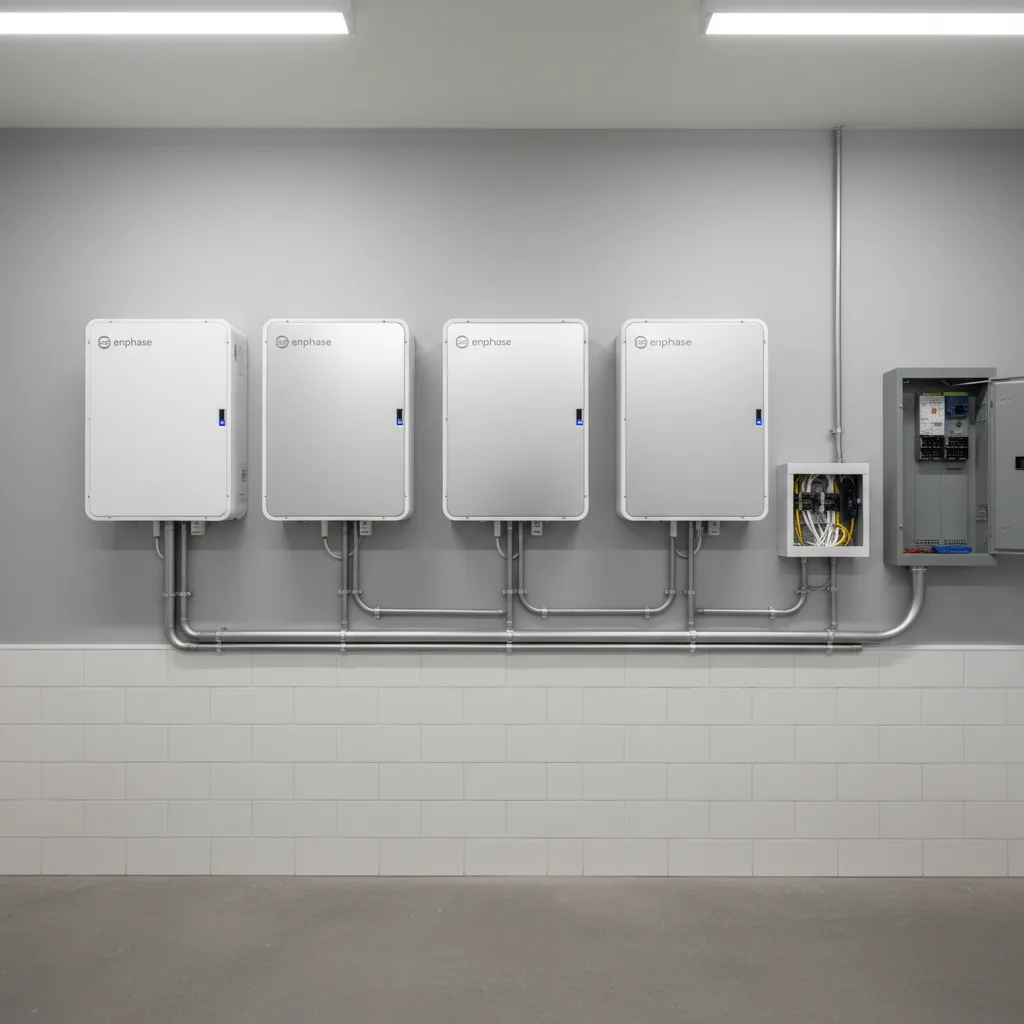
Get the Enphase IQ 5P if: you already have Enphase microinverters on your roof, you want to start small and expand, your backup needs are essential loads only, or you’re prioritising the longer warranty. It’s also the obvious fit if you want to keep your options open — the modular design means you’re never locked into buying more than you need.
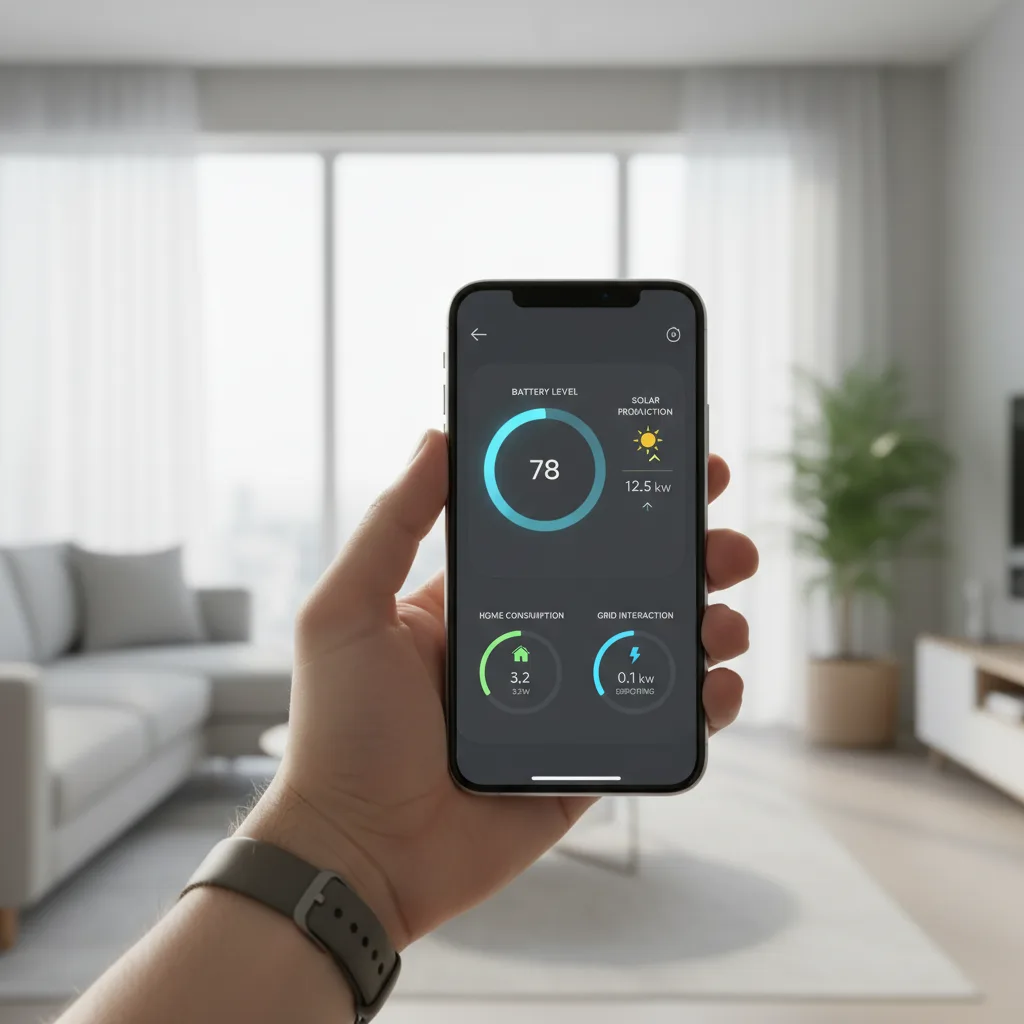
For homes in cloudy climates pairing battery storage with a microinverter solar system, the Enphase combination is particularly clean. The same ecosystem handles panel-level production and battery storage through one app. If you haven’t settled on inverter type yet, the microinverter vs string inverter guide covers exactly why microinverters outperform in overcast conditions — and how that affects which battery makes sense.
And if you want to see how the Powerwall 3 performs in real-world use, the full Tesla Powerwall 3 performance breakdown has 6 months of usage data.
Frequently asked questions
How much does the Enphase IQ Battery 5P cost vs Tesla Powerwall 3?
A single Enphase IQ 5P costs $6,500 to $8,500 installed. The Tesla Powerwall 3 costs $13,000 to $16,000 installed. But matching the Powerwall’s 13.5 kWh capacity requires 3 Enphase units at around $22,500 — so at equivalent storage, Powerwall 3 is the cheaper option.
Does the Enphase IQ 5P qualify for the 30% federal tax credit?
Yes. Both batteries qualify for the federal Investment Tax Credit at 30% of the installed cost. That brings a single Powerwall 3 to roughly $9,100 to $11,200, and a single Enphase 5P to $4,550 to $5,950.
Can the Enphase IQ 5P power a central air conditioner?
A single unit can’t — it maxes out at 3.84 kW continuous, and most central AC units need 80 to 110 amps to start. You need at least 3 units to match that surge capacity. One Powerwall 3 handles it solo at 11.5 kW with a 185-amp motor-start rating.
Which battery has the better warranty?
Enphase: 15 years with 60% to 70% capacity retention. Tesla: 10 years with 70% retention. Enphase’s 5-year advantage matters for a product that cycles daily and is expected to outlast the solar panels above it.
Can I add more Enphase batteries later without replacing the whole system?
Yes, that’s the point. Start with one 5 kWh unit, add a second when budget allows. Each unit installs independently. With the Powerwall, the minimum increment is another $13,000 to $16,000 unit.
Does the Powerwall 3 work with Enphase microinverters?
Technically yes, but it’s complicated. The Powerwall 3’s built-in DC inverter is designed for string-style panel wiring. Adding it alongside an Enphase microinverter system creates ecosystem conflicts and potential warranty issues. If you have Enphase microinverters, the IQ Battery 5P is the right battery — full stop.
Build the full system right
Battery chosen. Now make sure the rest of your setup matches your climate and inverter type.

Written by Mangaleswaran
Mangaleswaran is a dedicated sustainable living expert and the founder of EcoDweller. With a deep passion for renewable energy, he specializes in simplifying complex green technologies—like solar power and home efficiency—for the modern homeowner. His mission is to empower individuals to reduce their environmental impact while building more cost-effective, eco-friendly homes for the future.
Follow on Facebook