
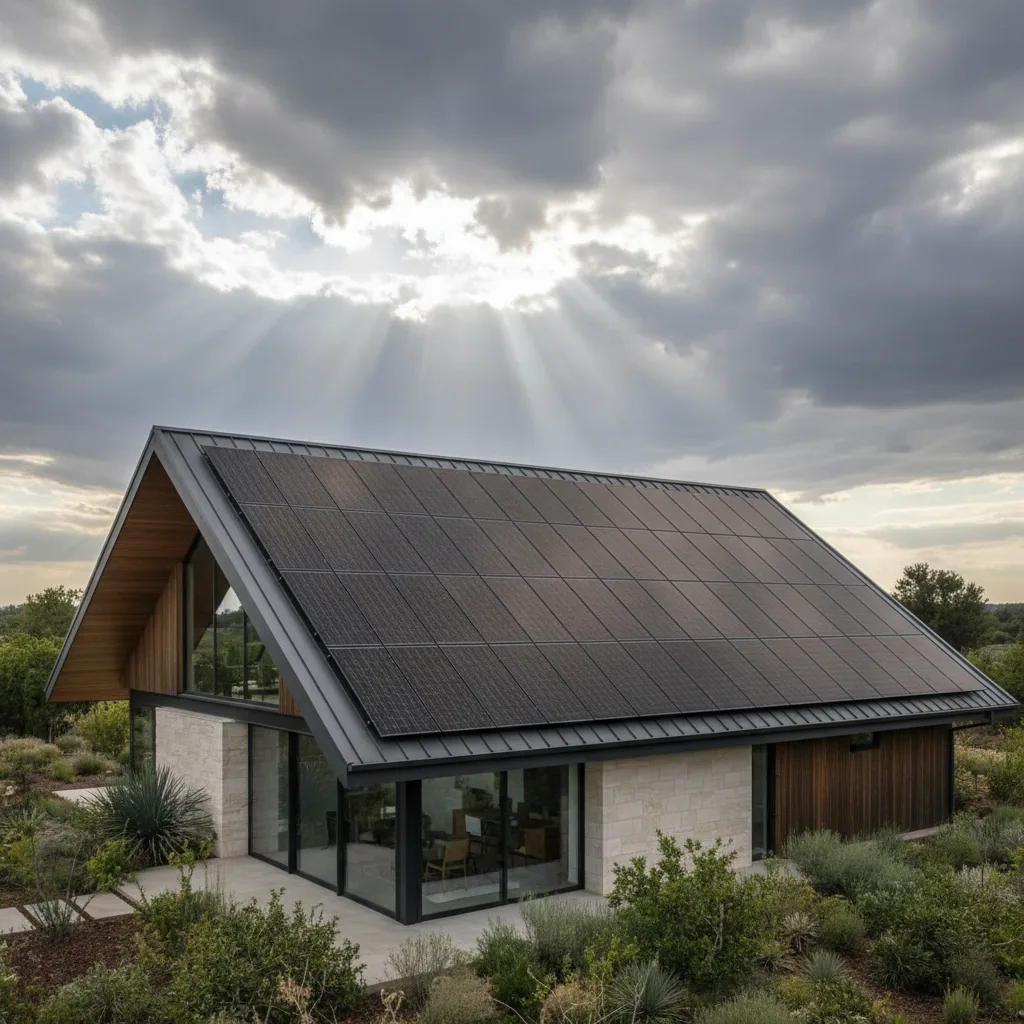
Your solar panels get all the glory. The inverter? Nobody talks about it.
Table of Contents
- ●Quick answer
- ●Why this decision hits harder in overcast climates
- ●How each system actually works
- ●String inverter
- ●Microinverter
- ●Side-by-side comparison
- ●The 3 inverter options ranked for cloudy climates
- ●1. Enphase IQ8+ — best overall for overcast regions
- ●2. Hoymiles HMS-2000-4T — best value microinverter
- ●3. SolarEdge with power optimizers — only for unshaded roofs
- ●How to decide for your specific roof
- ●Pairing the right inverter with the right panel
- ●Frequently asked questions
- ●Are microinverters better than string inverters in cloudy weather?
- ●How much more do microinverters cost?
- ●Is Enphase IQ8 worth the premium over cheaper microinverters?
- ●Can I add a microinverter system to existing solar panels?
- ●Does inverter type affect the federal tax credit?
- ●The bottom line
- ●Build the full system right
That’s a problem — because the inverter you pick matters more than your panel brand in a cloudy climate. Pick wrong and you’re leaving 15% to 35% of your annual production on the table. Every single year.
Quick answer
- Cloudy roof with any shading: microinverter (Enphase IQ8+)
- Simple unshaded south-facing roof: string inverter with optimizers (SolarEdge)
- Budget is the priority: Hoymiles microinverter — 30% cheaper than Enphase, same 25-year warranty
- Price difference: microinverters add $1,200 to $2,400 to an 8kW system
Why this decision hits harder in overcast climates
In a sunny climate, a string inverter works fine. Most days are clear, shading is rare, and the whole string performs together without issue.
Cloudy climates are different. Cloud cover is inconsistent — one part of your roof gets hit by a shadow from a chimney, a tree, or even cloud edge diffusion at a different intensity than another part. With a string inverter, that one underperforming panel pulls down every other panel on the string. All of them.
NREL field data puts the production gap at 15% to 35% annually for shaded roofs comparing string to microinverter systems. In Seattle or Vancouver, where you’re already working with 1,630 to 1,870 sun hours per year, a 20% loss is brutal.
How each system actually works
String inverter
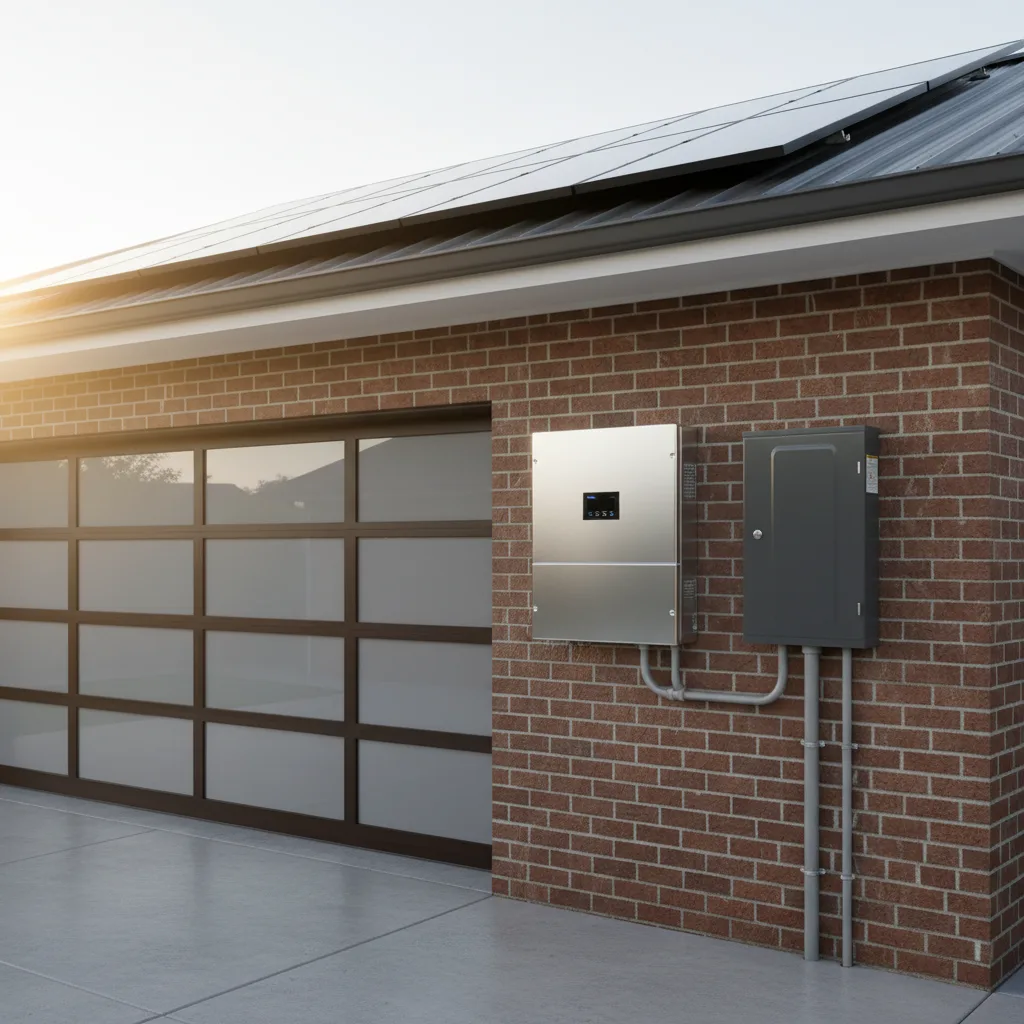
8 to 12 panels wire together in a “string.” All their DC power flows to one box on your wall. That box converts everything to AC at once.
The problem is MPPT — Maximum Power Point Tracking. A string inverter has one MPPT channel for the whole string. It finds the optimal operating voltage for the group, not for each panel individually. One weak panel drags the whole chain down to match it.
SolarEdge solves this partially with power optimizers — small devices on each panel that let each one operate at its own peak voltage before sending power to the central inverter. You get panel-level performance, but still have a single central box that’ll need replacing at year 10 to 15 ($2,000 to $3,500).
Microinverter
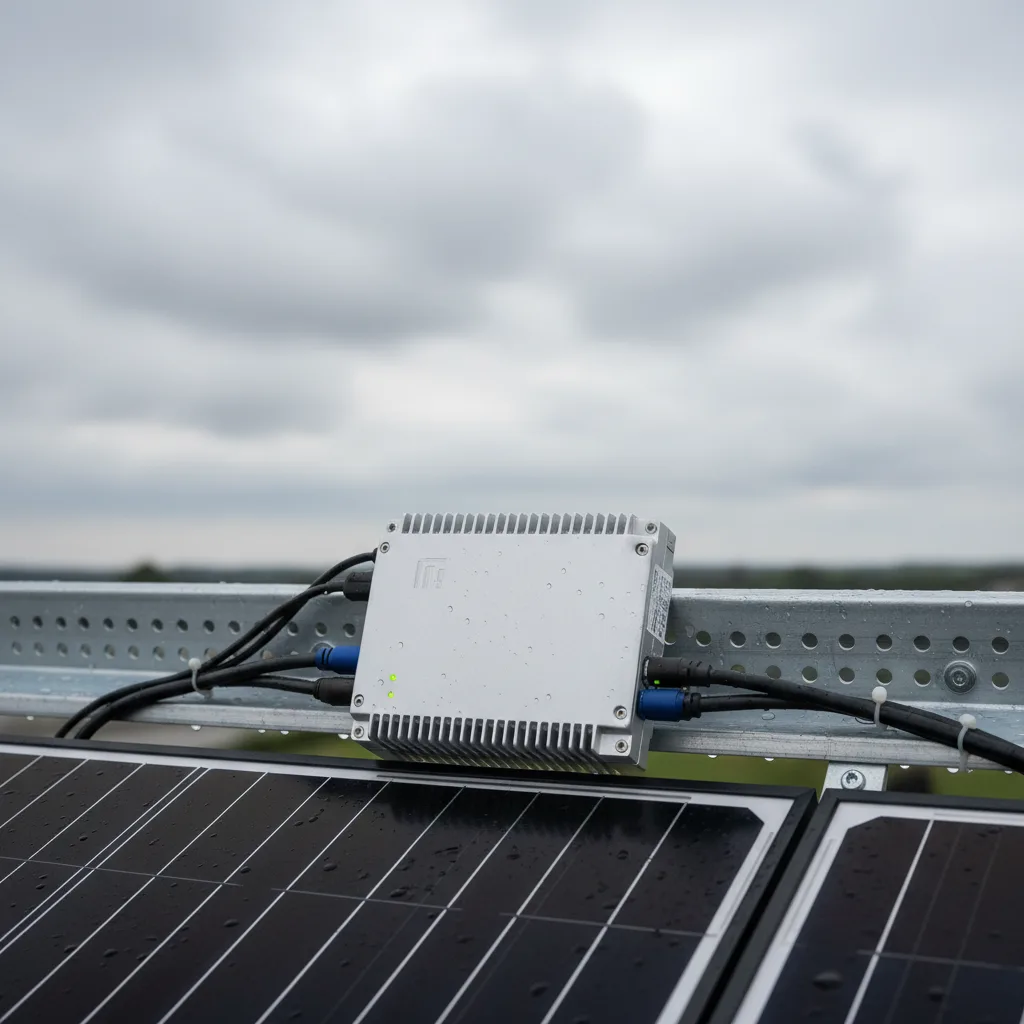
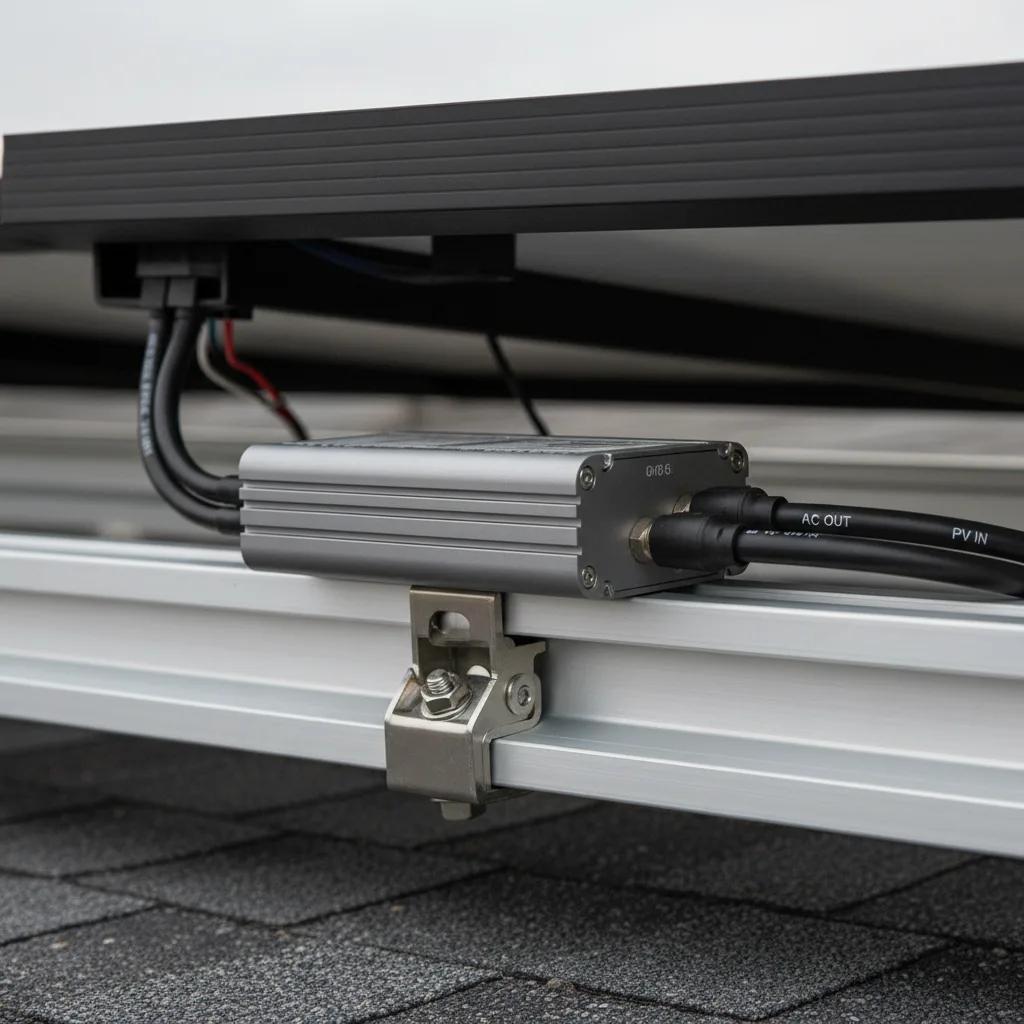
Each panel gets its own inverter mounted directly underneath it. DC converts to AC at the panel. No central box. No chain.
Shading one panel affects exactly one panel. Nothing else.
Enphase IQ8+ is the market leader. 96.5% peak efficiency, 25-year warranty, and real-time per-panel monitoring through their app. You can see exactly which panel is underperforming and why — useful when you’re in a climate where cloud patterns vary daily.
Side-by-side comparison
| Factor | String inverter | Microinverter |
|---|---|---|
| Cost (8kW system) | $1,000 – $2,000 | $2,200 – $4,400 |
| Shading tolerance | Poor (whole string affected) | Excellent (panel-by-panel) |
| Peak efficiency | 98% (SolarEdge) | 96.5% (Enphase) |
| Warranty | 10 – 15 years | 25 years |
| Monitoring | System-level only | Per-panel real-time |
| Replacement cost | $2,000 – $3,500 at yr 10-15 | Replace individual units only |
| Best for | Simple unshaded roof | Shaded or complex roof |
| Cloudy climate verdict | Only if zero shading | Strong recommendation |
The 3 inverter options ranked for cloudy climates
1. Enphase IQ8+ — best overall for overcast regions
The IQ8+ is the one I’d put on most cloudy-climate roofs. 96.5% peak efficiency, genuine panel-level independence, and a 25-year warranty that outlasts the string inverter replacement cycle entirely.
The app is genuinely good. You can pull up any panel on any day and see exactly what it produced. When you’re dealing with variable cloud cover, that data tells you whether your system is behaving the way it should — or whether a panel has an issue.
Cost: roughly $0.35 to $0.50 per watt. For an 8kW system, budget $2,800 to $4,000 for the inverters alone.
2. Hoymiles HMS-2000-4T — best value microinverter
One unit handles 4 panels. That cuts installation labor compared to a one-to-one setup, and the price is 30% to 40% below Enphase — about $0.18 to $0.24 per watt.
The 25-year warranty matches Enphase. Peak efficiency is 96.7%, marginally better than IQ8+. The monitoring app (S-Miles Cloud) is less polished, but it’s improving fast.
If the Enphase price is stretching the budget, Hoymiles is the honest alternative. Same shade tolerance, similar performance, significantly lower cost.
3. SolarEdge with power optimizers — only for unshaded roofs
String inverter with optimizers on each panel. You get panel-level monitoring and partial shade mitigation — but the central inverter is still a single point of failure. When it goes at year 12, you’re spending $2,000 to $3,500 to replace it.
Peak efficiency is 98%, slightly above microinverters. On a clean south-facing roof with zero shade issues, the SolarEdge setup costs less upfront and that efficiency edge is real.
For a cloudy, shaded, or complex roof: skip it. The microinverter production advantage outweighs the efficiency gap within 2 to 3 years.
How to decide for your specific roof
Three questions settle this:
1. Does your roof have any shading? A chimney, a vent pipe, a tree that hits 2 panels in the afternoon — any of it. If yes, microinverter. Full stop.
2. Does your roof face multiple directions? East-west split, L-shaped, or multiple pitches. A string inverter with one MPPT channel can’t optimize two orientations independently. Two MPPTs help but microinverters solve it completely.
3. How long are you staying? If you’re in the house 15+ years, microinverters save you the string inverter replacement cost entirely. If you’re planning to sell in 5 years, the string inverter’s lower upfront cost might pencil out better.
Pairing the right inverter with the right panel
The inverter decision doesn’t live in isolation. In a cloudy climate, you want HJT or TOPCon panels feeding into a microinverter system — because those panel technologies hold their efficiency best in diffuse light, and the microinverter makes sure every panel operates at its individual peak rather than being dragged down by one shadow.
If you haven’t settled on panels yet, the full HJT low-light performance breakdown shows exactly how much efficiency you retain under cloud cover compared to standard PERC. The numbers matter when you’re in Seattle or Vancouver and running 150+ overcast days per year.
And if you’re figuring out which panel brand to pair this with, the Pacific Northwest panel guide ranks the top 5 with real annual output estimates per city.
Frequently asked questions
Are microinverters better than string inverters in cloudy weather?
For any roof with shading, yes. Microinverters isolate each panel so cloud-edge shadows or partial shading only affect the panels directly hit — not the whole array. On a completely unshaded roof, the difference is smaller and a string inverter with optimizers can work fine.
How much more do microinverters cost?
$1,200 to $2,400 more for a typical 8kW system compared to a string inverter setup. Hoymiles narrows that gap to around $800 to $1,500. Factor in the string inverter replacement at year 10 to 15 ($2,000 to $3,500) and microinverters often cost less over the full system life. Use our solar panel payback period calculator to see your exact break-even point.
Is Enphase IQ8 worth the premium over cheaper microinverters?
Depends on your priorities. Enphase has the best monitoring app, a proven track record, and strong customer support. Hoymiles gives you the same warranty and similar efficiency for 30% to 40% less. If the app and brand reliability matter to you, Enphase. If budget is tight, Hoymiles is solid.
Can I add a microinverter system to existing solar panels?
Yes, but it’s a full inverter replacement job — not a simple upgrade. Your installer removes the existing string inverter and fits microinverters to each panel. Labor cost varies, but plan for $1,500 to $2,500 for a typical residential system.
Does inverter type affect the federal tax credit?
No. The 30% ITC applies to the full system cost including inverters, regardless of type. Microinverters, string inverters, and optimizers all qualify.
The bottom line
Most cloudy-climate roofs have some shading. A chimney. A vent. A tree 40 feet away that catches the low winter sun. If yours does, microinverters pay for themselves — the production difference compounds every year, and the 25-year warranty means you never face a mid-system replacement bill.
If your roof is genuinely clear with a single south-facing pitch and zero obstructions, a SolarEdge setup with optimizers saves you money upfront and performs within 1.5% of microinverter efficiency.
Know your roof before you sign anything. A shading analysis from a reputable installer takes 20 minutes and changes the whole calculation.
If you want to see how your total system would perform — panels, inverter, and battery combined — run your numbers through our cloudy day output guide first. It gives you a realistic baseline before you talk to any installer.
Build the full system right
Inverter sorted. Now make sure everything else in your setup matches your climate.

Written by Mangaleswaran
Mangaleswaran is a dedicated sustainable living expert and the founder of EcoDweller. With a deep passion for renewable energy, he specializes in simplifying complex green technologies—like solar power and home efficiency—for the modern homeowner. His mission is to empower individuals to reduce their environmental impact while building more cost-effective, eco-friendly homes for the future.
Follow on Facebook