
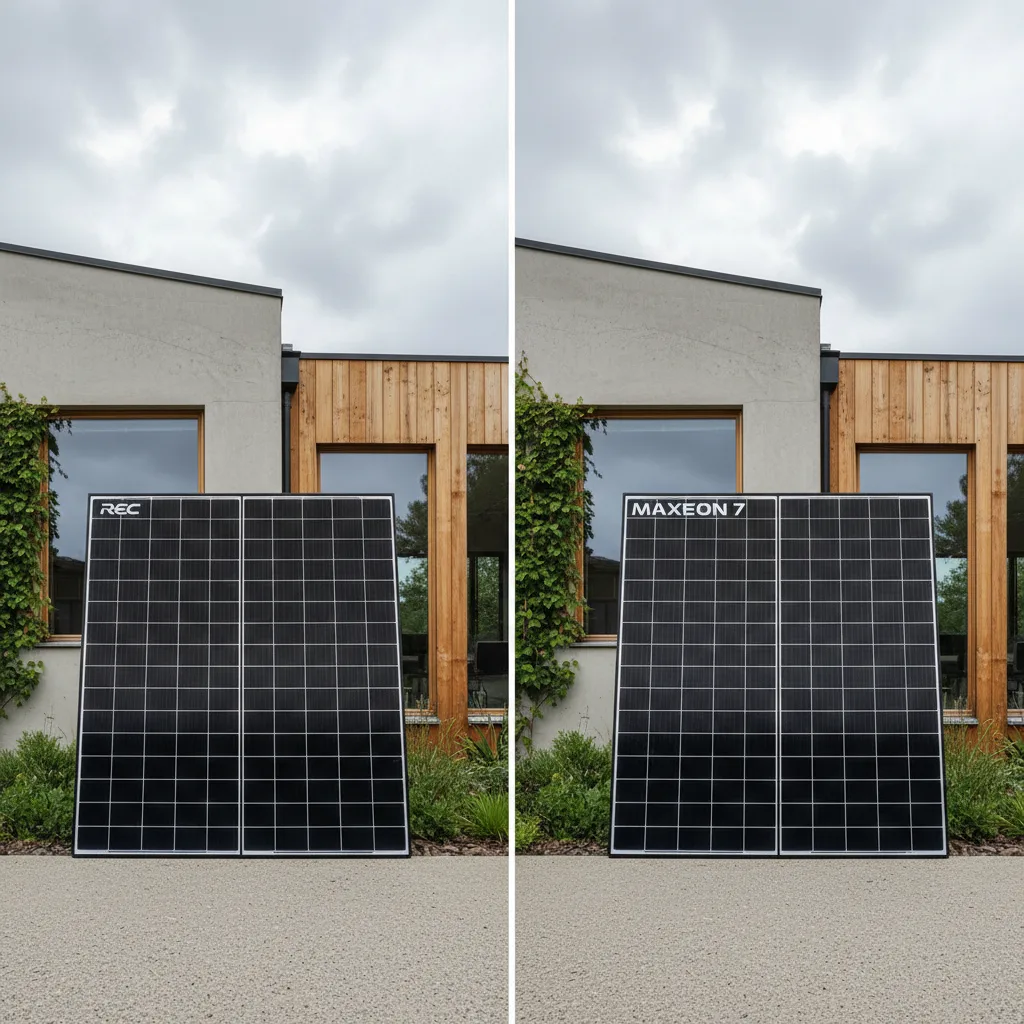
Living in an area where the sun feels like a rare visitor can make choosing solar panels feel like a gamble. I remember standing in my yard during a particularly long stretch of overcast weather, staring at the grey sky and wondering if solar was even worth it. You want the highest possible yield when the sun finally peeks through, but you also need panels that can harvest every stray photon on those dreary Tuesday mornings. This brings us to the ultimate heavyweight bout: analyzing REC Alpha vs Maxeon 7 cloudy climate performance.
Table of Contents
- ●REC Alpha Pure-R vs Maxeon 7: Key Specs Head to Head
- ●Low-Light Efficiency Test: How Both Panels Perform Under Cloud Cover
- ●The HJT Advantage of REC Alpha
- ●The IBC Prowess of Maxeon 7
- ●Temperature Coefficient Comparison: Which Handles Cold Rainy Days Better?
- ●10-Year Degradation and Warranty Comparison
- ●The Maxeon 40-Year Power Pledge
- ●The REC ProTrust Warranty
- ●Price vs Performance: Which Panel Gives Better ROI in a Cloudy Climate?
- ●Interactive Cloudy Climate Solar Calculator
- ●Real Example: A 6kW Comparison in an Overcast Metro
- ●Our Verdict: Which Panel Should You Buy for an Overcast Region?
- ●Choose REC Alpha Pure-R If:
- ●Choose Maxeon 7 If:
- ●Frequently Asked Questions
- ●1. Is the REC Alpha Pure-R or Maxeon 7 better for cloudy weather?
- ●2. How much more expensive is the Maxeon 7 than the REC Alpha?
- ●3. Which panel has better low-light efficiency: REC Alpha or Maxeon 7?
- ●4. Does the Maxeon 7 warranty outperform REC Alpha?
- ●5. Is Maxeon 7 worth the premium price over REC Alpha in 2026?
The Maxeon 7 currently holds the crown for peak efficiency at a staggering 24.1%, but the REC Alpha Pure-R is the value-driven challenger, delivering exceptional 22.3% low-light efficiency. While both are elite, they serve different types of homeowners. If you have limited roof space and a high budget, Maxeon is your champion. However, for most of us looking for the best return on investment (ROI) in less-than-sunny conditions, the REC Alpha might just take the trophy. In this deep dive, we will break down the data, the technology, and the real-world costs to see which panel deserves a spot on your roof.
Key Takeaways for Cloudy Climate Solar:
- Efficiency Lead: Maxeon 7 leads the industry with 24.1% efficiency, making it the best for extracting power from limited space.
- Low-Light King: REC Alpha Pure-R uses Heterojunction (HJT) technology, which excels at capturing diffused light during overcast days.
- Cost Advantage: REC Alpha panels typically cost 15% to 20% less per watt than Maxeon 7, often resulting in a faster payback period.
- Temperature Resilience: Both panels feature world-class temperature coefficients, ensuring they don’t lose power on humid, cloudy days.
- Warranty: Maxeon offers a massive 40-year warranty, while REC provides a stellar 25-year comprehensive package.
REC Alpha Pure-R vs Maxeon 7: Key Specs Head to Head
Before we get into the nitty-gritty of how these panels handle a gloomy sky, we need to look at the hard numbers. On paper, both panels represent the pinnacle of current photovoltaic technology, but their internal architectures differ significantly. To understand the full HJT technology breakdown behind both panels, we must look at how cell structure impacts performance.
| Feature | REC Alpha Pure-R | Maxeon 7 |
|---|---|---|
| Peak Efficiency | 22.3% | 24.1% |
| Cell Technology | HJT (Heterojunction) | IBC (Back Contact) |
| Temp. Coefficient | -0.24% / °C | -0.29% / °C |
| Annual Degradation | 0.25% | 0.25% |
| Warranty (Years) | 25 Years | 40 Years |
Understanding these specs is vital because:
- Efficiency dictates how much power you get per square inch.
- HJT technology in REC helps with “diffused light” (the light that bounces off clouds).
- The temperature coefficient determines how much power is lost as the panel heats up.
- Lower annual degradation means more power in year 25 compared to standard panels.
Low-Light Efficiency Test: How Both Panels Perform Under Cloud Cover
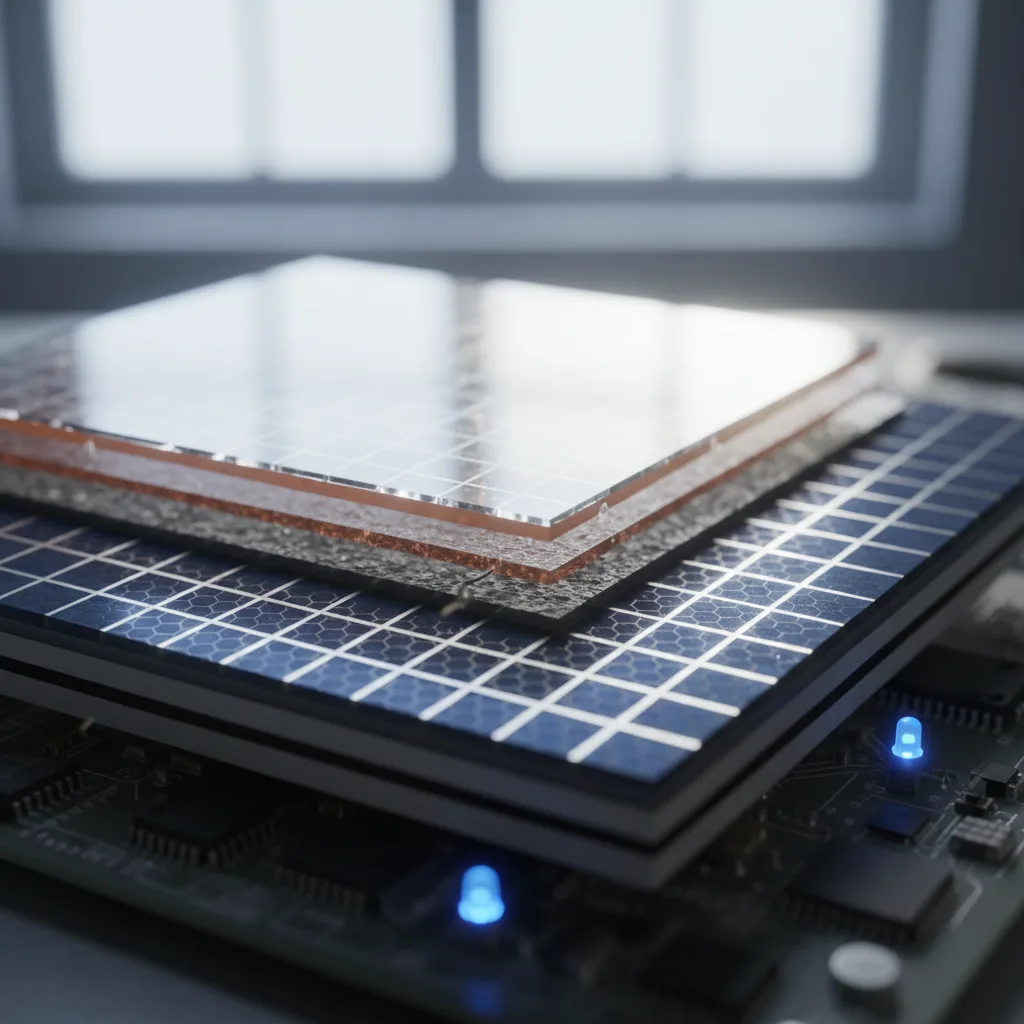
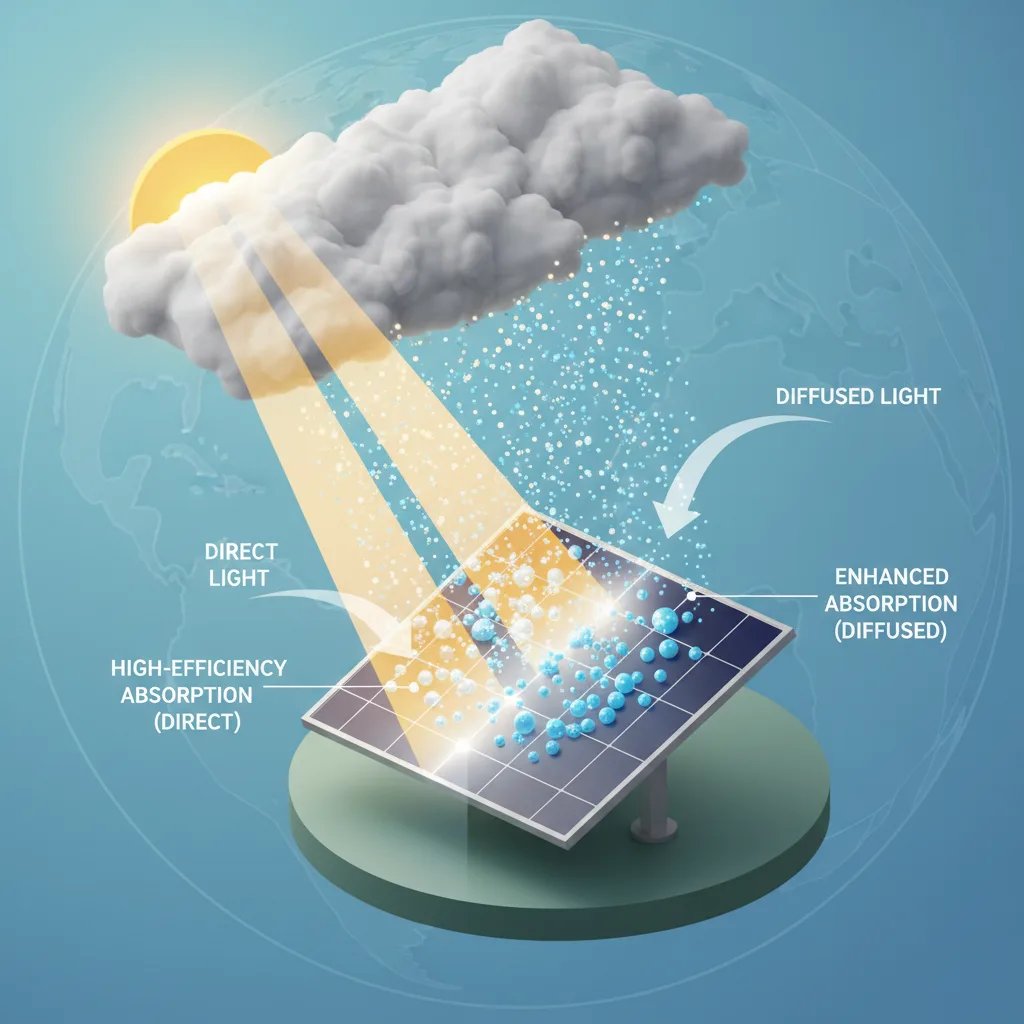
When the sky turns leaden, standard solar panels drop off a cliff in terms of production. This is where the debate between the REC Alpha and Maxeon 7 in overcast conditions gets interesting. High-end panels are designed to respond to a broader spectrum of light, not just direct beams. According to the National Renewable Energy Laboratory (NREL), next-generation cells are significantly better at capturing blue and red light waves that penetrate cloud layers.
The HJT Advantage of REC Alpha
REC uses Heterojunction technology, which combines crystalline silicon with thin-film silicon. This allows the panel to start producing power earlier in the morning and keep going later into the evening. Its specific response to diffused light is among the best in the industry.
- Early Wake-Up: HJT cells require lower voltage to start the conversion process.
- Diffused Light Capture: These panels excel when light is scattered by water vapor in the atmosphere.
- Lower Resistance: The cell structure reduces internal energy loss, which is critical when every milliwatt counts.
The IBC Prowess of Maxeon 7
Maxeon 7 utilizes Interdigitated Back Contact (IBC) technology. By moving all the metal contacts to the back of the cell, the entire front surface is dedicated to absorbing light. This design is highly effective in low-light because there is zero “shading” from the grid lines on the front of the cell.
- Total Surface Absorption: 100% of the front cell is active, maximizing photons captured in low-light.
- Broad Spectral Response: Maxeon cells are tuned to capture more of the infrared and ultraviolet spectrum.
- Exceptional Weak Light Performance: Maxeon’s patented solid copper foundation helps maintain high voltage even under heavy overcast conditions.
Temperature Coefficient Comparison: Which Handles Cold Rainy Days Better?
Many people assume solar panels love heat. In reality, heat is the enemy of efficiency. While we are comparing how the REC Alpha and Maxeon 7 handle gloomy weather, we must also consider the temperature. Overcast regions are often cooler and more humid. A panel’s temperature coefficient tells us how much efficiency is lost for every degree above 25°C (77°F).
The REC Alpha Pure-R boasts a temperature coefficient of -0.24%/°C, which is currently the gold standard for the residential market. Maxeon 7 is close behind at -0.29%/°C. While these numbers seem small, they have a massive impact over a 25-year lifespan. You can find more details on how these figures affect real-world output at Energy.gov’s solar basics.
Why this matters in a cloudy climate:
- Voltage Stability: Lower coefficients mean the panel maintains a higher voltage as it warms up, keeping your inverter in its “sweet spot.”
- Humid Performance: On muggy, overcast days, panels can still get quite warm; REC’s HJT technology manages this heat better than almost any other panel.
- Winter Yield: On those rare bright-but-cold winter days, both panels will actually over-perform their rated wattage because they stay so cool.
10-Year Degradation and Warranty Comparison
When you invest in premium solar, you aren’t just buying power for today; you are buying a hedge against energy inflation for the next four decades. Maxeon and REC offer two of the best warranties in the business, but there are distinct differences you need to know before signing a contract. You should always cross-reference these with SEIA’s consumer protection guidelines to ensure you’re getting a fair deal.
The Maxeon 40-Year Power Pledge
Maxeon recently shattered industry norms by offering a 40-year warranty on their Maxeon series (including the 7). This covers the product, the power output, and even the labor for replacement in many cases.
- 92% Power at Year 40: Maxeon guarantees that your panels will still produce 92% of their original rated power after four decades.
- Durability: The solid copper foundation of Maxeon cells prevents the micro-cracks that plague cheaper panels during freeze-thaw cycles.
- Peace of Mind: If you plan on staying in your home for 30+ years, this is the ultimate insurance policy.
The REC ProTrust Warranty
REC offers a 25-year warranty that is exceptionally robust, especially if installed by an REC Certified Solar Professional. Their degradation rate is also industry-leading at 0.25% per year.
- 92% Power at Year 25: While the term is shorter than Maxeon’s, the performance guarantee is nearly identical for the first quarter-century.
- Labor Coverage: Like Maxeon, REC covers the labor costs for repairs if you use a certified installer.
- Lead-Free & Eco-Friendly: REC panels are RoHS compliant and lead-free, making them easier to recycle at the end of their life.
Price vs Performance: Which Panel Gives Better ROI in a Cloudy Climate?
This is where the rubber meets the road. In any REC Alpha vs Maxeon 7 cloudy climate comparison, price is often the deciding factor. Maxeon 7 is the “Ferrari” of solar—it is arguably the best, but you pay a premium for it. REC Alpha Pure-R is more like a high-end “Tesla”—it’s incredibly efficient and tech-forward, but priced more competitively for the mass market.
Generally, you can expect Maxeon 7 systems to be 15% to 25% more expensive than an equivalent REC Alpha system. For many, the question is whether that extra 1.8% in peak efficiency and the extra 15 years of warranty justify the cost. You can see how REC Alpha and Maxeon 7 compare against all rainy climate panels in our broader rankings to get a sense of the market average.
Interactive Cloudy Climate Solar Calculator
Use this tool to estimate the difference in production and cost based on your local weather and roof size.
Real Example: A 6kW Comparison in an Overcast Metro
Let’s look at a realistic scenario. Imagine a homeowner in a city with roughly 150 rainy days a year. They have space for 15 panels on their south-facing roof.
- The REC Option: 15 REC Alpha Pure-R (430W) panels. Total system size: 6.45 kW. Total estimated cost: $22,500. Expected Year 1 output: 7,100 kWh.
- The Maxeon Option: 15 Maxeon 7 (445W) panels. Total system size: 6.67 kW. Total estimated cost: $27,800. Expected Year 1 output: 7,600 kWh.
- The Outcome: The Maxeon system produces about 7% more energy annually but costs roughly 23% more. In most US utility markets, the REC system will reach its “break-even” point 2-3 years sooner than the Maxeon system.
Our Verdict: Which Panel Should You Buy for an Overcast Region?
After analyzing the technical data and real-world costs, the winner of this REC Alpha and Maxeon 7 comparison depends entirely on your specific constraints. Both are world-class products that appear in where both panels rank in our Pacific Northwest top 5 list for a reason. They represent the absolute best of what 2026 solar technology can offer.
Choose REC Alpha Pure-R If:
- You want the best possible ROI and a faster payback period.
- You have a moderate-to-large roof where maximizing power per square inch isn’t the absolute priority.
- You want the benefits of HJT technology without the Maxeon price premium.
- You prefer a lead-free, more sustainably manufactured panel.
Choose Maxeon 7 If:
- Your roof space is extremely limited and you need to squeeze every possible watt out of a small area.
- You prioritize the longest possible warranty (40 years) and the lowest long-term degradation.
- You live in an area with extremely high electricity rates where the extra 7-10% production justifies the higher upfront cost.
- You want the most aesthetically pleasing panel with zero visible metal lines on the front.
Regardless of which you choose, moving to high-efficiency solar in an overcast climate is a smart financial move. With federal tax credits (ITC) still available in the US and various provincial incentives in Canada, the time to electrify is now. Check out Bloomberg Energy’s latest market trends to see how solar costs are projected to shift through the end of 2026.
Frequently Asked Questions
1. Is the REC Alpha Pure-R or Maxeon 7 better for cloudy weather?
Both are elite. Maxeon 7 has higher overall efficiency, but REC Alpha’s HJT technology is specifically designed to excel in capturing the diffused light common on cloudy days. In most real-world tests, their low-light performance is very similar, with Maxeon having a slight edge in total yield and REC having the edge in cost-per-kWh.
2. How much more expensive is the Maxeon 7 than the REC Alpha?
On average, Maxeon 7 panels cost between 15% and 25% more than REC Alpha Pure-R panels. This can add $3,000 to $6,000 to the cost of a typical residential 7kW installation.
3. Which panel has better low-light efficiency: REC Alpha or Maxeon 7?
The Maxeon 7 has higher peak efficiency (24.1% vs 22.3%), but the REC Alpha is specifically praised for its spectral response in overcast conditions. Generally, Maxeon will produce more energy in the same footprint, but REC delivers more “bang for your buck” in low light.
4. Does the Maxeon 7 warranty outperform REC Alpha?
Yes, Maxeon offers a 40-year product and power warranty, while REC offers a 25-year warranty. Both are excellent, but Maxeon provides an extra 15 years of guaranteed performance.
5. Is Maxeon 7 worth the premium price over REC Alpha in 2026?
It is worth it if you have a very small roof and need to generate maximum power, or if you plan on living in your home for more than 25 years. For the average homeowner with plenty of roof space, REC Alpha usually offers a better overall ROI.

Written by Mangaleswaran
Mangaleswaran is a dedicated sustainable living expert and the founder of EcoDweller. With a deep passion for renewable energy, he specializes in simplifying complex green technologies—like solar power and home efficiency—for the modern homeowner. His mission is to empower individuals to reduce their environmental impact while building more cost-effective, eco-friendly homes for the future.
Follow on Facebook