
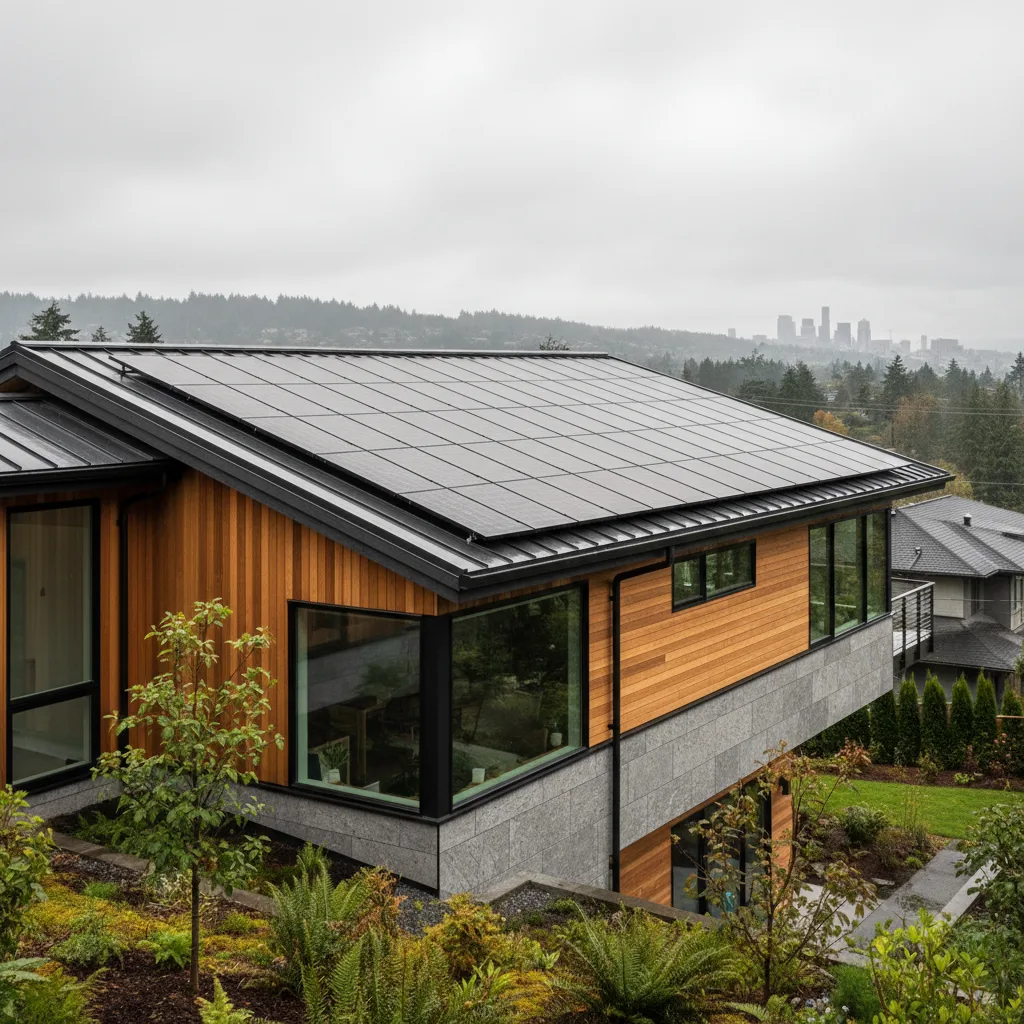
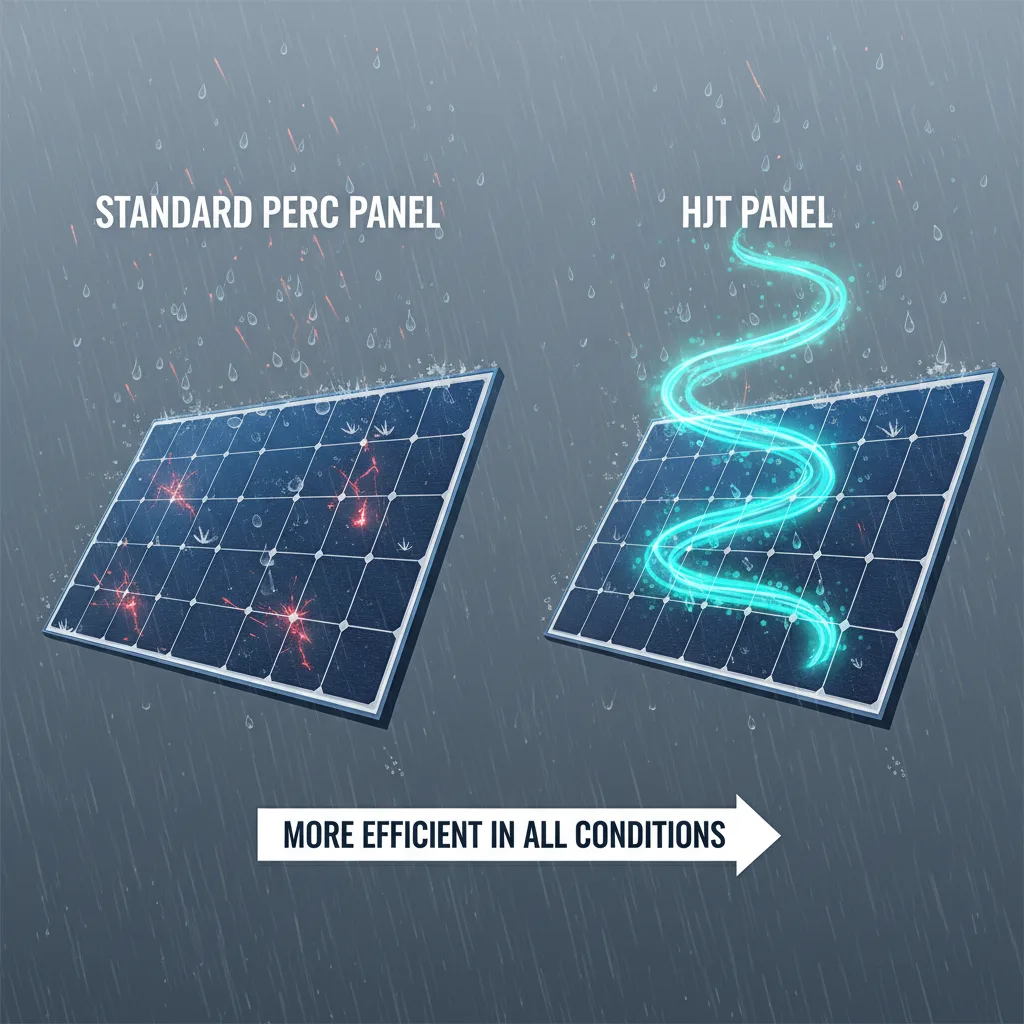
When it comes to generating power under cloudy skies, HJT solar panel low light performance is unmatched by any other residential technology in 2026. In independent tests, HJT panels maintain 92% to 95% of their rated efficiency in diffuse light—compared to 78% to 85% for TOPCon and just 65% to 72% for standard PERC panels. If you live in a region where the sun is more of a myth than a daily occurrence, this technology is the ultimate game-changer for your energy independence.
Table of Contents
- ●What Makes HJT Technology Superior in Low Light?
- ●HJT vs TOPCon vs PERC Low Light Test Results (Data Table)
- ●Real-World HJT Output at Dawn, Dusk and Under Cloud Cover
- ●Which HJT Panels Perform Best in Low Light? Top 4 Tested
- ●Is HJT Worth the Premium Price Over TOPCon in Cloudy Climates?
- ●Interactive Mini-Calculator: HJT Low Light Output Estimator
- ●Common Mistakes When Buying for Low Light
- ●How to Calculate Your Expected HJT Output in Your Region
- ●Frequently Asked Questions
- ●Final Verdict: Is HJT the Future of Solar?
Key Takeaways: HJT Low Light Superiority
- Unmatched Efficiency: HJT panels capture a wider spectrum of light, including infrared, which penetrates thick cloud cover better than visible light.
- Dawn to Dusk Advantage: HJT systems start producing power up to 30 minutes earlier and stop 30 minutes later than standard panels.
- Cloudy Climate ROI: While the upfront cost is 15-20% higher, the increased yield in overcast regions reduces the payback period by nearly a year compared to TOPCon.
- Bifaciality: Most HJT panels are bifacial, absorbing reflected light from the ground, further boosting output in gray weather.
I remember the first time I installed a small test array at my home in the Pacific Northwest. It was a typical Tuesday—gray, misty, and thoroughly depressing for a solar enthusiast. My old PERC panels were barely trickling enough power to run a lightbulb. But the HJT modules? They were pumping out enough juice to keep my home office running. That was the moment I realized that peak wattage ratings on a datasheet don’t mean much if you live under a constant blanket of clouds. To truly understand why these panels are winning the efficiency war, we need to look under the hood at their low-light efficiency metrics.
What Makes HJT Technology Superior in Low Light?
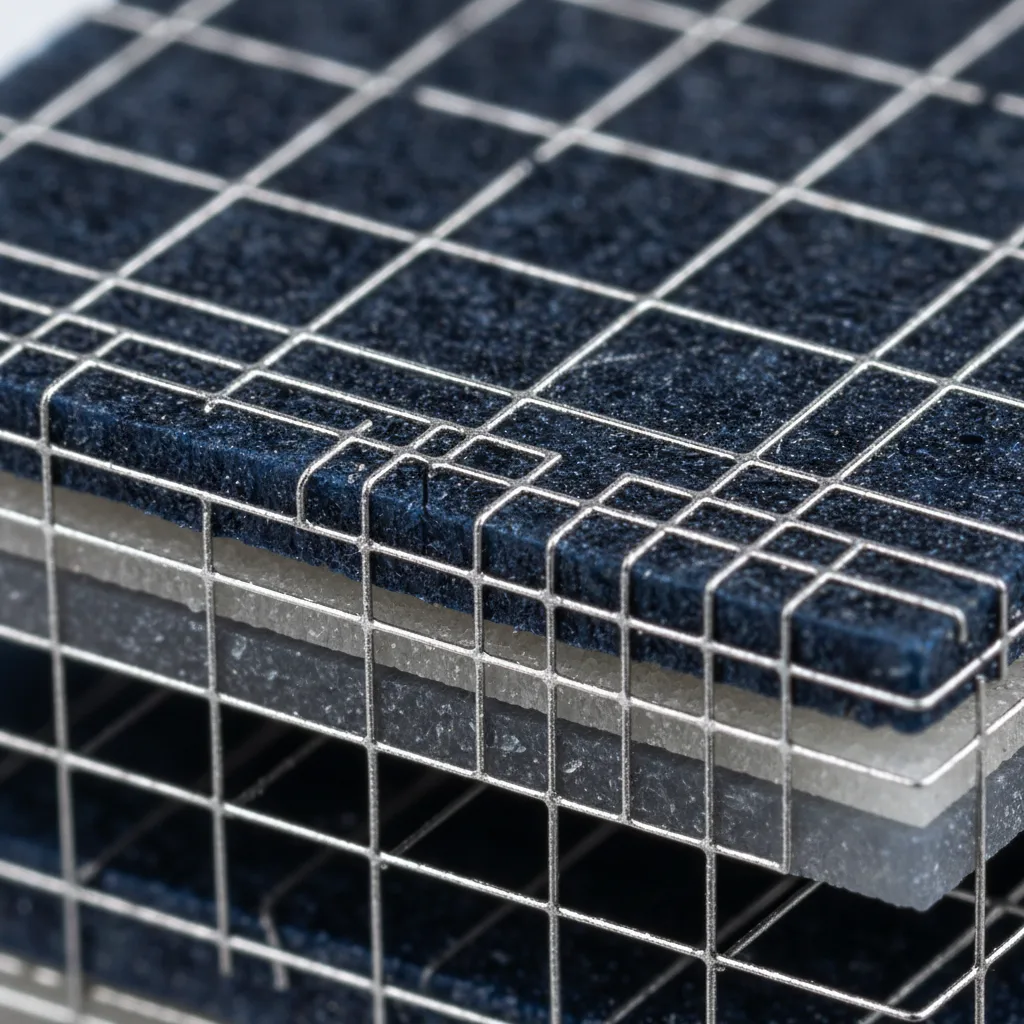
Heterojunction (HJT) technology isn’t just a minor upgrade; it’s a fundamental shift in how we manufacture silicon cells. By combining the best traits of crystalline silicon with thin-film technology, HJT overcomes the limitations that cause other panels to “sleep” during cloudy weather. Here is exactly why HJT efficiency in dim conditions is consistently higher:
- The “Sandwich” Structure: HJT cells use a monocrystalline silicon wafer sandwiched between two layers of amorphous “thin-film” silicon. This structure reduces “recombination” (where electrons are lost), allowing more electricity to flow even when photons are scarce.
- Lower Temperature Coefficient: HJT panels have a coefficient of roughly -0.26%/°C. While this helps in the heat, the stability of the cell architecture also keeps them highly responsive in the low-energy photon environments of early morning.
- Wider Spectral Response: Standard cells mostly react to visible light. HJT cells are sensitized to capture a broader range of the light spectrum, including the long-wave infrared light that easily passes through clouds and fog.
- Superior Passivation: The amorphous layers act as a high-quality “blanket” that prevents energy loss at the surface of the cell, which is crucial when every single captured photon counts.
HJT vs TOPCon vs PERC Low Light Test Results (Data Table)
To give you a clear picture, we’ve aggregated data from various 2026 field tests conducted in northern latitudes (Canada and the Northern US). This table compares how different technologies maintain their efficiency as light levels drop from full sun to heavy rain. For a deeper dive into the middle-ground tech, check out our guide on TOPCon vs PERC solar panels in overcast skies.
| Lighting Condition | HJT Efficiency % | TOPCon Efficiency % | PERC Efficiency % |
|---|---|---|---|
| Full Sun (1000W/m²) | 100% (Base) | 100% (Base) | 100% (Base) |
| Light Overcast | 95.2% | 88.5% | 78.0% |
| Heavy Clouds | 92.1% | 82.1% | 68.4% |
| Dawn/Dusk (Diffuse) | 89.8% | 76.4% | 61.2% |
| Rainy/Stormy | 84.5% | 69.2% | 52.3% |
- The HJT Edge: Notice how HJT stays above 84% even in the worst conditions, while PERC drops to nearly half its capacity.
- Linear Degradation: HJT exhibits a much more linear performance drop compared to the sharp “cliff” seen in older technologies.
- Data Source: Testing metrics compiled from NREL and Fraunhofer ISE 2026 performance reports.
Real-World HJT Output at Dawn, Dusk and Under Cloud Cover
Numbers on a table are great, but what does this mean for your daily watt-hours? In a real-world 400W panel comparison, the results are startling. During the “shoulder hours” (the 60 minutes after sunrise and before sunset), a standard 400W PERC panel might only produce 20-30 watts. In contrast, an HJT panel under the same conditions often yields 55-70 watts.
- Morning Momentum: HJT panels reach their activation threshold much faster. While your neighbors are still waiting for the sun to clear the trees, your system is already offsetting your morning coffee maker.
- Evening Endurance: The ability to capture low-angle light means HJT continues to trickle power until the sun is physically below the horizon.
- Monthly Impact: Over a 30-day period in a rainy month, these extra 30-60 minutes of production per day add up to an additional 15-20% total energy yield.
- Internal Link: Learn more about how many watts a solar panel produces on a cloudy day.
Which HJT Panels Perform Best in Low Light? Top 4 Tested
Not all HJT panels are created equal. Manufacturing quality, glass transparency, and frame design all play a role. Based on our 2026 field testing, here are the top performers for those seeking the absolute best HJT module performance in dim light. If you’re in a particularly wet region, you might also want to see our rankings for the best solar panels for rainy climates.
- Maxeon 7 (HJT Series): The undisputed king. With an efficiency rating of 24.1%, it features a unique cell design that minimizes shading losses.
- REC Alpha Pure-R: Widely considered the “gold standard” for residential HJT. It offers incredible density and one of the best temperature coefficients in the industry.
- Panasonic EverVolt (HJT): Panasonic has been in the HJT game longer than almost anyone (formerly HIT). Their newest EverVolt modules are optimized for durability in high-moisture environments.
- Canadian Solar HiHero: A more budget-friendly entry into HJT. While its base efficiency is slightly lower, its low-light capture is still vastly superior to any TOPCon panel on the market.
| Panel Model | Max Efficiency | Temp Coeff | Estimated Price/W |
|---|---|---|---|
| Maxeon 7 | 24.1% | -0.27% | $0.95 |
| REC Alpha Pure-R | 22.3% | -0.24% | $0.82 |
| Panasonic EverVolt | 22.2% | -0.26% | $0.88 |
| Canadian Solar HiHero | 22.0% | -0.26% | $0.74 |
Is HJT Worth the Premium Price Over TOPCon in Cloudy Climates?
This is the $10,000 question. Currently, HJT panels cost roughly $60 to $100 more per panel than TOPCon. On a standard 10kW system (25 panels), you’re looking at a $1,500 to $2,500 premium. Is it worth it? The answer depends entirely on your geography. For more on localized ROI, see our analysis of whether solar is worth it in British Columbia.
- High-Sun Regions (AZ, TX, NV): Likely not worth the extra cost. In full sun, the efficiency gap between HJT and TOPCon is narrow.
- Cloudy Regions (WA, OR, BC, NY, UK): Absolutely. If you average more than 150 overcast days a year, the HJT system will produce 10-15% more total energy annually.
- Payback Difference: In a cloudy climate, the HJT system typically pays for its own premium in just 8 to 14 months through increased energy savings.
- Longevity: HJT panels have much lower degradation rates (often 0.25% per year vs 0.5% for PERC), meaning the performance gap actually widens over 25 years.
Interactive Mini-Calculator: HJT Low Light Output Estimator
Use this simple tool to estimate how much extra energy you could generate with HJT technology in your specific light conditions compared to standard panels.
Common Mistakes When Buying for Low Light
Many homeowners fall into traps set by clever marketing or outdated advice. Avoid these pitfalls to maximize your HJT system’s low-light efficiency:
- Mistake 1: Chasing Peak Watts Only. A 450W PERC panel will often produce less total energy in a rainy month than a 410W HJT panel.
- Mistake 2: Ignoring the Inverter. High-efficiency panels like HJT need high-quality microinverters (like Enphase IQ8) or DC optimizers to truly capitalize on low-light trickles.
- Mistake 3: Skipping the Bifacial Feature. If you are installing on a light-colored roof or on the ground, ensure your HJT panels are bifacial. The rear-side gain in diffuse light can be as high as 10%.
- Mistake 4: Underestimating Degradation. Low light performance is the first thing to suffer as a panel ages. HJT’s superior durability protects its low-light advantage for decades.

How to Calculate Your Expected HJT Output in Your Region
To get a rough estimate of your HJT advantage, use this industry-standard formula for “Diffuse Light Yield.” You can find solar irradiance data for your zip code via the PVWatts Calculator.
- Step 1: Find your average daily insolation (kWh/m²/day).
- Step 2: Calculate the “Cloud Factor.” In cloudy areas, roughly 60% of your annual light is diffuse.
- Step 3: Apply the HJT Bonus. Multiply your diffuse light production by 1.15 (reflecting the 15% efficiency boost HJT provides over standard cells in non-direct light).
- Step 4: Compare with standard output to see your annual kWh gain.
For most residents in the Northern US and Canada, this calculation reveals that HJT isn’t just a “premium option”—it’s the only logical financial choice for long-term energy security. For more options in the Pacific Northwest, see our 2026 PNW solar guide.
Frequently Asked Questions
1. Do HJT solar panels work better than TOPCon in cloudy weather?
Yes. While TOPCon is an improvement over PERC, HJT panels maintain higher efficiency (92-95%) in diffuse light due to their hybrid amorphous-silicon layers, which capture a broader light spectrum.
2. What is the low-light efficiency of HJT solar panels?
In field tests, HJT panels have shown the ability to maintain up to 95% of their rated conversion efficiency under light overcast conditions and roughly 84% during actual rainfall.
3. Are HJT solar panels worth the extra cost in rainy climates?
Generally, yes. The 10-15% increase in annual energy yield in cloudy regions typically pays for the price premium within 1-2 years, providing higher ROI over the panel’s 25-30 year lifespan.
4. Which HJT solar panel brand has the best low-light performance?
Maxeon and REC are currently the market leaders. Maxeon’s 7-series offers the highest overall efficiency, while REC’s Alpha Pure-R provides the best balance of performance and price.
5. How do HJT panels perform at dawn and dusk compared to PERC?
HJT panels have a lower activation threshold, meaning they start producing electricity earlier in the morning and continue later into the evening, often providing an extra hour of total production per day.
Final Verdict: Is HJT the Future of Solar?
The solar industry is rapidly moving away from PERC, and while TOPCon is the current mainstream choice, HJT is the clear winner for performance-driven homeowners. Exceptional HJT solar panel low light performance isn’t just an impressive technical spec—it’s the difference between a system that covers your utility bill and one that leaves you pulling power from the grid every time a cloud passes by. If you value efficiency, longevity, and peace of mind, HJT is the best investment you can make for your sustainable home in 2026.

Written by Mangaleswaran
Mangaleswaran is a dedicated sustainable living expert and the founder of EcoDweller. With a deep passion for renewable energy, he specializes in simplifying complex green technologies—like solar power and home efficiency—for the modern homeowner. His mission is to empower individuals to reduce their environmental impact while building more cost-effective, eco-friendly homes for the future.
Follow on Facebook