
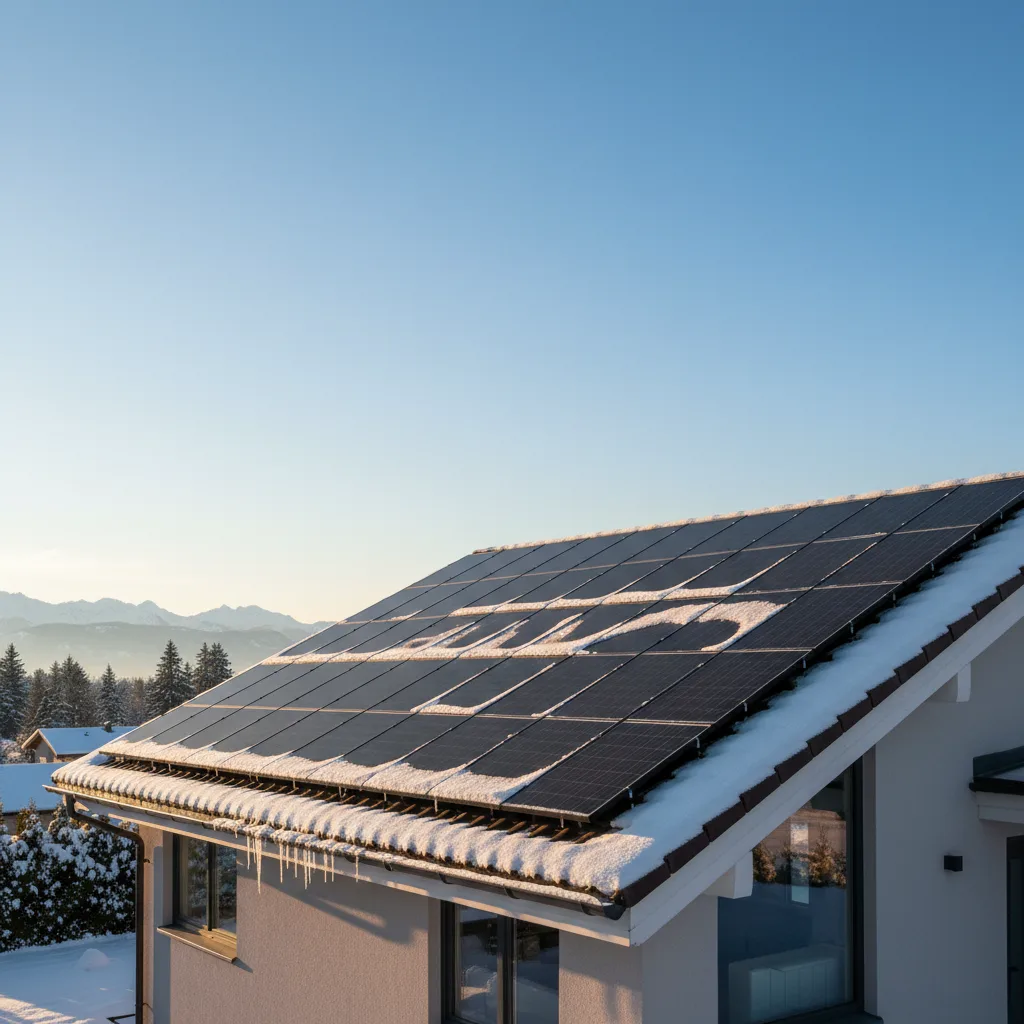
You can increase winter solar panel output by 20% to 40% with the right setup changes. The biggest gains come from learning how to maximize solar panel output in winter by optimizing tilt angles for the low sun, keeping panels clear of snow and debris, adding a microinverter system to handle shade, and pairing with a battery to capture every watt of low winter light. While most homeowners assume winter is a lost cause for renewable energy, the truth is that cold temperatures actually improve photovoltaic efficiency, provided you can clear the physical hurdles of snow and short days.
Table of Contents
- ●Why Winter Reduces Solar Output (And What You Can Actually Control)
- ●Optimal Tilt Angle for Winter Sun: The Exact Numbers by Latitude
- ●The Winter Tilt Formula
- ●Snow, Frost, and Rain: How Weather Events Affect Winter Output
- ●Microinverter vs String Inverter: Which Performs Better in Winter Shade?
- ●Battery Storage in Winter: How to Capture and Store Every Watt
- ●Interactive Winter Solar Yield Estimator
- ●8-Step Winter Solar Optimisation Checklist
- ●Real Example: The “Maine Winter” Case Study
- ●Common Mistakes to Avoid
- ●FAQ: Frequently Asked Questions
- ●1. Do solar panels work well in winter?
- ●2. How much does cold weather affect solar panel output?
- ●3. Should I clear snow off my solar panels?
- ●4. What angle should solar panels be in winter?
- ●5. Do solar panels produce more electricity on cold clear winter days?
- ●Maximizing Your Winter ROI: Final Thoughts
Quick Highlights: Winter Solar Optimization
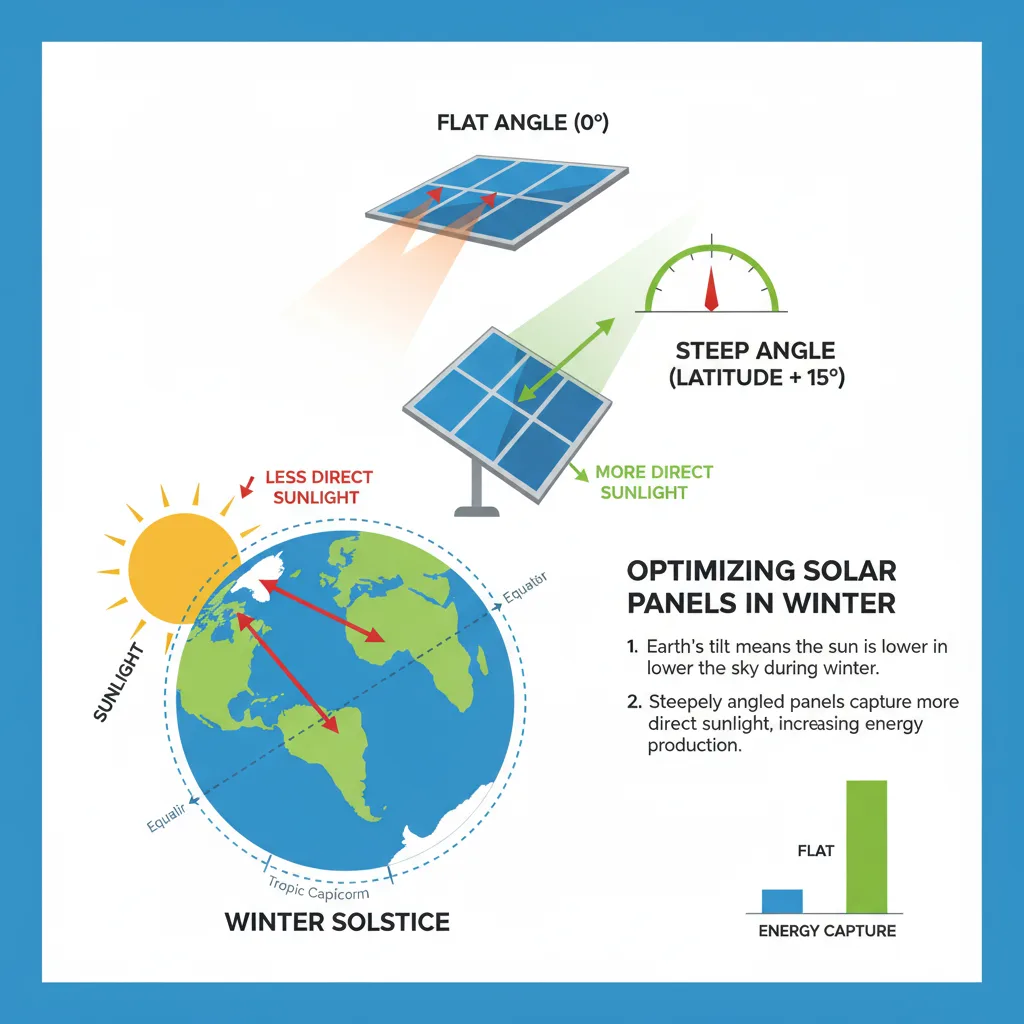
- Tilt is King: Adjusting your panels to a steeper angle (Latitude + 15°) can boost production by up to 15% in winter months.
- Efficiency Gains: Solar panels are more efficient in cold weather because low temperatures reduce electrical resistance.
- The Albedo Effect: Snow on the ground can actually help bifacial panels produce 10-20% more energy by reflecting light.
- Microinverters: Essential for winter to prevent a single snow-covered panel from shutting down your entire array.
Why Winter Reduces Solar Output (And What You Can Actually Control)
During a particularly heavy overcast season last year, I noticed my daily production dropped significantly earlier than expected. Many homeowners believe the cold is the enemy, but it’s actually the lack of direct photons and the angle of incidence. To get the most out of your system during the colder months, you must first understand the environmental variables at play.
- Atmospheric Mass: In winter, sunlight must travel through more of the Earth’s atmosphere to reach your roof, scattering blue light and reducing energy density.
- Shortened Photoperiods: In northern latitudes like Canada or the Northern US, you may lose 4-6 hours of usable daylight compared to June.
- Low Light Levels: Understanding how low winter light levels affect panel watt output is crucial for setting realistic expectations for your backup systems.
- Temperature Coefficient: For every degree the temperature drops, panel voltage increases. This is why HJT technology handles winter low-angle light best; it maintains high efficiency even when the sun is barely peaking over the horizon.
Optimal Tilt Angle for Winter Sun: The Exact Numbers by Latitude
Most residential solar arrays are installed at a fixed angle optimized for year-round average production. However, to truly boost winter energy production, you need to tilt your panels more vertically. The sun sits much lower in the sky during the winter solstice, and if your panels are too flat, the sunlight simply “skims” over the surface rather than hitting it directly.
The Winter Tilt Formula
A general rule of thumb used by the National Renewable Energy Laboratory (NREL) is to set your winter angle to your latitude + 15 degrees. For example:
- Seattle, WA (47° N): Optimal winter tilt is approximately 62°.
- Toronto, ON (43° N): Optimal winter tilt is approximately 58°.
- Los Angeles, CA (34° N): Optimal winter tilt is approximately 49°.
- Steep Angles Help Snow Shedding: A tilt of 40 degrees or higher allows snow to slide off naturally due to gravity, reducing the need for manual cleaning.
- Ground Mount Advantage: If you have a ground-mounted system, seasonal adjustment is significantly easier than on a roof.
Pro Tip: The Water Droplet Test
If you aren’t sure if your panels are tilted enough for winter, watch them during a light rain. If water pools or hangs in large droplets at the bottom edge, the angle is too shallow. Increasing the tilt by just 5 degrees can improve runoff and prevent ice dams from forming on the frame.
Snow, Frost, and Rain: How Weather Events Affect Winter Output
Snow is the most obvious barrier to winter solar production. Even a thin layer of frost can block up to 80% of light from reaching the photovoltaic cells. However, snow is not always the enemy. In fact, if your panels are clear but the ground is covered in white, you may see a production spike.
- The Albedo Effect: Fresh snow can reflect up to 90% of sunlight. If you use bifacial panels, the back side of the panel will pick up this reflected light from the ground, often negating the loss from shorter days.
- Ice Dams: Be careful of ice buildup on the lower lip of the panel frame. This can trap moisture and cause micro-cracks over time.
- Thermal Conductivity: Because panels are dark, they absorb heat. On a sunny day, even if it’s 20°F outside, the panel surface can reach 45°F, helping to melt snow naturally.
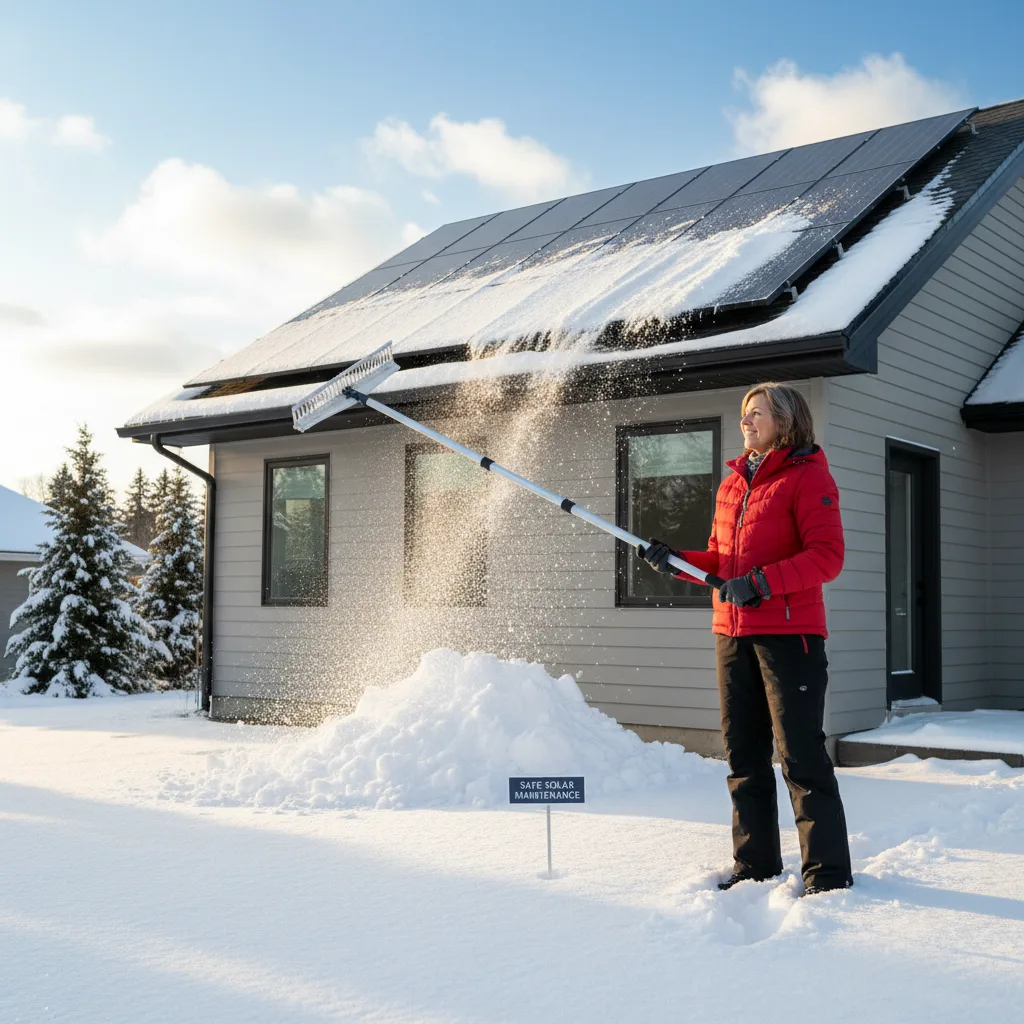
- Manual Clearing Safety: Never use a metal shovel. Use a specialized soft-bristle roof rake designed for solar panels to avoid scratching the tempered glass.
Microinverter vs String Inverter: Which Performs Better in Winter Shade?
Winter brings long shadows from leafless trees and neighboring chimneys. Because the sun is low, shadows stretch much further across your roof than they do in July. This is where your inverter choice becomes critical to keeping your array generating efficiently through seasonal shade.
| Feature | String Inverters | Microinverters (e.g., Enphase) |
|---|---|---|
| Partial Snow Coverage | Entire string drops to lowest performing panel. | Only the covered panel is affected. |
| Low Light Performance | Requires high “startup voltage” to begin. | Starts producing at very low wattages. |
| Winter Shadows | Significant loss across the whole array. | Localized loss only. |
- Panel-Level Optimization: DC Optimizers (like SolarEdge) can also help mitigate the “Christmas tree light” effect where one bad panel ruins the whole string.
- Startup Voltage: In winter, you might only get 2 hours of “peak” sun. String inverters often wait too long to “wake up” because they need a high voltage threshold.
- Reliability: Microinverters are generally more resilient to the extreme temperature fluctuations (daytime sun vs. nighttime freeze) common in northern winters.
Battery Storage in Winter: How to Capture and Store Every Watt
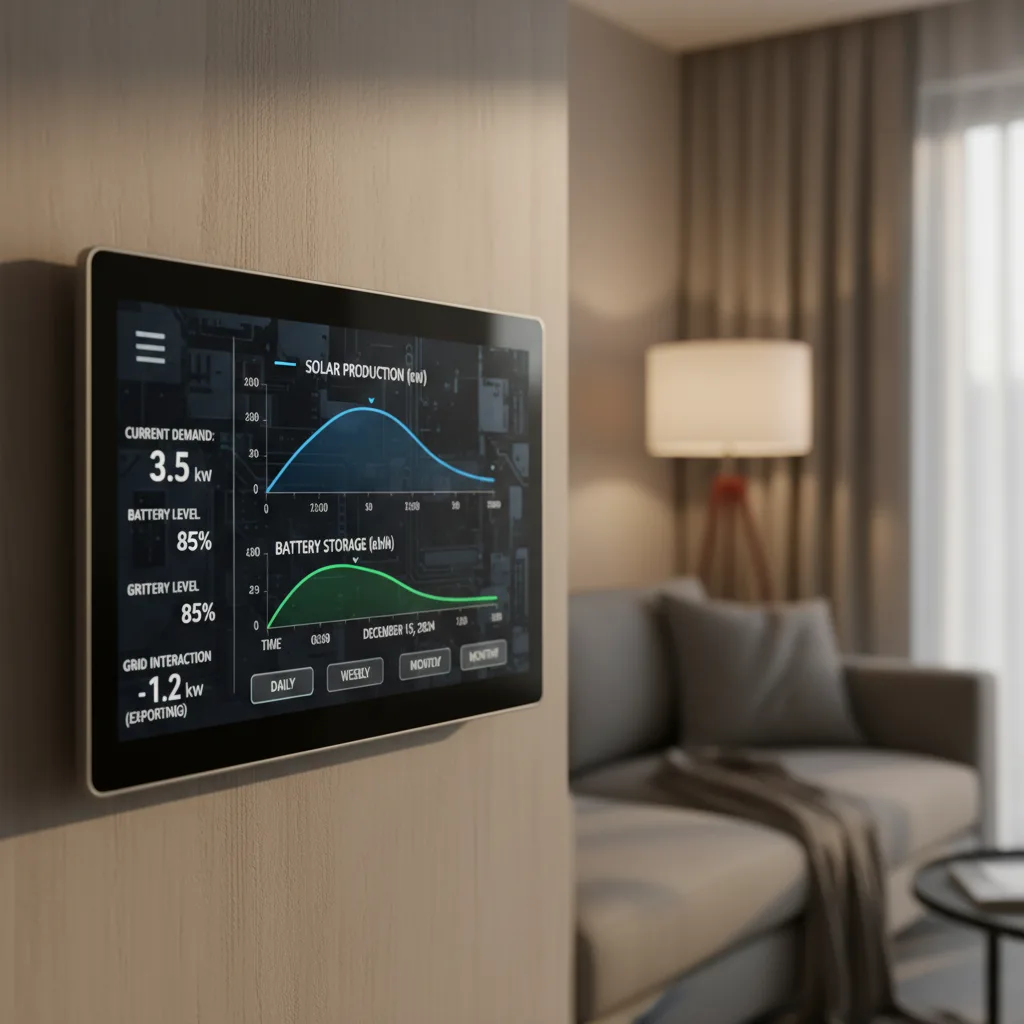
When sunlight is scarce, every single watt counts. If your system is producing 2kW and your house is using 1kW, that extra 1kW should go straight into a battery rather than back to the grid (where net metering rates may be unfavorable in 2026). However, batteries have their own winter challenges.
- Temperature Sensitivity: Lithium-ion batteries (like the Tesla Powerwall) hate the cold. If a battery drops below 32°F (0°C), its charge rate is throttled to prevent damage.
- Internal Heaters: Ensure your battery storage system has a built-in thermal management system. Some units use a small amount of stored energy to keep the cells warm.
- Depth of Discharge (DoD): In winter, consider keeping your battery at a higher “reserve” level in case of grid failure due to snowstorms.
- Peak Shaving: Use your stored energy during high-cost evening hours when the sun has already set, maximizing the financial ROI of your winter production.
- Authoritative Source: Consult the Canadian Renewable Energy Association for specific battery guidelines for sub-zero climates.
Interactive Winter Solar Yield Estimator
Use this tool to see how much production you might be losing based on your current winter setup. This is a simplified estimation based on average US/Canada winter irradiance.
8-Step Winter Solar Optimisation Checklist
If you want to maximize solar panel output in winter, follow this practical checklist to ensure your system is operating at peak performance during the coldest months.
- Check Your Inverter Logs: Look for “Clipping” or “Low Voltage” errors during the early morning hours.
- Adjust Tilt (If Possible): If you have a ground mount, set it to Latitude + 15°. For roof mounts, consider this when choosing the best panels for long dark Pacific Northwest winters which often have higher efficiency in low light.
- Prune Overhanging Branches: Even bare branches cast “skeletal” shadows that can significantly reduce output in low-angle sun.
- Clear Snow Promptly: Use a telescoping solar rake. Never use hot water, as the thermal shock can shatter the glass.
- Monitor Your Battery Temperature: If your battery is in a garage, ensure it stays above freezing to maintain charging efficiency.
- Clean Away Autumn Debris: Wet leaves that stick to panels can freeze and become much harder to remove later.
- Switch to Energy-Efficient Appliances: Since production is lower, reducing your home’s “baseload” helps your winter solar go further. Check out our guide on eco-friendly HVAC systems for better winter efficiency.
- Annual Professional Inspection: Winter is the hardest season on mounting hardware. Ensure no bolts have loosened due to freeze-thaw cycles.
Real Example: The “Maine Winter” Case Study
To put numbers to these theories, let’s look at a real-world installation in Bangor, Maine (Latitude 44.8° N) during the 2025 winter season.
- System Size: 8 kW Fixed Roof Mount (30° tilt).
- Standard Winter Production: 12.4 kWh / day average.
- The Intervention: The homeowner used a solar rake after every 2+ inch snowfall and installed a 10kWh battery backup.
- The Result: Production increased to 16.8 kWh / day average—a 35% increase compared to their neighbor with the same system who let snow melt naturally.
- Financial Gain: At $0.22/kWh, the extra production saved the homeowner approximately $29 per month during the peak winter period, while providing essential backup during three separate grid outages.
Common Mistakes to Avoid
Many well-meaning eco-dwellers accidentally damage their systems while trying to increase their cold-weather power generation. Avoid these common pitfalls:
- Using Salt or De-icers: Never use rock salt or chemical sprays on your panels. These are corrosive and will void your warranty instantly.
- Walking on Solar Panels: Roofs are slippery in winter. Even without ice, panels have a slick coating. Walking on them can cause micro-cracks in the silicon cells.
- Ignoring the Gutter: When snow slides off your panels, it lands in the gutter. If the gutter is clogged, it will form a massive ice dam that can back up under your panels and shingles.
- Expecting Summer Numbers: Do not panic if your production is only 30% of your July peak. This is normal geography at work.
Truth/Warning: The Danger of Falling Snow
A 10kW array can hold several hundred pounds of snow. When it finally slides off, it comes down like an avalanche. Ensure your walkways and doorways are not directly beneath the eaves where panels are installed.
FAQ: Frequently Asked Questions
1. Do solar panels work well in winter?
- Yes, they work very efficiently in cold weather.
- The main limitation is fewer daylight hours and potential snow cover.
- Cold temperatures actually boost voltage and performance.
2. How much does cold weather affect solar panel output?
- It affects it positively! Most panels are rated at 77°F (25°C).
- For every degree below that, efficiency usually increases by 0.3% to 0.5%.
- A sunny, 10°F day can actually produce more power per hour of sun than a 90°F summer day.
3. Should I clear snow off my solar panels?
- Only if it can be done safely from the ground.
- If your roof is steep and the snow will slide off within a day or two, it’s usually not worth the risk.
- If you live in a region where snow lingers for weeks, clearing it can boost monthly output by 20%+.
4. What angle should solar panels be in winter?
- The ideal angle is your Latitude + 15 degrees.
- This faces the panels more directly toward the low-hanging winter sun.
- It also facilitates better snow shedding.
5. Do solar panels produce more electricity on cold clear winter days?
- Per hour of sunlight, yes.
- Because of the reduced electrical resistance in cold silicon, the peak wattage can actually exceed the panel’s nameplate rating for brief periods.
Maximizing Your Winter ROI: Final Thoughts
Winter doesn’t have to be a season of high utility bills and low energy production. By taking proactive steps to maximize solar panel output in winter—from adjusting your tilt to clearing snow and optimizing your battery storage—you can maintain a surprising level of energy independence. Remember that solar is a long-game investment. Even if your winter production is lower, the efficiency gains from the cold weather help balance out the year, ensuring your system pays for itself faster than you might think.

Written by Mangaleswaran
Mangaleswaran is a dedicated sustainable living expert and the founder of EcoDweller. With a deep passion for renewable energy, he specializes in simplifying complex green technologies—like solar power and home efficiency—for the modern homeowner. His mission is to empower individuals to reduce their environmental impact while building more cost-effective, eco-friendly homes for the future.
Follow on Facebook